Homemade Dijon Mustard Recipe
For millennia, mustard seeds have been favored for their pungent, earthy flavor and the spicy depth they lend to dishes such as South Asian curries, Japanese condiments, and barbecue sauces of the American South. Sometime during the 13th century, Burgundian monks began combining the pulverized seeds with grape must (he…
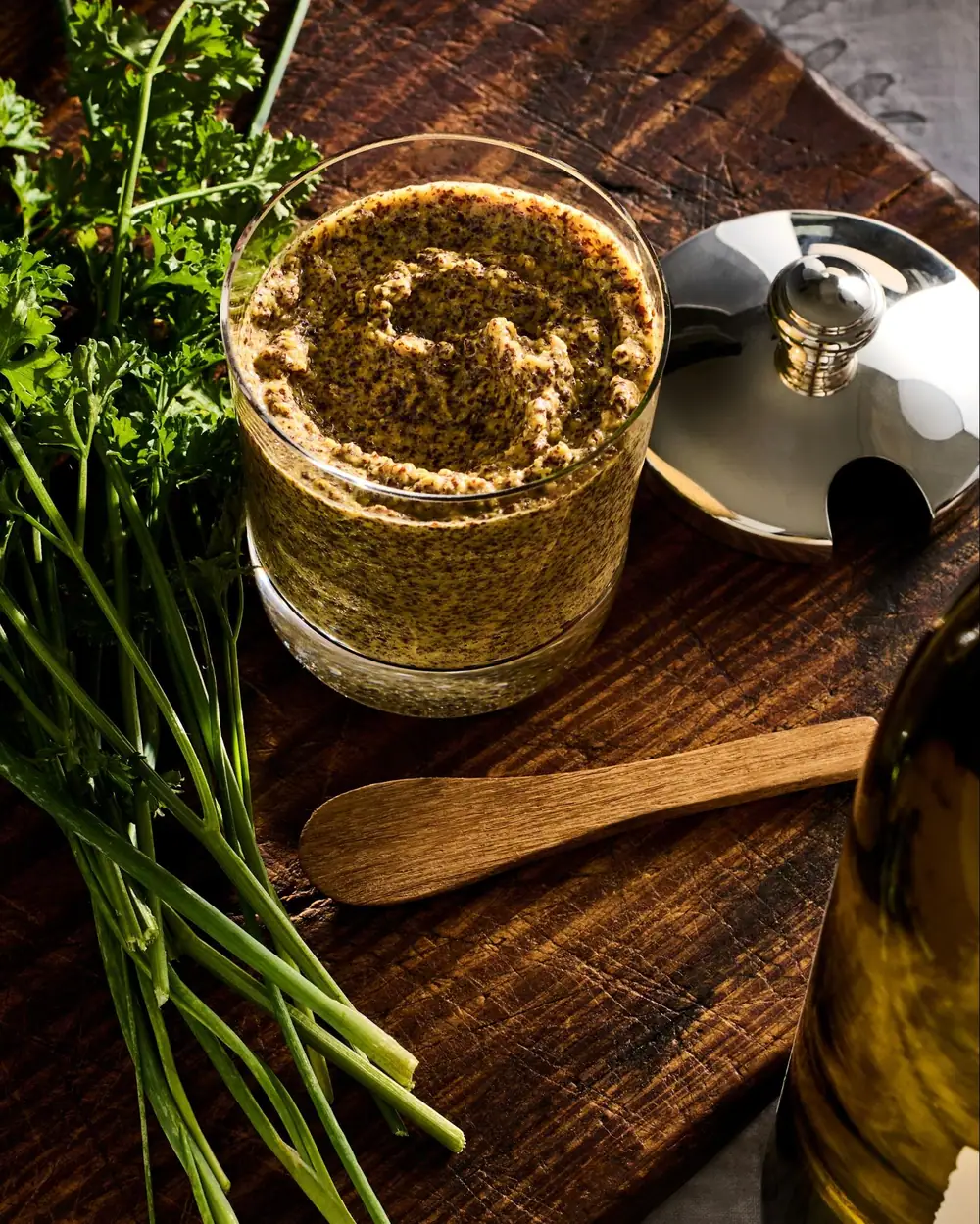
Whole, brown mustard seeds are ground to a powder, exposing their aromatic interiors, then seasoned with salt and an acid—typically verjus, the unfermented juice of unripe wine grapes—and thinned with water. In Dijon today, most mustard seeds are imported, as the local crops gradually lost out to the region’s more profitable grape vines. But in nearby Beaune, Moutarderie Edmond Fallot blends locally grown mustard seeds with aligoté wine, creating a hyper-local product worthy of an IGP (Indication Géographique Protégée) designation.
With just a few kitchen tools and three simple ingredients, you can make your own version and customize it to your liking with garden herbs, seasonal fruits, or homemade vinegars. Featured in “Make Your Own Mustard” by Ryan McCarthy in the Spring/Summer 2025 issue. See more recipes and stories from Issue 204.
Ingredients
- ½ cup brown mustard seeds
- 1½ teaspoons kosher salt, plus more
- 2 tablespoons verjus, wine vinegar, or lemon juice
- Flavorings such as herbs, dried fruit, spices, or sweeteners (optional)
Instructions
- Using a mortar and pestle or spice grinder, pulverize the mustard seeds to a coarse powder, with more yellow visible than brown. For smooth mustard, pass the mixture through a fine-mesh strainer to remove the seed husks. Alternatively, leave the husks in for whole-grain mustard. Stir in the salt.
- Transfer to a medium bowl, add the verjus and 2 tablespoons water and stir to combine. Stir in more verjus and water in equal amounts, one teaspoon at a time, until the mixture is spreadable.
- Stir in flavorings, if using, and additional salt to taste, then transfer to an airtight container. Set aside for 24 to 48 hours for the flavors to meld and to soften any bitterness before serving. Mustard will last in the refrigerator for several months.
- Who: Mustard · Murray Hall · Food Styling · Thu Buser