Sourdough Raised on Kombucha Instead of a Starter
No starter, no feeding schedule, no jar on the counter. Our bakery desk raised a loaf entirely on live, unflavoured kombucha, whose yeasts and bacteria turn out to be cousins of a sourdough culture. The bread is tangy, open and ready in a day. Here is what the microbes did.
- 500 g strong bread flour
- 380 g live, unflavoured, unpasteurised kombucha, at room temperature
- 10 g salt
- 5 g honey
- Rice flour for dusting
- Mix the flour, kombucha and honey into a shaggy dough. Rest 30 minutes, then add the salt and squeeze it through.
- Over the next 2 hours, do four sets of stretch-and-folds at 30 minute intervals. Then leave to bulk ferment, covered, until risen by about 60 percent, 4 to 6 more hours.
- Shape into a tight round, dust with rice flour, and place seam side up in a floured basket. Refrigerate overnight, 12 hours.
- Heat the oven with a Dutch oven inside to 250 C for 45 minutes. Turn the dough onto paper, score, and lower into the pot.
- Bake covered 20 minutes, uncovered 22 minutes until very dark. Cool completely, at least 2 hours, before cutting.
A sourdough starter is a stable community of wild yeasts and lactic acid bacteria living in flour and water. Kombucha is a stable community of yeasts and acetic and lactic acid bacteria living in sweet tea. The two cultures share several yeast species and an appetite for sugar, which raised an obvious question in our bakery: can the tea culture do the flour culture's job? It can, with adjustments, and the result is one of the most interesting loaves we have baked this year.
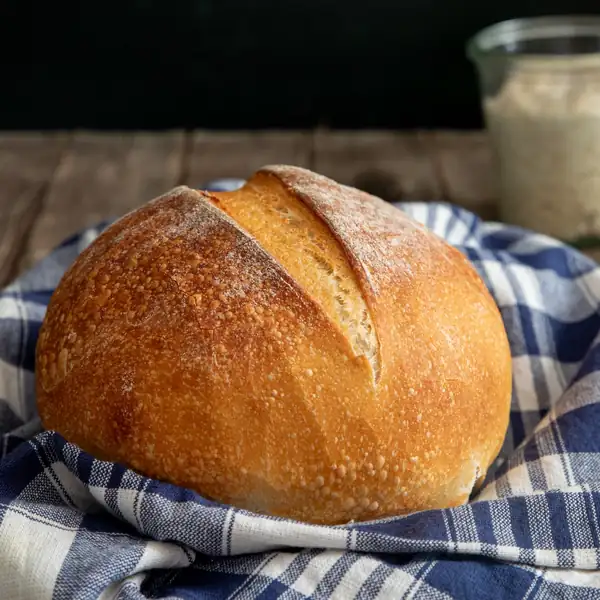
The method replaces the water and starter in a standard sourdough formula with unflavoured, unpasteurised kombucha at room temperature. The yeasts in the tea start fermenting the flour within an hour, faster than a young starter would, and the acetic acid the kombucha already carries gives the finished crumb a tang that a sourdough usually takes two days to develop. The crust browns darker because kombucha carries residual sugars. The crumb is open but even, closer to a French pain de campagne than to a cathedral-holed sourdough.
The numbers
- Formula: 500 g bread flour, 380 g live unflavoured kombucha, 10 g salt, 5 g honey. Hydration 76 percent. No commercial yeast, no starter.
- Bulk fermentation 6 to 8 hours at 24 C with four sets of folds in the first two hours. Shape, then cold proof overnight in the fridge for 12 hours.
- Bake in a preheated Dutch oven at 250 C: 20 minutes covered, 22 uncovered. Total time from bottle to bread: about 22 hours, against 36 to 48 for a starter loaf.
What it tastes like
Brighter than sourdough, with a clean vinegar note in place of the deeper lactic sourness, and a faint sweetness at the crust from the tea. It is the bread to serve with smoked fish, with butter and radishes, or toasted under a poached egg. If your kombucha is flavoured, the flavour survives the oven in a ghostly way: a ginger kombucha gives a ginger loaf, which is either a warning or an invitation.