The Case for Cold Tea Brewed Like Wine
Our cellar desk spent a month treating loose-leaf tea the way a sommelier treats a bottle: long cold infusions, decanting, temperature at the table. The best of them stand up to the food the way a wine does, without the alcohol.
The habit of drinking tea with dinner is older than the habit of drinking wine with it in most of the world, and yet the two have almost never been made to meet. Wine has a vocabulary of body, tannin, acidity and finish; tea, served hot in a small cup, is rarely allowed to show any of it. Cold brewing changes that. Steep good leaves in cold water for twelve to eighteen hours and you extract the sweetness and aromatics while leaving behind most of the bitterness, which is exactly the balance a wine drinker looks for.
We tested twelve teas over a month with a rule borrowed from the cellar: each was served in a wine glass, at cellar temperature of about 12 degrees, poured from a decanter, and tasted with food rather than alone. Three of them behaved like wines we know.
Three that work
- Tieguanyin oolong from Anxi, cold brewed for 14 hours, comes out floral and buttery with a long orchid finish. It behaved like a Viognier: excellent with roast chicken, less good with anything acidic.
- A young sheng pu-erh, brewed cold for 18 hours, is pale gold, honeyed, and carries a faint tannic grip. It was the surprise of the month beside charcuterie and hard cheese, where a Pinot Noir would normally go.
- Japanese hojicha, roasted green tea, cold brewed overnight, tastes of toast and caramel with almost no astringency. With a chocolate dessert it did what a tawny port does, at no cost to the next morning.
How to serve it
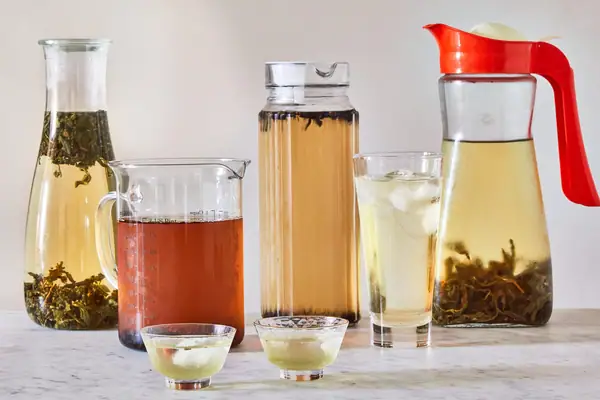
Use 10 grams of leaf per litre of cold filtered water, in a covered glass jar in the fridge. Strain into a bottle and drink within two days. Serve it in stemmed glasses, not tumblers; the shape concentrates the aroma and, more importantly, tells your guests to take it seriously. Do not add ice at the table, which would dilute what you spent eighteen hours extracting.
The method is not a replacement for wine. It is the drink for the guest who does not want alcohol and is tired of being handed a sparkling water as if it were a consolation. Treated with the same ceremony, cold tea earns the same place at the table.