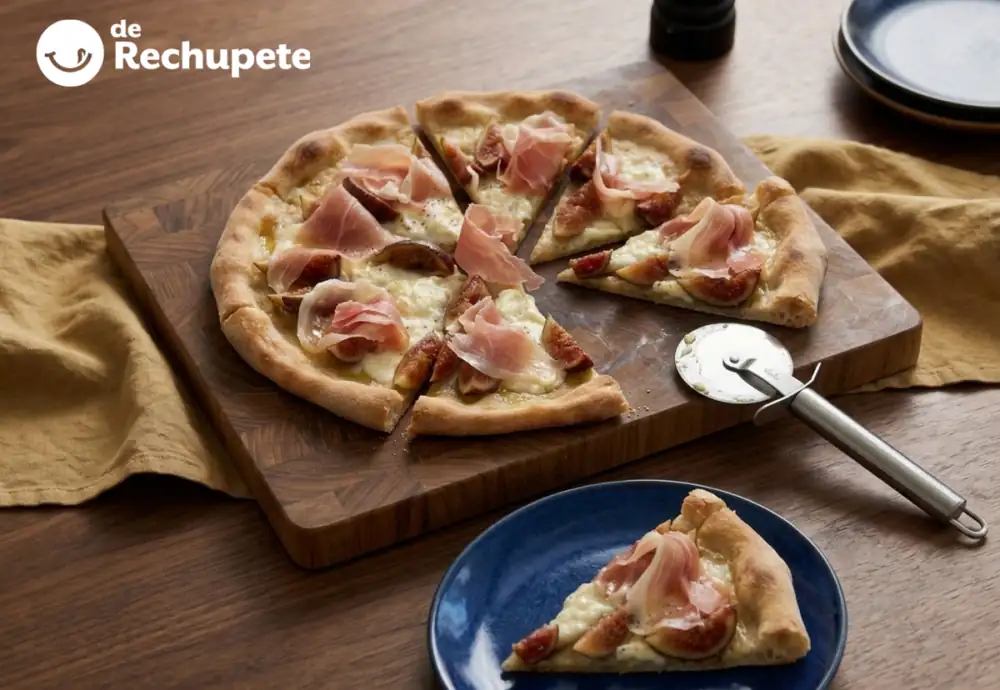
Fig, cheese and Serrano ham pizza
Para 2 3.2€/pers. 240kcal/100g
- Para la masa:
- 250 g de harina de fuerza
- 160 ml de agua
- 3 g de levadura seca de panadería o 9 g de levadura fresca
- 5 g de sal
- 10 ml de aceite de oliva virgen extra
- Para cubrir la pizza:
- 5 higos frescos medianos, maduros pero firmes
- 125 g de mozzarella fresca
- 90 g de queso de cabra
- 80 g de jamón serrano cortado muy fino o prosciutto crudo
- 10 ml de aceite de oliva virgen extra
- Pimienta negra recién molida
- Ponemos el agua en un cuenco y disolvemos en ella la levadura. En otro bol grande echamos la harina de fuerza, hacemos un hueco en el centro e incorporamos el agua con la levadura y el aceite. Mezclamos y, cuando la harina empiece a absorber el líquido, añadimos la sal. Trabajamos hasta formar una masa húmeda y algo irregular. Si tenemos dudas con este ingrediente, aquí explicamos los tipos de levadura para hacer pan y masas.
- Pasamos la masa a la encimera y amasamos durante 8-10 minutos. Al principio puede pegarse un poco, pero evitamos enterrarla en harina. Poco a poco debe convertirse en una masa lisa, elástica y ligeramente húmeda, manejable sin resultar dura.
- Formamos una bola, la ponemos en un bol y la tapamos. Dejamos fermentar alrededor de una hora, hasta que haya aumentado claramente de volumen. No necesitamos que el reloj mande al segundo: la temperatura de la cocina puede adelantar o retrasar este punto.
- Mientras termina la fermentación, escurrimos muy bien la mozzarella durante 20-30 minutos. Lavamos los higos con cuidado, los secamos, retiramos el rabito y cortamos cada uno en cuatro gajos. Los manipulamos lo justo para mantener enteras la piel y la pulpa.
- Precalentamos el horno a 250 ºC o a la temperatura máxima que alcance durante unos 30 minutos. Si tenemos piedra, acero o una bandeja gruesa, la calentamos también. Extendemos la masa hasta formar un disco de unos 30 centímetros, dejando un borde de unos 2 centímetros algo más grueso que el centro.
- Repartimos un poco de aceite sobre la masa. Desmenuzamos la mozzarella escurrida y la distribuimos sin formar una capa continua. Añadimos el queso de cabra en pequeños trozos y colocamos los gajos de higo de manera irregular, dejando parte de la pulpa mirando hacia arriba. No cubrimos el borde.
- Horneamos durante 8-12 minutos, según la potencia del horno. La pizza estará lista cuando el borde esté dorado y tenga algunas zonas más tostadas, la mozzarella se haya fundido, los higos estén blandos pero aún reconozcamos los gajos y la base se note firme y crujiente al levantarla. Un buen precalentamiento evita bastantes de los problemas que repasamos en estos errores habituales al utilizar el horno.
- Sacamos la pizza y distribuimos inmediatamente el jamón serrano o prosciutto sin hornearlo. Lo colocamos en trozos y pliegues sueltos, no formando una alfombra. Terminamos con pimienta negra recién molida y un hilo fino del aceite restante.
- Dejamos reposar dos minutos, cortamos en porciones y servimos. No añadimos sal por encima antes de probar: entre la mozzarella, el queso de cabra y, sobre todo, el jamón curado, normalmente ya tendremos suficiente.
- La fruta no puede estar pasada. Si el higo se rompe al cogerlo o pierde líquido por la base, tendrá pocas posibilidades de mantener su forma durante el horneado. Los ejemplares muy maduros podemos reservarlos para una mermelada casera de higos.
- Secar la mozzarella merece la pena. Una bola recién sacada de su líquido y directamente colocada sobre la masa puede soltar bastante agua en pocos minutos.
- No sobrecargamos la pizza. Tenemos dos quesos, fruta y jamón. Añadir capas y capas solo dificulta que el centro de la masa reciba suficiente calor.
- La bandeja, piedra o acero deben estar bien calientes antes de meter la pizza. Precalentar el horno durante cinco minutos no es suficiente para conseguir el mismo resultado.
- El queso de cabra se reparte en pequeñas cantidades. Si hacemos una capa gruesa, su sabor se comerá tanto a los higos como al jamón.
- El jamón entra nada más salir del horno. El calor residual lo atempera y suaviza la grasa sin convertir las lonchas finas en piezas secas y quebradizas. Es un método utilizado también en otras pizzas de prosciutto.
- Si queréis explorar otras masas y estilos, en esta selección de pizzas caseras hay bases y coberturas bastante diferentes para seguir probando.
Ingredients
- For the dough:
- 250g of strong flour
- 160 ml of water
- 3 g of dried baker's yeast or 9 g of fresh yeast
- 5 g of salt
- 10 ml of extra virgin olive oil
- To top the pizza:
- 5 medium-sized fresh figs, ripe but firm
- 125 g of fresh mozzarella
- 90g of goat cheese
- 80g of very thinly sliced Serrano ham or prosciutto crudo
- 10 ml of extra virgin olive oil
- Freshly ground black pepper
There are pizzas where almost everything depends on the sauce, and others where the important thing is deciding when each ingredient goes in.
In this fig, cheese, and Serrano ham pizza, the figs are heated in the oven, while the ham is added later. This way, we have warm, tender fruit alongside slices of ham that retain their thin, supple texture.
We make it like a plain white pizza, without tomato sauce, because we don't need another sauce competing for space. The homemade pizza dough serves as the base for a fairly simple combination: well-drained mozzarella for the melt, goat cheese to add a slightly bolder flavor, and fresh fruit that softens and concentrates during baking. We don't want to make it a sweet pizza, so there's no need to add honey, jam, or glazes.
The figs also need to be at a specific point. We look for ripe but firm figs that we can cut into quarters without the pulp spilling out onto the board.
With overripe fruit, the pizza will lack sweetness; with very ripe fruit, it will end up with a kind of compote on the crust. The moisture of the cheese also matters: the better we drain the mozzarella, the less likely we are to end up with a soggy center. And if after this combination you feel like experimenting with doughs and toppings, there are three quite different options in the recipe book: homemade four-cheese pizza when we want the cheese to take center stage, pesto pizza for a more herbal version, and ham pizza bread with mozzarella cheese and cherry tomatoes when we want to try a different approach to the base.
Step-by-step preparation
- We put the water in a bowl and dissolve the yeast in it. In another large bowl, we put the strong flour, make a well in the center, and add the water with the yeast and the oil. We mix, and when the flour starts to absorb the liquid, we add the salt. We work the dough until it's moist and slightly uneven. If we have any questions about this ingredient, here we explain the different types of yeast for making bread and dough.
- Transfer the dough to the work surface and knead for 8-10 minutes. It may be a little sticky at first, but avoid burying it in flour. Gradually, it should become a smooth, elastic, and slightly moist dough that is easy to handle without being stiff.
- We form a ball, place it in a bowl, and cover it. We let it ferment for about an hour, until it has clearly increased in volume. We don't need to be precise; the kitchen temperature can affect this process.
- While the fermentation finishes, drain the mozzarella very well for 20-30 minutes. Wash the figs carefully, dry them, remove the stems, and cut each one into four wedges. Handle them just enough to keep the skin and flesh intact.
- Preheat the oven to 250°C (480°F) or the highest temperature it reaches for about 30 minutes. If you have a baking stone, steel, or a thick baking tray, preheat it as well. Roll out the dough into a disc about 30 centimeters (12 inches) in diameter, leaving a border about 2 centimeters (1 inch) thicker than the center.
- We drizzle a little oil over the dough. We crumble the drained mozzarella and spread it out in a loose layer. We add the goat cheese in small pieces and arrange the fig wedges irregularly, leaving some of the flesh facing upwards. We don't cover the edge.
- Bake for 8-12 minutes, depending on your oven. The pizza will be ready when the crust is golden brown with some browned areas, the mozzarella has melted, the figs are soft but still recognizable as segments, and the base feels firm and crispy when lifted. Proper preheating prevents many of the problems we discussed in these common oven mistakes.
- We take the pizza out and immediately distribute the unbaked Serrano ham or prosciutto. We place it in loose pieces and folds, not forming a carpet. We finish with freshly ground black pepper and a drizzle of the remaining oil.
- Let it rest for two minutes, cut into portions, and serve. Don't add salt before tasting: between the mozzarella, goat cheese, and especially the cured ham, you'll usually have enough.
Tips for a delicious fig, cheese and Serrano ham pizza
- The fruit must not be overripe. If the fig breaks when you pick it up or leaks juice from the base, it will have little chance of keeping its shape during baking. Very ripe figs can be reserved for homemade fig jam.
- Drying the mozzarella is worthwhile. A ball freshly removed from its liquid and placed directly on the dough can release quite a bit of water in just a few minutes.
- We didn't overload the pizza. We have two cheeses, fruit, and ham. Adding layers and layers only makes it harder for the center of the dough to get enough heat.
- The baking tray, stone, or steel plate must be very hot before placing the pizza on it. Preheating the oven for five minutes is not enough to achieve the same result.
- The goat cheese is spread in small amounts. If we make a thick layer, its flavor will overpower both the figs and the ham.
- The ham goes in straight from the oven. The residual heat tempers it and softens the fat without turning the thin slices into dry, brittle pieces. This method is also used for other prosciutto pizzas.
- If you want to explore other doughs and styles, this selection of homemade pizzas has quite a few different bases and toppings to keep trying.
Some questions you might have during the recipe. Answering your emails. We can make it with store-bought dough if we're in a hurry.
The combination will still work, although we'll lose some control over the thickness and edge consistency. With fresh, chilled dough, let it warm up slightly before attempting to roll it out to prevent it from shrinking. You can also use prosciutto crudo instead of Serrano ham.
In both cases, it's best if the ham is thinly sliced and added after baking. We don't need to look for a particularly cured and strong ham; we already have the saltiness of the goat cheese and we want to continue tasting the figs. Using dried figs changes the result considerably.
They have much less water and a much more concentrated sweetness, so they're not a one-to-one replacement for fresh figs. For this pizza, it's worth waiting until you have fresh fruit at its peak ripeness.
If the center of the pizza is still soft while the edges are cooked, before extending the baking time indefinitely, we check two things: the moisture level of the mozzarella and the heat accumulated at the base of the oven. These are two much more likely causes than insufficient baking time.
And if there's any dough left over, it's best not to leave it assembled at room temperature for hours. Store it covered in the refrigerator, and the next day, reheat the pizza first and then add some fresh slices of ham if you want to better recreate the contrast between the warm base and the cured ham.
Last revision: September 3, 2026
We have worked 2 hours and 25 minutes so that you can enjoy this recipe.
How is it calculated? 35 min. cooking, 30 min. to take and edit the photos, 45 min. to write and 35 min. to organize and publish everything on the web and on social media.
😊 Not to mention the time we spend researching how to make the best recipe, buying the ingredients, tasting it (and making it again if it wasn't perfect), reading your comments, and answering your questions. Categories: Cooking Recipes, Pizza and Flatbread Recipes