Chefs rebuild the original 1954 ranch formula with global ingredients
As the 2026 World Cup draws international attention to American food, chefs are replacing the original buttermilk and mayonnaise base of ranch dressing with global dairy and aromatics to transform a mid-century condiment into a primary menu component.
“I’m mostly using the food as a vehicle to get the ranch to my mouth, you know? But I also don’t see it as a condiment. I see it as a main.”
Chefs across the United States are treating ranch dressing as a primary component rather than a secondary condiment. Restaurants from Los Angeles to Portland are replacing the original 1954 formula of buttermilk and mayonnaise with regional dairy and global aromatics to anchor their menus.
At Lapaba in Los Angeles, chef McKenna Lelah builds her version around creme fraiche for acidity and yuzu juice for the citrus component. She adds yuzu kosho for heat and retains dill from the original profile, serving the thick emulsion alongside lollipopped fried chicken wings.
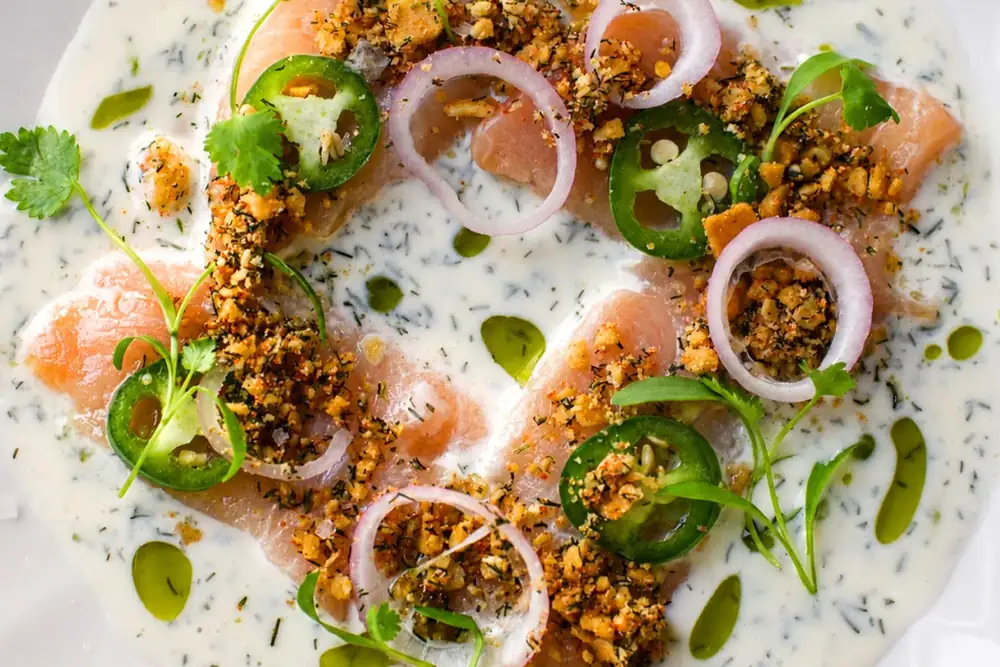
In Santa Barbara, chef Julian Martinez constructs a buttermilk-lime creme to pool around hamachi crudo, finishing it with garlic oil, masa, cilantro and serrano pepper. Other kitchens apply similar structural shifts, folding wasabi into the base at a Chamorro restaurant in San Francisco or replacing the traditional herb mix with fish sauce, lime and green chile at a Thai restaurant in Maine.
A Lebanese-inspired rotisserie restaurant in New York applies this same logic, substituting the original dairy with labneh to accompany their poultry. These variations arrive as the 2026 FIFA World Cup focuses international attention on American food, prompting manufacturers to produce travel-sized bottles and developers to create novelty snacks.
Consumer research indicates that condiment consumption rose sharply during the pandemic lockdowns and remained elevated as diners sought comfort foods. This sustained demand for familiar flavors provides the economic foundation for chefs to experiment with the basic emulsion without alienating their regular guests.
The original arrangement dates to 1954, when contractor Steve Henson combined buttermilk, mayonnaise and herbs to dress salads for his workers at Cold Spring Tavern in the Santa Ynez mountains. He later packaged the mixture at Hidden Valley Ranch, establishing a shelf-stable template that dominated dining rooms for decades before facing modern reinterpretation.
The mechanical function of this sauce relies entirely on its capacity to deliver fat and acid to the palate in a single bite. By substituting the foundational dairy and introducing new aromatics, cooks demonstrate that the original 1954 ratio was never a fixed boundary, but merely a starting emulsion.