Taystee's Burgers finds its niche serving premium burgers in gas stations
A dozen years or so ago, just after his 21st birthday, Ali Jawad was at a bit of a crossroads.
“I want people to say, ‘I walked into a gas station today and had the best burger I ever had.’”
He had left school, and had some money saved up. He had dreams about opening a Nathan’s Famous franchise unit.
But his grandfather, who had come to the U.S. from Lebanon and built a career first in the auto industry and then later as the owner of a chain of gas stations in Michigan, advised against it. His grandfather said: Either start your own restaurant concept, or go back to school.
“And I really didn’t want to go back to school,” said Jawad. So, in a friend’s garage, Jawad started cooking burgers. And that’s how Taystee’s Burgers was born in 2014.
He didn’t really know anything about the industry. He just knew he wanted to build a restaurant brand around fresh, delicious food, where customers could walk a line and choose what they wanted on their burgers.
But how to make it stand out in a crowded quick-service world? That problem was solved when he found his first location: One of his grandfather’s gas stations.
Soon it became clear: He wasn’t just going to open a burger joint. It would be a gas station burger joint.
And the burgers would be premium, with only fresh (no frozen) meat, plenty of toppings and “crazy” options like using grilled cheese in place of the buns to build a burger. The first Taystee’s opened in his grandfather's gas station in Dearborn, his hometown.
It started slow, some days only selling $300 to $400. Then one day Jawad entered a local burger competition. Taystee’s ended up winning first place, beating out far bigger burger competitors.
Suddenly, Taystee’s got flooded. “I felt like I was given a second chance,” he said. Cut to today: There are 10 Taystee’s locations, all but one in gas stations.
The original location has an average unit volume of about $2 million, he said, though the system average is about $1.4 million. In the beginning, he and his wife would spend their date nights driving around looking for nice gas stations to grow the brand. (“She didn’t mind. I would buy her snacks,” he said.)
Now gas stations come to him asking for a Taystee’s. Jawad owns three of the 10 Taystee's, but the rest are franchised.
And he’s ready to make the move out of Michigan to other markets. “My main focus this year is securing an out-of-state location,” he said, noting that they’re looking at Chicago or Ohio, and the first out of state unit could be company owned.
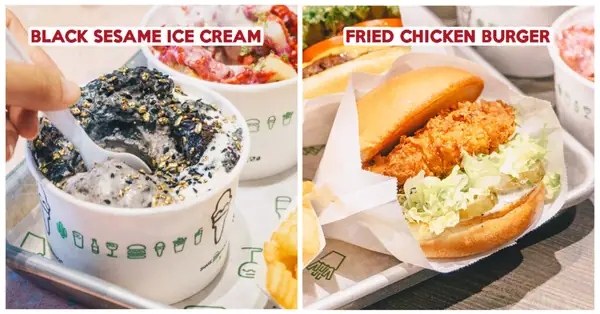
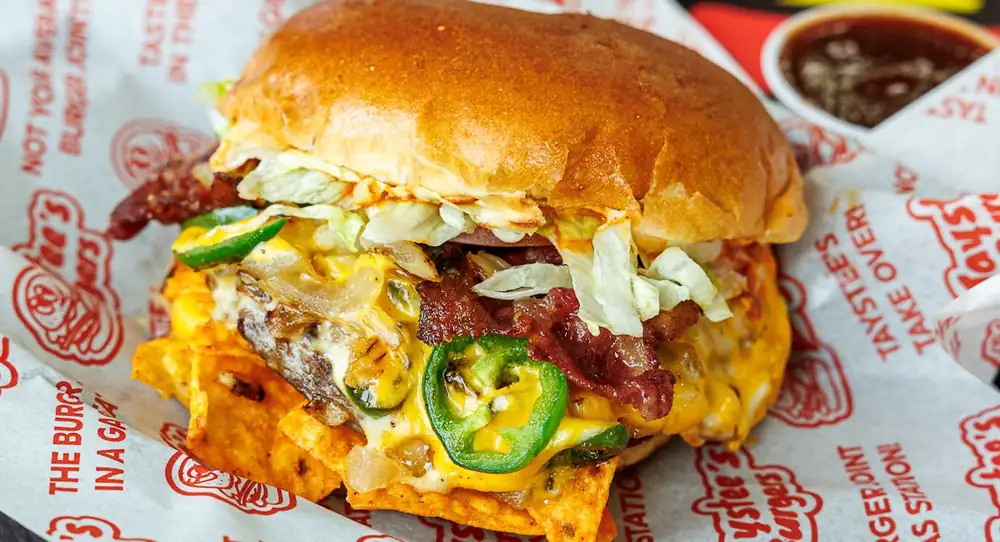
It may seem odd to go to a gas station to get a freshly made-to-order, all-Halal burger topped, for example, with American, Swiss and pepper jack cheeses, beef bacon, grilled onions, jalapenos, lettuce, tomato, and Nacho Cheese Doritos on a brioche bun (that’s the Ali’s Notch-Yo-Burger that won the contest). But, like convenience stores, gas stations and other non-traditional travel hubs are raising the bar on food offerings across the country, nipping away at fast-food restaurant traffic.
Jawad contends that gas stations have regular customers throughout the day and night, and they tend to be on high-visibility corners with good foot traffic. He’s agnostic about the gas-station brands he looks to partner with.
Taystee’s just looks for clean, top-notch gas stations with the space for a tiny restaurant, roughly 1,000- to 1,600-square feet. “It has to fit with the brand,” he said. The Taystee’s brand has evolved, with about 15 burgers, wraps, some more healthful bowls, and chicken wings, with prices roughly between $9 to $16.
Taystee’s units have attractive seating areas and multiple TV screens to give drivers a reason to sit and stay a while. The restaurant concept doesn’t have to have a beverage program because the gas stations typically offer all manner of drinks, a symbiotic benefit. And then there’s that “wow factor,” said Jawad. “I want people to say, ‘I walked into a gas station today and had the best burger I ever had.’”
The one Taystee’s that isn’t in a gas station (it’s in an inline shopping center) does fine, but it doesn’t have the flow of customers throughout the day seen by the gas station units, Jawad said. The chain’s growth has been self-funded, he said, though his family has helped a little.
His grandmother bought the first nice tables, he said. His mother worked for a bit in the first location. “Seeing how hard she worked really elevated my work ethic,” he said.
Now Jawad dreams of building a little empire, as his grandfather did. His first franchisees were managers and team members who helped grow the brand in the early years. (Jawad said he read somewhere that’s how Domino’s, a fast-food giant also born in Michigan, started out.)
Looking back, Jawad has no regrets about not going back to school. He admits that, when he was that young, he had no idea what it would take to build a restaurant brand. “It’s a lot harder than people think,” he said. “The hardest part, when I was young, was the mental part of it.
You see all your friends going out and going to school and having fun, and you’re sitting in the back of a gas station, wondering if you made the right decision.” Now Jawad wants to keep the momentum going. “I made a promise to myself that I’d keep my foot on the gas and give it everything I got,” he said.
- Who: Taystee · Ali Jawad · Nathan’s Famou
- Money: $300 · $400. · $2 million · $1.4 million
- Figures: 2 million · 1.4 million