Chahan (Japanese-Style Fried Rice)
This dish was very easy to make.
- ½ tbsp lard
- 2 eggs
- 200 g cooked Japanese short-grain rice (or Calrose "sushi rice")
- 80 g pork chashu (cubed, fatty cut; or thick-cut bacon (reduce salt if using))
- 3 slices kamaboko fish cake (cubed, or narutomaki)
- ¼ Japanese leek (naganegi) (white part only, finely diced (or regular leek/scallions))
- ¼ tsp ground white pepper
- 2 g salt (1% of the rice quantity, approx ¼ tsp per 200g)
- ½ tsp Chinese-style chicken bouillon powder
- 2 tbsp chashu marinade
- red pickled ginger (benishoga) (to garnish)
- Heat a wok on a high heat and melt ½ tbsp lard.
- Crack 2 eggs into the wok and break it up while frying until it reaches a runny scrambled egg consistency, about half cooked.
- Add 200 g cooked Japanese short-grain rice (cooled) to the wok. Break it up and mix well.
- Once the eggs are cooked through, add 80 g pork chashu, 3 slices kamaboko fish cake and ¼ Japanese leek (naganegi). Stir fry for a few minutes or until the ingredients are warmed through and evenly distributed.
- Pour 2 tbsp chashu marinade down the side of the wok (if you didn't make chashu, see note for alternative) and sprinkle the rice with 2 g salt, ¼ tsp ground white pepper and ½ tsp Chinese-style chicken bouillon powder.
- Stir fry for 1-2 minutes and occasionally toss to help dry out the rice a little.
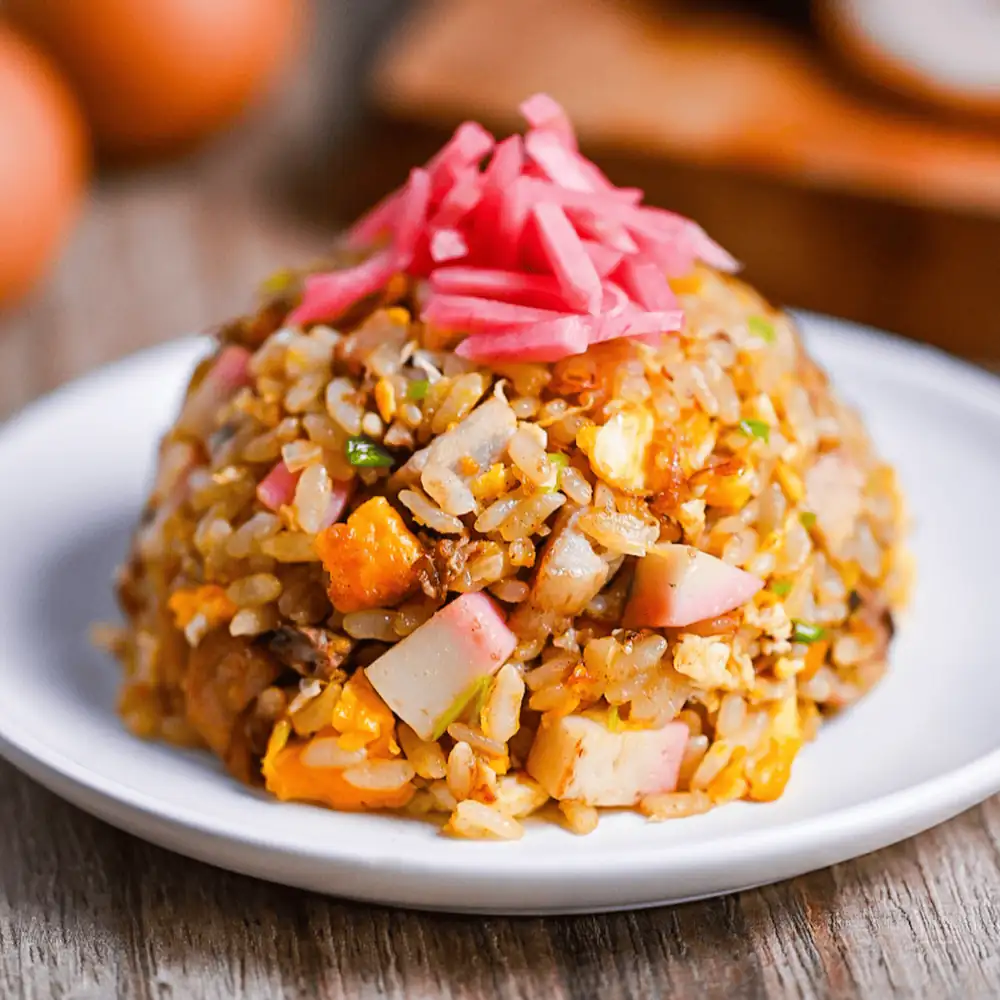
- Pack rice into a ladle or small bowl and flip it onto a plate. Garnish with red pickled ginger (benishoga) and serve. Enjoy!
“uses classic ramen ingredients such as pork chashu, kamaboko fishcake, egg and spring onion to make the ultimate fried rice! Ingredients ½ tbsp lard 2 eggs 200 g cooked Japanese short-grain rice (or Calrose”
Featured Comment
This dish was very easy to make.
This is a great dish to make when using leftover rice and whatever you have in your refrigerator. ★★★★★
Why does ramen shop chahan in Japan taste different? It’s not the shoyu ramen or miso ramen sitting beside it. After many years of attempts, I finally cracked the code.
And it wasn’t fancy technique or expensive equipment. This chahan recipe will bring ramen restaurant flavor home.
CHahan
- What is it? 15-minute ramen shop-style chashu chahan
- Flavor profile: Clean but punchy pork umami, light wok smokiness, fluffy egg, and chewy-short rice grains.
- Why you’ll love this recipe: Designed to close the “restaurant vs home” flavor gap by stacking rendered pork fat, chashu tare reduction and chicken bouillon for ramen-shop depth without commercial equipment.
- Must-haves: Pork chashu (or alternatives), Lard (rendered pork fat), Chinese-style chicken bouillon powder
- Skill Level: Easy one-pan stir-fry
- Freezer Friendly? Yes!
Summarize & Save this content on: Chahan (チャーハン) is Japanese-style fried rice, adapted from Chinese chǎofàn (炒飯) and now a core dish in chūka ryōri (Japan’s Chinese-inspired cuisine).
It is made by stir-frying cooked, usually short-grain Japanese rice over high heat with egg and small pieces of meat such as chashu pork. Chahan is similar to Yakimeshi but differs because chahan is rooted in chūka ryōri and Chinese-style wok frying, often using lard or rendered pork fat and a touch of ramen-style seasoning, while yakimeshi leans more toward Japanese home-cooking language and can be cooked in a regular frying pan with slightly different seasoning balances. In most ramen shops you’ll see “chahan” on the menu when the style is clearly Chinese-influenced fried rice, even in regions where the everyday word for fried rice at home might be yakimeshi.
- Cooked Japanese short-grain rice: This is your everyday Japanese short-grain white rice (uruchimai). You can use any Japanese short-grain or “sushi rice (Calrose)” sold at the Asian aisle of regular supermarkets.
- Lard: Lard is rendered pork fat, a creamy solid fat that melts into a clear, silky oil. In this chahan recipe it’s the non-negotiable flavor engine. It coats every grain so the chashu and chicken bouillon umami taste deep, rounded, and unmistakably “ramen-shop” instead of home-style.
- Chashu pork: Chashu is Japanese-style braised pork (usually belly in ramen shops) simmered in a soy-based marinade until it’s tender, deeply seasoned, and easy to slice or cube. In this chahan recipe it pulls double duty: the juicy pork pieces add satisfying chew while the clinging chashu marinade and rendered fat seep into the rice, creating that layered, ramen-shop umami you’ve been chasing.
- Japanese short-grain rice: Calrose is the closest swap and will behave almost the same, while Thai jasmine or basmati (Indica) will give you an easier separated texture but less of that chewy, Japanese chahan bite.
- Japanese leek (naganegi): You can use the white part of regular leeks or a scallions.
- Pork chashu: The best backup is fatty, thick-cut bacon cut into small cubes, which gives you a similar richness and pork fat but with a smokier, saltier edge. Just hold back slightly on the added salt. Cubed pork belly works too.
- Kamaboko fish cake: It can be swapped for narutomaki or any plain Japanese fish cake. If you leave it out entirely the chahan will still be delicious, but you’ll miss a bit of color and that nostalgic ramen-shop fish cake note.
- Chashu marinade: Mix a quick sauce with tsuyu, sake, mirin, a splash of water, grated ginger and garlic, plus a pinch of sugar. It won’t be quite as meaty, but it gets you very close to the same glossy, umami coating this chahan recipe is built around.
- Red pickled ginger (benishoga): It’s purely a garnish here, so you can skip it completely without harming the dish, or swap it for a little finely sliced green onion for a fresh pop on top.
Have trouble finding Japanese ingredients? Check out my ultimate guide to Japanese ingredient substitutes!
Before you start (Mise en place): Small-dice chashu and kamaboko, finely dice the white leek. Pre-measure marinade, salt, white pepper, and chicken bouillon powder within arm’s reach.
High-heat stir-frying moves fast, so mise en place preserves texture and umami. i.
Loosen cooked short (or medium)-grain rice. If chilled, microwave just until warm and pliable, then fluff.
This re-gelatinizes starch so grains coat evenly, while de-clumping increases surface area for quick moisture evaporation. Aim for steamy, not wet.
If tacky, spread on a plate 2-3 minutes to dry slightly before frying. ii.
Crack eggs into a bowl and lightly beat until streak-free, or plan to crack directly into the wok. i. Heat the wok until a thin wisp of smoke appears, then melt lard and swirl to film.
Lard supplies porky aroma and a stable medium for Maillard browning. i.
Add the eggs and stir constantly, forming glossy, soft curds. Stop once half cooked with a texture like runny scrambled egg.
Half-set eggs create a thin film that keeps grains separate and glossy. i. Add the rice, folding and chopping to coat every grain with egg and fat.
Keep the sizzle lively! This drives moisture evaporation and light Maillard aromas without steaming. If clumps resist, spread in a thin layer for 20-30 seconds, then toss again.
ii. Warmed rice separates faster than fridge-cold.
If you start cold, extend dry-frying by 30-45 seconds. i.
Add diced chashu, kamaboko, and the white leek. Stir-fry until edges pick up light golden spots and the pork perfumes the wok. If the sizzle dies, you’ve overcrowded.
Push some rice up the sides to create hotter zones, or remove a few teaspoons until the heat rebounds. Brief rendering from chashu adds savory lipids that help seasoning cling.
i. Sprinkle salt (≈1% of the rice), white pepper, and chicken bouillon over the surface.
Pour chashu marinade along the wok’s hot sides to flash-reduce, then toss so a thin glaze clings to each grain. If liquid pools, spread briefly to evaporate, then retoss.
Chicken bouillon powder varies by brand. My brand is 1 tsp per 200 ml, so check the label and if yours is more concentrated (e.g., 1 tsp per 300 ml or 1 cup), use touch less to avoid oversalting, and if it’s less concentrated, use a little more (and adjust to taste).
If you didn’t make your chashu from scratch then of course you won’t have the leftover marinade. Make a substitute by mixing 1 tbsp tsuyu sauce, 1 tsp sake, 1 tsp mirin, 1 tsp water, ½ tsp grated ginger, ½ grated garlic, and a pinch of sugar.
ii. Taste and fine-tune salt or pepper now! i.
Stir-fry 1-2 minutes, alternating tosses with brief spreads to let steam escape. Proper moisture migration yields grains dry outside, tender within, and a gentle toasty aroma.
If it turns mushy, stop adding anything and raise heat. Leave rice in a thin layer 20-30 seconds, then toss.
i. Pack the fried rice into a ladle or small bowl, press lightly, and invert onto a plate to form a neat dome.
Top with benishoga and serve immediately.
- Preheat the wok until a faint wisp of smoke, then melt lard.
- Add eggs first and stop at soft-set, then add rice. Egg fat emulsifies onto grains for glossy separation, fully setting first gives dry curds and clumps.
- Keep batches to 200-250 g (especially on IH) and maintain a steady sizzle. It protects pan temperature so steam escapes, overcrowding steams the chahan soggy.
- Pour chashu marinade along the wok’s hot sides and let it bubble 5-10 seconds, then toss. Concentrates umami into a clingy glaze.
- Taste hot just before plating and correct salt/pepper/umami.
With these simple tips in mind, you’re set for success every time you make chahan. Fridge: Store up to 1-2 days in a shallow, airtight container. Grains will firm from starch retrogradation and pork fat will solidify.
Cool quickly and refrigerate within 2 hours to limit condensation. Freezer: Recommended. Freeze same day in flat, single-serve portions in airtight freezer bags, pressing out air to prevent freezer burn.
It keeps ~1 month. Spread thin for rapid chilling so rice reheats fluffy rather than wet. Meal Prep: Prep components: cook rice, cool fast, then fridge/freeze plain.
Pre-diced chashu/kamaboko and pre-mix the seasoning blend. Reheating: Microwave covered until the center is steaming hot (75℃ (167°F)), then dry-fry 30-60 seconds in a hot wok with 1 tsp lard/cooking oil to re-crisp and re-glaze (dry heat > steam heat).
Toss just until surface moisture evaporates and the rice smells toasty and looks glossy. Can I use freshly cooked rice instead of day-old rice for chahan?
You can, but you need to treat it differently to avoid mushy texture. Cook the rice on the firm side, then spread it out in a thin layer and let steam escape for 10-15 minutes so surface moisture evaporates before stir-frying.
This helps the starch retrogradation and drying you’d normally get overnight and keeps the grains from clumping. How do I keep my chahan from turning soggy or mushy?
The big three culprits are wet rice, low heat, and over crowding the pan, all of which block moisture evaporation. Use properly dried or cooled rice, preheat your wok until it’s lightly smoking, and keep the batch around 200-250 g so the rice fries instead of steaming.
Add liquid seasonings in thin streams and let them reduce on the pan’s edges, not pool at the bottom. Can I make this chahan without a wok or on an IH/electric stove? Yes, use a heavy large skillet and cook in smaller batches so the pan temperature stays high.
On IH or weaker burners, give the pan extra preheat time, then add lard, eggs, and rice quickly so you don’t lose heat. The goal is the same “dry heat” environment you’d get from a wok: constant sizzle, light browning, and fast moisture loss.
- Takikomi Gohan (Mixed Rice)
- Ochazuke (Japanese Tea on Rice)
- Yakiniku Rice Burger
- Pork-Wrapped Rice Balls
Hungry for more? Explore my Japanese rice recipes to find your next favorite dishes! The ingredient brands and tools I trust are in my Japanese pantry guide and my cooking tools guide.
Can’t find certain Japanese ingredients? See my substitution guide here.