Easy Gyudon (Sukiya-Style Japanese Beef Bowl)
While visiting Japan with my partner last year, sukiya became a breakfast staple for us, upon returning to Australia the lack of a good gyudon became depressingly clear.. then I discovered this recipe. it is almost a perfect recreation. you are a god among men, thank you so much.
- ½ onion (large, yellow or white)
- 150 g thinly sliced beef (paper-thin (1-3mm), short-plate is the best option)
- 2 portions cooked Japanese short-grain rice
- red pickled ginger (benishoga) (optional topping)
- Japanese chili powder (shichimi togarashi) (optional topping)
- 300 ml dashi stock
- 2 tbsp Japanese dark soy sauce (koikuchi shoyu)
- 2 tbsp mirin
- 2 tbsp sake (or dry white wine)
- 1 ½ tbsp light brown sugar (or other sugar)
- 1 tsp Japanese light soy sauce (usukuchi shoyu) (or use regular soy sauce if unavailable)
- 1 tsp grated ginger root (or ginger paste)
- ¼ tsp grated garlic (or garlic paste)
- ½ tsp Chinese-style chicken bouillon powder
- Cut ½ onion into wedges.
- Take a saucepan and add all the broth ingredients (300 ml dashi stock, 2 tbsp Japanese dark soy sauce (koikuchi shoyu), 2 tbsp mirin, 2 tbsp sake, 1 ½ tbsp light brown sugar, 1 tsp Japanese light soy sauce (usukuchi shoyu), 1 tsp grated ginger root, ¼ tsp grated garlic and ½ tsp Chinese-style chicken bouillon powder). Mix well and place on the stove over a medium heat.
- Add the onion to the broth and bring to a boil. Once bubbling, lower the heat slightly and simmer until the onions are softened to your preference.
- Add 150 g thinly sliced beef to the broth and continue to simmer until cooked through.
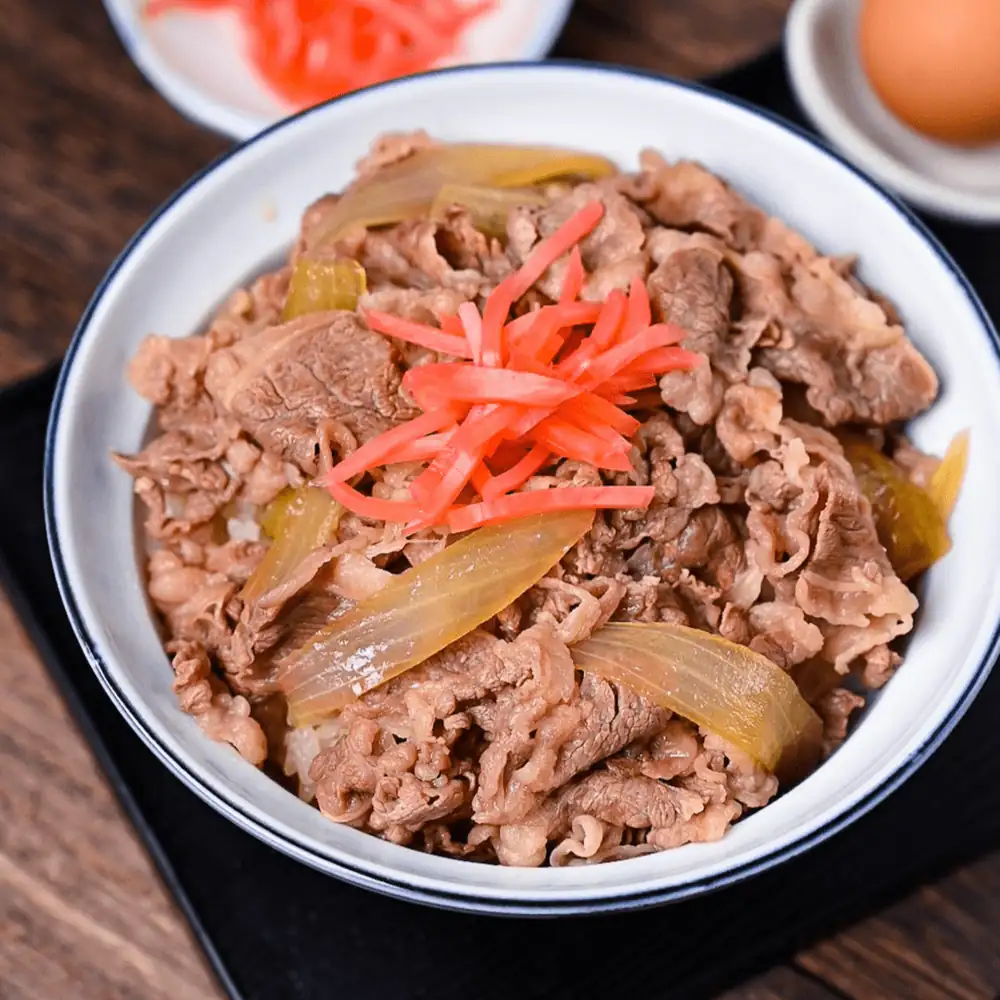
- Divide 2 portions cooked Japanese short-grain rice into serving bowls and top with the beef and onions. Drizzle 1-2 tbsp of the broth over each bowl.
- Top with red pickled ginger (benishoga) and Japanese chili powder (shichimi togarashi). See note for more topping ideas. Enjoy!
Featured Comment
While visiting Japan with my partner last year, sukiya became a breakfast staple for us, upon returning to Australia the lack of a good gyudon became depressingly clear.. then I discovered this recipe. it is almost a perfect recreation. you are a god among men, thank you so much.
★★★★★ Can you still taste that Sukiya gyudon? The sweet-savory sauce, the tender beef that melted on your tongue?
You tried tonkotsu ramen, katsudon, gyoza, and yakitori, but perhaps nothing brings back that moment like gyudon does. Good news?
This 15-minute homemade version creates the same flavor that made you return to Sukiya three times during your trip. No special skills required.
Easy Gyudon
- What is it? 15-minute Sukiya-style gyudon for when you miss Japan a little too much..
- Flavor profile: Umami-rich, Sweet-savory, Comforting
- Why you’ll love this recipe: This is the recipe for people who can still taste a specific bowl in their mind and finally want to stop searching for something that comes close.
- Must-haves: Thinly sliced beef, Dashi-based broth ingredients (dashi + soy sauce + mirin + sugar), Japanese short-grain rice or Calrose
- Skill Level: Easy
Summarize & Save this content on:
Gyudon (牛丼) is basically Japan’s go-to comforting fast food: silky beef, sweet onions, and a glossy broth poured over warm rice. It’s the bowl you turn to when you’re exhausted, hungry, and just need something familiar.
The name is simple: gyu for beef, don for donburi rice bowl. Saying that, there is also a pork rice bowl called “butadon.”
I get it, when I lived in England, I missed those more than I expected. You never realize how much a simple beef bowl can anchor you until it’s suddenly out of reach.
If you want to recreate that exact fast-food-but-magical taste at home, this gyudon recipe keeps everything beginner-friendly while staying true to the flavors you remember.
- Dashi stock (Japanese soup base): For this fast-food style gyudon, instant dashi is actually your friend as it captures that bold, savory taste like fast food chain. Look for dashi granules or tea bag-style dashi packs in the Asian aisle. Homemade dashi is too clean and sophisticated for this purpose.
- Chinese-style chicken bouillon powder: Any Asian-style chicken bouillon powder works fine, but the strength varies by brand. My brand is 1 tsp per 200 ml, so check the label and if yours is more concentrated (e.g., 1 tsp per 300 ml or 1 cup), use touch less to avoid oversalting.
- Beef (thinly sliced with some fat): You want beef that’s sliced thin enough to cook quickly and tender enough to soak up all that sweet-savory sauce. Look for “sukiyaki beef” or “shabu-shabu beef” at Asian markets, or ask your regular butcher to slice very thin. I will explain more about the best cuts in later section.
- Sake: Use dry white wine instead. I’ve tried it, and it works just as well. No need to make a special trip to find sake if you don’t already have it.
- Japanese soy sauce: If you can’t find Japanese brands like Kikkoman, Chinese light soy sauce works in a pinch. Just avoid Chinese dark soy sauce, which is too thick and sweet for this dish.
- Benishoga (pickled red ginger): Don’t stress if you skip this. It’s a traditional topping, but the dish is complete without it. Try chopped green onions or similar instead for that fresh, bright contrast against the rich beef.
Have trouble finding Japanese ingredients? Check out my ultimate guide to Japanese ingredient substitutes!
The star of gyudon is, of course, the beef. But here’s something that might surprise you: the major Japanese gyudon chains don’t use wagyu or even Japanese beef for their bowls.
They use imported beef, which means you can absolutely recreate that authentic Sukiya taste with beef available in the U.S.
What the Gyudon Chains Actually Use
Note: Sukiya has the most locations in Japan, followed by Yoshinoya, then Matsuya.
What is Short Plate? Short plate (also called beef plate) comes from the belly area of the cow, just below the ribs.
It has the perfect balance of meat and fat that gives gyudon its signature tender texture and rich flavor when simmered in that sweet-savory sauce. This is the cut that creates the taste you remember.
Your Best Options
- Most authentic approach: Buy short plate, flank steak, or skirt steak and partially freeze it for 30-45 minutes until firm but not solid, then slice it very thin (about 1-3mm) with a sharp knife. If you have a butcher, ask them to slice it “paper-thin” or “shaved for hot pot.”
- Easier option: Look for pre-sliced beef labeled “for Hot Pot” or “Shabu Shabu” at Asian markets. It’s already the perfect thickness and saves you the slicing work.
- Most accessible option: Shaved steak sold for Philly cheesesteaks at your regular grocery store works surprisingly well. It’s thin, has good marbling, and you’ll find it in the meat section without needing a special trip.
For the closest match, grab thin-sliced short plate (or pre-sliced hot-pot/shabu-shabu beef) and keep slices paper-thin.
If that’s not available, flank, skirt, or shaved beef are perfectly valid swaps. If you prefer to watch the process in action, check out my YouTube video of this Gyudon recipe for a complete visual walkthrough! i.
Cut the yellow (or white) onions into thick wedges by slicing them from pole to pole (rather than into rings) and gently break the layers apart. Cutting onions radially rather than into rings helps them cook more uniformly and prevents them from becoming mushy too quickly.
i. Add the dashi stock, Japanese soy sauce, mirin, sake, light brown sugar, Japanese light soy sauce, grated ginger, grated garlic, and Chinese-style chicken bouillon powder to a medium saucepan and mix over medium heat.
Light soy sauce has a slightly higher salt content and brings a cleaner, saltier flavor, while also helping to keep the broth from becoming too dark. Dark soy sauce, on the other hand, adds depth, color, and a bit of sweetness.
Using both helps balance flavor and appearance. That said, it’s a subtle difference in this particular recipe, so if you only have dark soy sauce (regular Japanese soy sauce) on hand, it will still work just fine.
- If you like sophisticated flavors, try making your own dashi stock with dried bonito and kelp.
- If you’re looking for a clean yet convenient option, dashi packets are great.
- And if you want to add some junky fast food flavor, dashi granules are a good choice.
Don’t stress too much – gyudon is forgiving, and any of these options will make delicious gyudon. Choose what fits your time constraints and ingredient availability. This combo of ingredients makes the perfect umami-rich base for gyudon:
- Dashi stock: glutamic acid (pure umami)
- Soy sauce: salt and complexity
- Mirin & Sugar: balance with sweetness
- Ginger and Garlic: enhance the overall flavor profile without overwhelming
- Bouillon powder: creates the slightly “junky” flavor like Japanese gyudon chains
i. Add the prepared onion wedges to the simmering broth and bring to a gentle boil.
Once bubbling, lower the heat slightly to maintain a steady simmer until the onions soften to your liking, about 5 minutes or so. i.
Add the thinly sliced beef to the pan, separating the pieces as you add them to prevent clumping. ii. Continue to simmer just until the beef is cooked through, about 1-2 minutes depending on thickness.
The meat should still be tender. Overcooking is the most common mistake when making gyudon. The thin beef slices cook extremely quickly.
They need just enough heat to change color while remaining tender. Watch carefully and remove from heat as soon as the beef is about 90% cooked, as residual heat will finish the cooking process.
If you want to add a little extra refinement, you can try the “shimofuri (霜降り)” technique. Just briefly dip beef slices in boiling water for 15 seconds, then immediately transfer them to cold water. This removes excess blood and fat, giving you a cleaner flavor and keeping the slices from sticking together during cooking.
But we’re making fast food style gyudon today, so you don’t have to do this. i.
Divide the freshly cooked Japanese short-grain rice into serving bowls, filling them about 2/3 of the way up. Arrange the beef and onions on top of the rice.
Spoon 1-2 tablespoons of the flavorful broth over each portion, allowing it to soak into the rice. By the way, since gyudon broth always leaves leftovers, you can refrigerate or freeze it to make another bowl later, but do not pour all the broth over your rice or it will become overly soupy and lose the enjoyable texture.
ii. For the best eating experience, serve gyudon immediately while still hot. i.
Garnish with your favorite toppings. Red pickled ginger (benishoga) and Japanese chili powder (shichimi togarashi) are classic choices that add brightness and gentle heat to cut through the richness of the beef.
While classic toppings are definitely delicious enough, Sukiya offers the following topping options:
- Kimchi
- Chopped green onion
- Melted cheese
- Ponzu on grated daikon radish
- Okra
- Pasteurized raw egg/egg yolk (you can also use onsen tamago or soft-boiled egg)
- Salad (with broccoli, shredded cabbage and sweetcorn)
- Beef thickness matters: Look for beef sliced 1-3mm thick (paper-thin).
- Don’t overcook the beef: Cook just until it changes color. The residual heat will finish cooking it.
- Separate beef slices: As you add the beef to the broth, gently separate the slices to prevent them from clumping together.
- Control your heat: Once the broth boils, reduce to a gentle simmer. Aggressive boiling will toughen the meat.
- Hot rice is essential: Always use freshly cooked, hot Japanese rice. Cold rice won’t absorb the flavors properly.
With these simple tips in mind, you’re set for success every time you make gyudon. Fridge: Store leftover gyudon in an airtight container for 1-2 days. For best results, keep the beef and onion mixture separate from the rice to prevent sogginess.
Freezer: Not recommended. Meal Prep: Make the broth (without beef or onions) up to 3 days ahead and refrigerate it in an airtight container.
Keep cooked rice in the freezer in portions. When you’re ready to eat, simply reheat the broth, add fresh beef and onions, and simmer for 5-7 minutes while your rice warms up.
Reheating: Reheat gently on the stovetop over medium-low heat, stirring occasionally and adding a splash of water or broth if it looks dry. The beef is already thin and fully cooked, so you’re just warming it through, not cooking it again.
I can’t find mirin. What should I use instead without ruining the Japanese flavor?
If you can’t get true mirin, use a mix of sake + sugar or white wine + sugar to mimic that gently sweet, slightly boozy note. What if I don’t have thinly sliced Japanese “hot pot” beef?
Can I still make this gyudon? Totally.
You can use shaved steak (often sold for cheesesteaks) or partially freeze a cut like short plate, flank, or skirt steak and slice it as thin as you can. Ask the butcher for “shaved” or “paper-thin for hot pot” if that feels easier.
Can I use a different type of onion if I don’t have yellow onions? Yellow onions are ideal because they get sweet and soft when cooked, which balances the salty sauce perfectly. Sweet onions (like Vidalia) work great too.
Avoid red onions, they stay too sharp and crunchy. White onions are okay but can be a bit strong.
- Yoshinoya Copycat Pork Rice Bowl (Negi Shio Butadon)
- Saizeriya Milano Doria
- Gindaco’s Takoyaki
- Bikkuri Donkey Hamburger Steak
Hungry for more? Explore my Japanese restaurants copycat recipe collection to find your next favorite dishes! The ingredient brands and tools I trust are in my Japanese pantry guide and my cooking tools guide.
Can’t find certain Japanese ingredients? See my substitution guide here.