How To Make Caramelised Onions Like A Pro
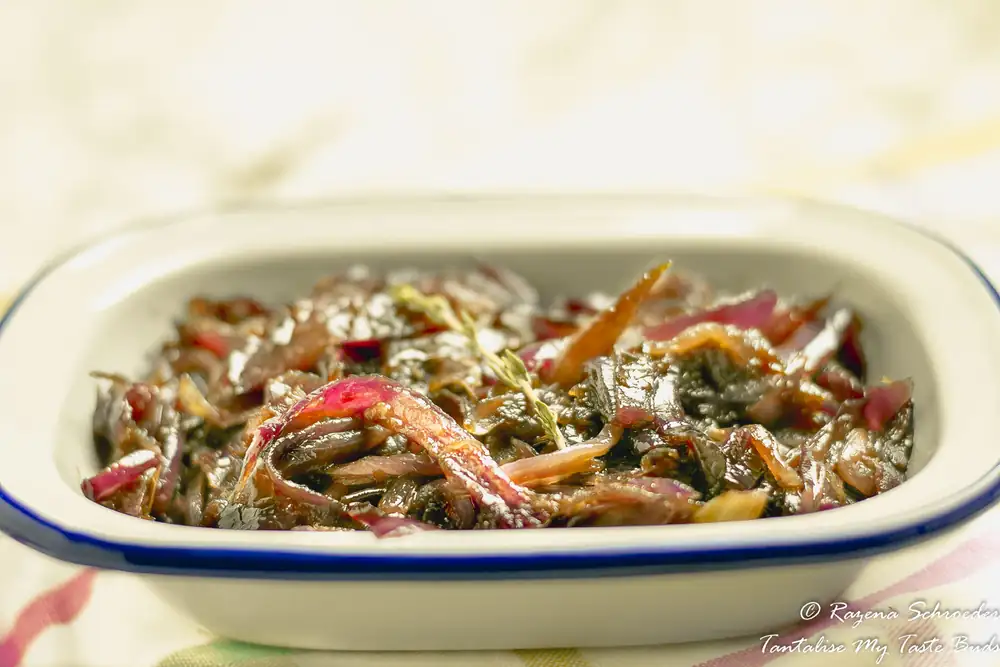
Caramelised onions are a versatile addition to savory dishes and add a deep flavour and subtle sweetness.
- 500 grams onion (2 large onions, peeled)
- 15 ml extra virgin olive oil (approximately 1 tablespoon)
- 15 ml butter (approximately 1 tablespoon)
- 1 clove garlic
- 1 ml salt (approximately 1/4 teaspoon)
- 2.5 ml thyme leaves (approximately 1/2 teaspoon)
- 15 ml granulated sugar (approximately 1 tablespoon)
- 30 ml balsamic vinegar (approximately 2 tablespoon)
- 30 ml water (optional)
- Cut both onions in half length wise and remove the roots.
- Place the first onion half flat on the cutting board and cut even slices from the stem end to the root end, about 5mm wide. Repeat this with the other three onion halves.
- Heat the extra virgin olive oil and butter in a high sided pan and add the onion slices when it starts to sizzle.
- Reduce the heat to medium-low and cook gently for 20-25 mins. Check and stir every few 3-5 minutes to ensure that it does not catch and burn.
- At this point add the crushed garlic, salt and thyme leaves and cook another 5 mins if you wish to use it in soups and quiche. It will be a deep golden blonde color.
- For a deeper flavored and softer caramelised onion, cook for another 15-20 minutes then add the sugar and balsamic vinegar.
- Keep cooking the caramelised onions for another 5 minutes on low heat until the sugar has dissolved and the balsamic vinegar has absorbed, then remove from the heat.
- If the onions start sticking then add up to 30 ml water to deglaze the chewy bits and cook off the water.
It is easy to make although it requires time and patience for the best result. Caramelised onions can be used as a basis for caramelised onion jam or caramelised onion chutney, with the addition of spices, sugar and vinegar. Many Cape Malay home cooks already know how to make caramelised onions because as soon as we are old enough to stir the pot, we are taught how to how to saute onions and garlic in preparation for a bredie.
Caramelised onion gravy forms the basis of all Cape Malay bredie recipes and makes for the deeply flavorful and multi-layered stews, curries and smoortjies (quick braise) that we learnt to make from our mothers, aunts and grandmothers. My mother was of the opinion that if recipes with caramelised onions are made correctly, the stews and curries will be a rich deep dark brown with a depth of flavor that is absent from barely blonde sautéed onions and garlic. The caramelisation of the sugars in the onions add a dimension that you can’t really replicate with any other ingredient.
My first memory of tasting caramelised onions were my mother’s Gesmoorde Eiers. Literally translated it means Smothered Eggs. The actual usage is Braised eggs; perfectly caramelised onions smothered in soft scrambled eggs, garlic and green chili.
We also love fried calf liver and caramelized onions with balsamic vinegar for weeknight meals. Perfectly caramelised onions are wonderful in these Caramelised onion, fig and brie tart appetisers or week end meals like toasted masala steak sandwiches (more garlic, ginger and a sprinkling of turmeric) or homemade burgers.
Any type of onion can be used to make caramelized onions and I tend to use yellow, brown or red onions. In my experience it is a myth that you can make quick caramelised onions, because all you will get is slightly colored onions with lots of burned ends.
- Slice the onions evenly and not too thin or too thick, to ensure even cooking and prevent them burning easily. For best results they should be sliced between 3mm to 5mm (1/8″ -1/5″).
- Use the right pan to cook caramelised onions, preferably a large one with high sides to prevent the onion slices flipping onto the cook top. A small pan or wok will result in steaming and a potentially mushy end result. For 500 grams onions the best pan would be 30cm (12″) in diameter.
- Use a combination of oil and butter for cooking as butter gives a delicious flavor but the dairy solids tend to burn more easily.
- Slow cooking on low or medium-low heat will allow the sugars to slowly caramelize and is preferable to shorter cooking at high heat. It takes much longer but gives a more uniform result with deeper flavor and little or no burning or scorching.
- Regular stirring of the onions prevents burning and ensures even cooking. For low heat check and stir every 5-10 mins and more frequently for medium-low heat.
- Deglaze the pan and incorporate the sticky film on the bottom or any brown bits. Water, stock or vinegar can be used for this. If you use a non-stick pan there may not be much of the sticky stuff (sad but true and the only time a stainless steel or cast iron pan rocks!)
- Cook the onions until they are dark brown for a rich caramelised onion flavor. Golden blonde and translucent onions will be cooked but not fully caramelized.
For a more spicy condiment on sandwiches or with stews and curries you may want to try this Spicy Kumquat pickle achar.
Disclaimer: Nutritional information for the recipe is an approximation and varies according to the ingredients and products used. If you liked the recipe above please consider rating the recipe and leaving a comment below. Also keep in touch on Facebook, Twitter, Pinterest and Instagram for more updates.
Don’t forget to share the recipe with your family and friends and #tantalisemytastebuds if you share one of my recipes that you made on Instagram! Want more?