Gueddid Recipe
Gueddid or qaddid is Moroccan dried meat made by marinating strips of beef or lamb (though camel and turkey may also be used) and then hanging the meat to in the sun. As the meat dries, it loses anywhere from one-third to half of its weight in water and becomes hard to the touch with a much darker color. If sun drying …
- 8.8 lbs boneless, trimmed lamb or beef (best) shoulder or leg meat, (cut into strips at least 12" long and 1.5" thick)
- 5 oz. salt ((about 1/2 cup))
- 5.5 oz. coriander seeds
- 2 oz. cumin seeds
- 2 oz. caraway seeds (optional but my auntie loves it)
- 4 heads garlic, (unpeeled)
- 1/3 cup white vinegar
- 1/3 cup olive oil
- 1/2 cup water, (optional)
- Use a food processor or a pestle and mortar to make the spice rub. One by one, crush or coarsely grind the coriander seeds, cumin seeds and caraway seeds (if using). Set aside.
- Crush the unpeeled garlic cloves. Mix the garlic with the spices, salt, vinegar and water to make a paste. Rub the meat with this marinade. Be generous and make sure each bit of the meat is coated.
- Cover the marinated meat and place in the fridge for 48 hours. Every 12 hours or so (for a total of 3 or 4 times), take time to toss the meat around ton ensure even marinating.
- After 48 hours, remove the the strips of meat from the fridge and give them a last massage before drying with one of the following methods.
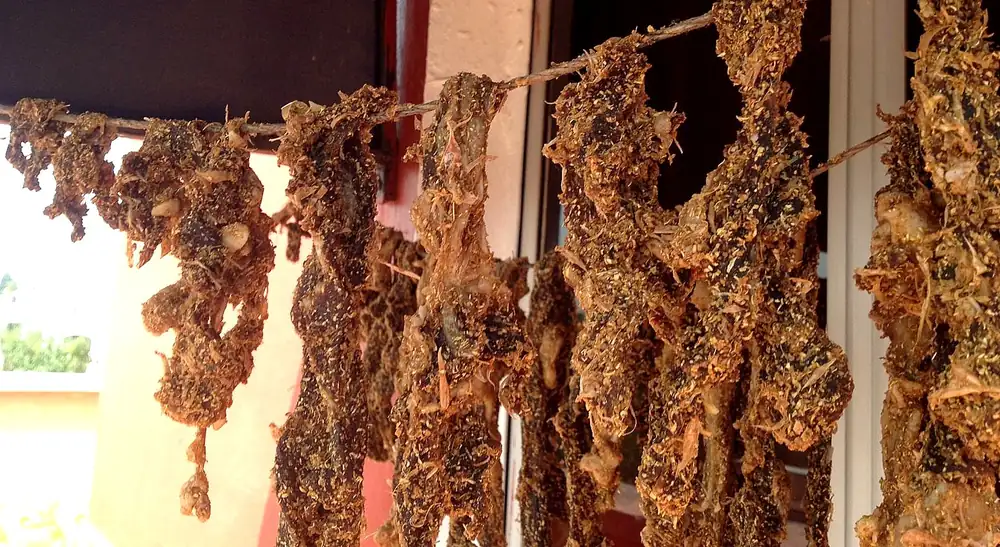
- Plan to hang the meat the beginning of a good sunny day as we know them in Morocco. You can do this on a clothesline in direct sun or under a covered window. It takes anywhere between 3 to 6 hot days minimum to have a dried gueddid, depending on the temperature/humidity.
- Clean the clotheslines with a wet towel. Hang single strips of meat side-by-side without overlapping, allowing some space between strips. Leave the meat outside under the sun as long as it's hot, hopefully for the whole day. An hour before sunset, wrap the meat with an appropriate clean cloth and bring it inside the house until the next day.
- The next day, repeat the same process of hanging the meat before mid-morning or when it feels like the temperature is rising, and then wrapping the meat and bringing it in before sunset. Continue repeating this process anywhere from 3 to 8 days, depending on how hot it is outside, until the meat is dry and darkened.
- The oven should be on a very low setting and ideally fan-assisted to distribute the heat evenly. You may need to work in batches. Spread the meat in a single layer directly on the rack. I suggest you start with 160° F (70° C) for anywhere between 8 to 12 hours. Turn the strips of meat occasionally and check after 8 hours by cutting through. (See below for how to check for readiness. Depending on the quality and the thickness of the cut, adjust the required time accordingly. )
- Alternatively, you can use a dehydrator and you set it accordingly. Check below how to know when the meat has turned to dried gueddid. Follow the same logic as mentioned above to check how the strip of meat looks from inside and how it feels overall.
- Gueddid is ready when the meat has shrunk after losing its water content. It will be ready when it will have a uniform dark color and its fibers would look as if they are packed long threads. It should become rubbery from inside and hard from outside. It should darken and should have lost any red or pink spot all the way through.
- It’s important that the gueddid strips thoroughly dry out for a better preservation.
- Dried meats of all sorts do develop a distinctive odor, so the gueddid may have a slight smell of rancidity due to the chemical reactions which would have occurred during the marinating and drying process. However, a very rancid odor is not a good sign.
- We used to keep gueddid in sealed clay jars or urns and place them in bit el 'aoula, a room to store anything related to food, which would be equivalent to a larder in our modern kitchen.Nowadays, we divide the strips of gueddid and store in plastic bags, which we keep in the freezer.
- Alternatively, any dry, air tight container away from light will be a perfect place to store the dried meat.
As ovens and thickness of strips might vary from one house to another, the drying times below should be taken only as a guideline. You will have to be the judge of how dry the strips are.Although gueddid is sometimes referred to as Moroccan jerky, it's never eaten as snack food and usually must be re-hydrated before long cooking in traditional recipes.
It is not re-hydrated, that said, when used to make khlii, a confit of preserved meat cooked in fat and olive oil.Allow two days for marinating the meat before drying. Cover the marinated meat and place in the fridge for 48 hours.
Every 12 hours or so (for a total of 3 or 4 times), take time to toss the meat around ton ensure even marinating. After 48 hours, remove the the strips of meat from the fridge and give them a last massage before drying with one of the following methods.
Plan to hang the meat the beginning of a good sunny day as we know them in Morocco. It takes anywhere between 3 to 6 hot days minimum to have a dried gueddid, depending on the temperature/humidity.
Leave the meat outside under the sun as long as it's hot, hopefully for the whole day. An hour before sunset, wrap the meat with an appropriate clean cloth and bring it inside the house until the next day. The next day, repeat the same process of hanging the meat before mid-morning or when it feels like the temperature is rising, and then wrapping the meat and bringing it in before sunset.
Continue repeating this process anywhere from 3 to 8 days, depending on how hot it is outside, until the meat is dry and darkened. I suggest you start with 160° F (70° C) for anywhere between 8 to 12 hours. Turn the strips of meat occasionally and check after 8 hours by cutting through. (See below for how to check for readiness.
Depending on the quality and the thickness of the cut, adjust the required time accordingly. ) Alternatively, you can use a dehydrator and you set it accordingly. Check below how to know when the meat has turned to dried gueddid. Follow the same logic as mentioned above to check how the strip of meat looks from inside and how it feels overall.
Dried meats of all sorts do develop a distinctive odor, so the gueddid may have a slight smell of rancidity due to the chemical reactions which would have occurred during the marinating and drying process. We used to keep gueddid in sealed clay jars or urns and place them in bit el 'aoula, a room to store anything related to food, which would be equivalent to a larder in our modern kitchen.Nowadays, we divide the strips of gueddid and store in plastic bags, which we keep in the freezer.