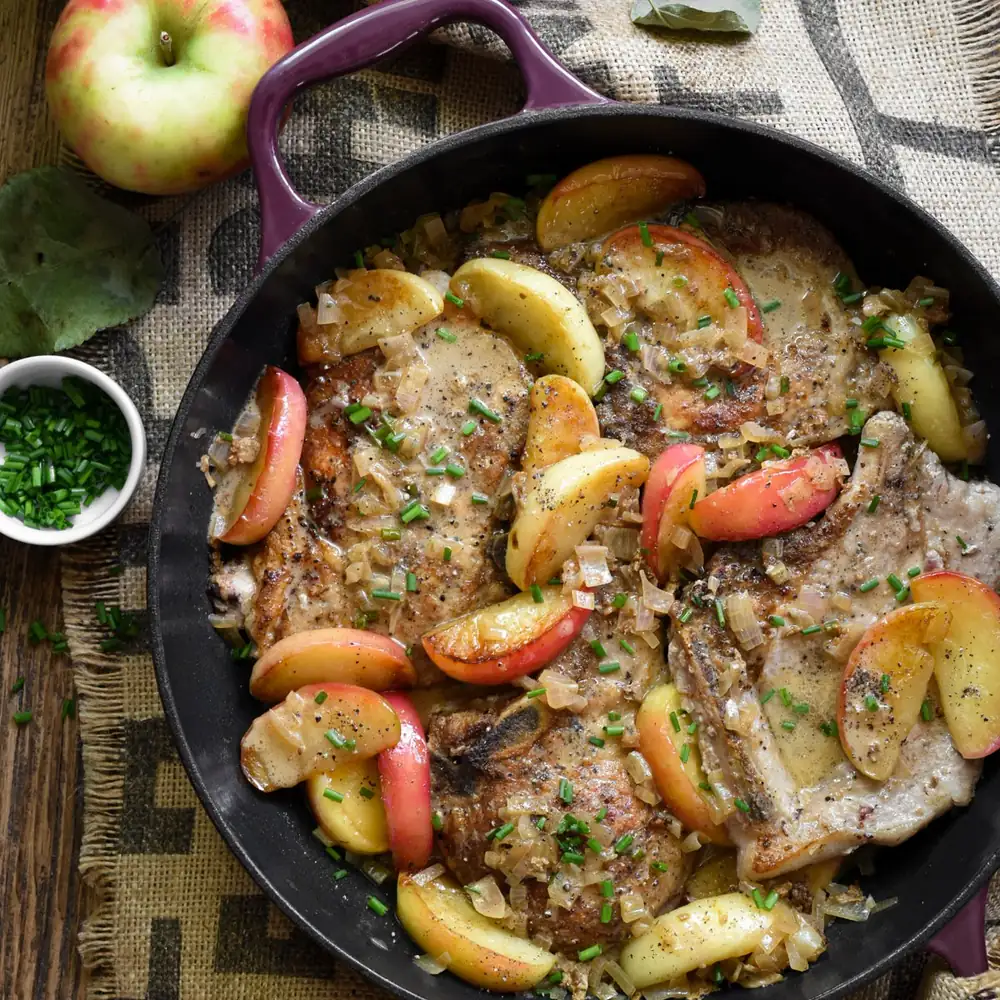
Pork Chops with Apples and Cider Sauce
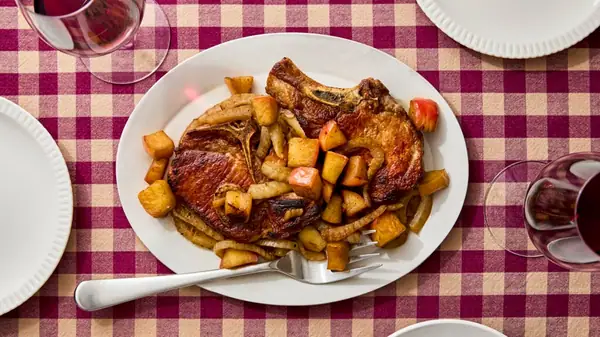
Pork chops, apples and cider collide in this typical dish from Brittany – a French region famous for its apple orchards and pig farms. These Pork Chops with Apples served in a cider-spiked creamy sauce are a favorite recipe amongst Brittany home cooks, as it’s a simple one-pan dish that boasts delicious sweet and savor…
It’s rustic, perfect for Fall and a great square meal for the whole family.
How to cook perfect pork chops
Because they can end up tough and dry if over-cooked, pork chops have a reputation for being difficult to cook – but I assure you they shouldn’t be. This recipe ensures the pork chops will be fully cooked and remain juicy, by adopting a 2-step process.
First, the pork chops are seared on the stove-top in butter until golden-brown. This step creates a nice caramelization all around, without cooking through the center.
Then, the chops are transferred into a hot oven to finish cooking. This second step, with a gentler heat, ensures the middle of pork chops can fully cook, before the outsides become overdone. At this point, I also highly recommend you use a food thermometer to check the internal temperature of the pork chops.
When they reach an internal temperature of 140-145°F (60-63°C), immediately take the pork chops out of the oven and transfer them onto a plate/cutting board. Cover them with foil, and the pork chops will continue to cook slightly. Using a food thermometer makes things very easy and basically foolproof – once the pork chops reach a 140-145°F (60-63°C) internal temperature, they are done.
For this recipe, I recommend you choose bone-in pork chops that are about ¾-1 inch (1.9-2.5cm) thick. These thicker chops, with the bones, will also be less-likely to be overcooked.
If you choose boneless and/or thinner pork chops, you will be more likely to overcook them. Lastly, make sure you take the pork chops out of the fridge at least 1 hour before cooking them and salt them generously.
You want to allow some time for the salt to penetrate the meat and for the chops to warm up close to room temperature.
Choose baking apples
Just like most baking or cooking projects that include apples, it is best to use baking apples for this recipe. Compared to eating apples, baking apples aren’t as juicy and won’t turn mushy once cooked.
Good baking varieties I recommend are Honey Crisp, Jonagold, Braeburn, Mutsu, Pink Lady and Northern Spy. The only exception would be for Granny Smith apples. While Granny Smith are usually my go-to cooking/baking apple variety, I find them to be slightly too tart for this recipe.
I recommend sticking to red-skinned varieties which are generally sweeter and will caramelize better. The apples are to be cut in big wedges and pan-fried in butter until soft inside and caramelized outside.
Depending on the apple variety chosen, some may soften more quickly than others, so just make sure you keep an eye on the apples when you cook them. You can check on their doneness by poking a sharp knife in an apple wedge – it should feel soft but not mushy.
Stop cooking the apples when they are tender enough but not breaking apart yet. For the final dish photos, here, I used Honey Crisp apples and the result was perfect. They held their shape very well and caramelized nicely.
Hard Apple Cider
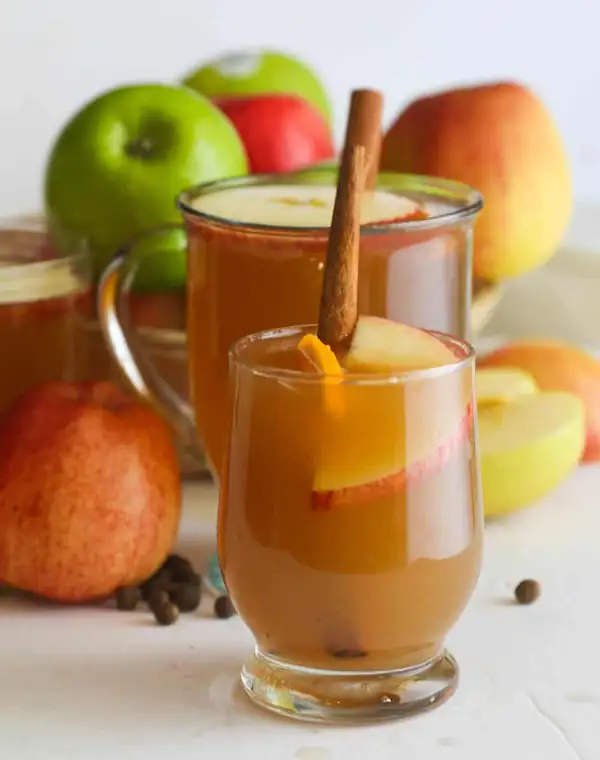
For this recipe, prefer a dry hard apple cider – not sweet/off-dry. You can buy a can from a grocery store or ideally opt for dry hard cider from a local apple farm.
Note that the alcohol from the cider will completely evaporate while simmering. I don’t recommend using a non-alcoholic cider for this recipe, as they are often too sweet and won’t create as nice a depth of flavor for the sauce.
- Who: Ingredients For · Cider Sauce