Aloo Methi Recipe (Potato & Fenugreek Leaves Sabzi)
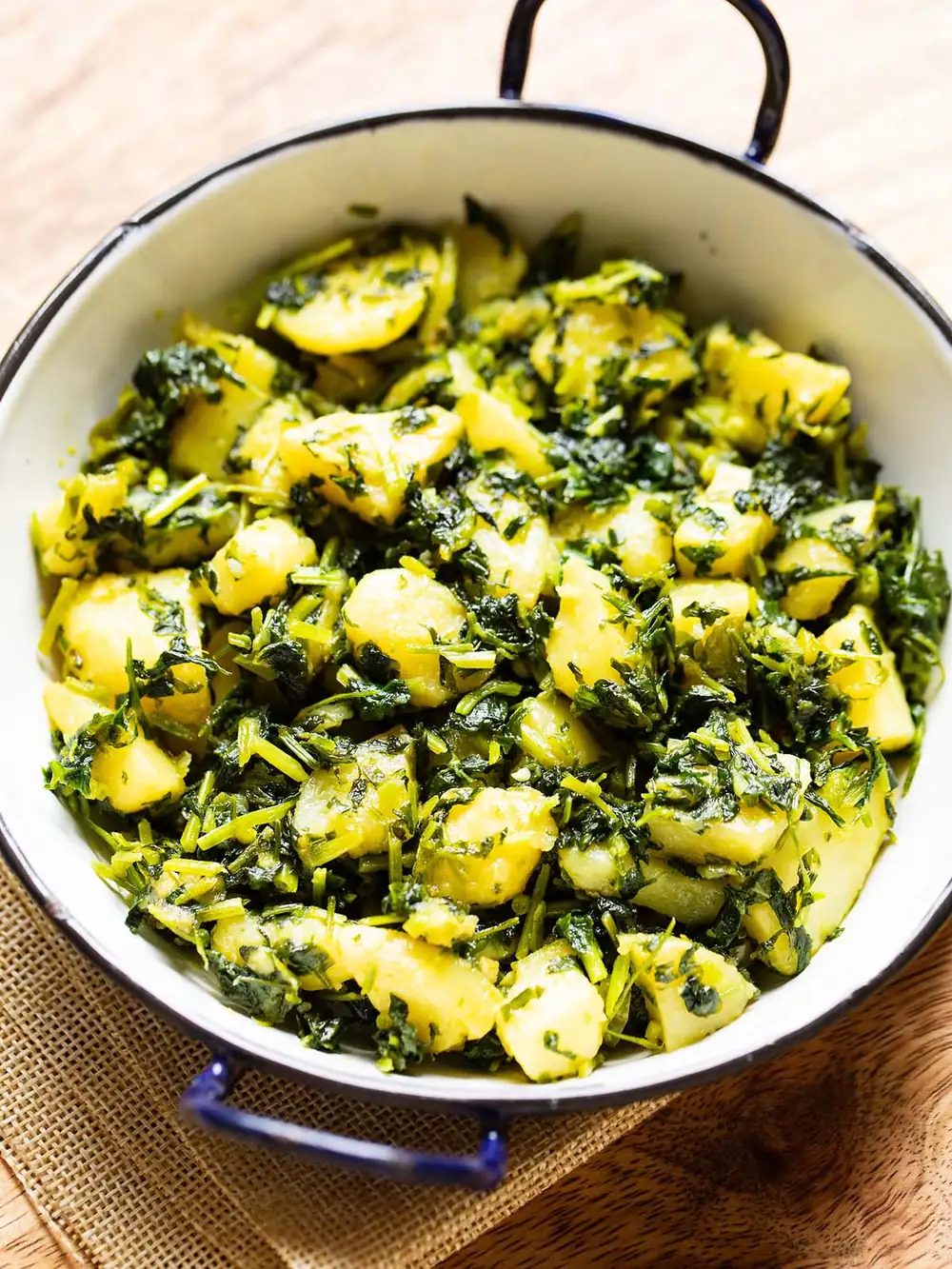
Aloo Methi is a classic Punjabi side dish made with tender potatoes and fresh fenugreek leaves sautéed in mustard oil with simple spices.
- 3.5 to 4 cups fenugreek leaves (- chopped, tightly packed) - fresh methi leaves)
- 250 grams potatoes (or about 3 to 4 medium sized or 12 to 15 baby potatoes)
- 1 teaspoon green chilies (- chopped or 1 to 2 green chillies, or ¼ to ½ teaspoon red chili powder or cayenne pepper)
- 2 tablespoons mustard oil (or any neutral oil or vegetable oil)
- 1 pinch asafoetida ((hing))
- salt (as required)
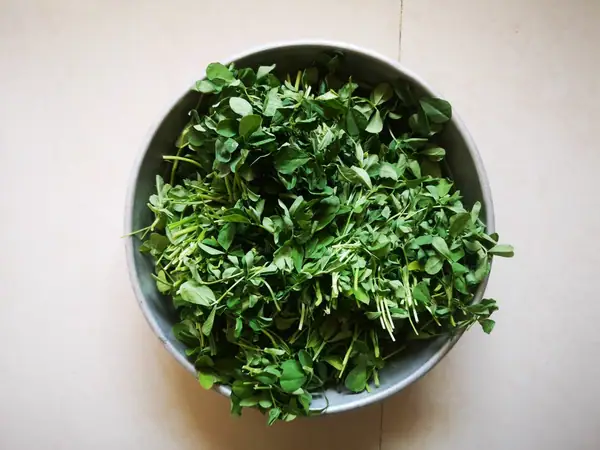
- Remove the leaves from the stems of the methi/fenugreek leaves. This can take a good amount of time, and I like to prepare a large batch at once to keep in the fridge for about a week or so and have ready as needed.
- After plucking the leaves rinse them thoroughly in cool running water in a large bowl. Firstly soak the leaves in enough water for a few minutes. Add some vinegar and baking soda to the water. This gets rid of pesticides if any.
- Swish and move them with your hands, so that they are cleaned thoroughly of any soil or mud clinging on the stems. This needs to get washed off. See that the leaves are clean and devoid of any muddy particles on them.
- Drain all the water and soak them in fresh water for a few more minutes. Drain the water. Repeat this process once or twice. Finally, drain all the water.
- Now chop the fenugreek leaves. You could do this with a knife or chop them in a food processor. While chopping in the food processor, make sure you do not chop it to fine or make a paste of it.
- Rinse, peel and chop the potatoes into small cubes or squares.
- In a heavy skillet, kadai or pan, heat up the oil. Add the potatoes first.
- Saute the potatoes for some minutes on medium-low to medium heat until they start looking crisp and are lightly browned from the edges.
- Add the chopped green chilies and asafoetida. Stir. If you don't have green chilies, add about ¼ to ½ teaspoon of red chili powder or cayenne pepper.
- Now add the chopped methi (fenugreek leaves). Mix very well.
- Add salt. Give a good stir, and let the aloo methi continue to cook for a couple of minutes uncovered on medium-low to medium heat.
- When the methi begins to produce water, reduce the heat to low and cook for 5 to 6 more minutes on a low to medium-low heat.
- The liquid should be totally evaporated in the dish and the fenugreek leaves will become completely wilted.
- Sauté for a couple more minutes to get the potatoes and methi nice and dry.
- If your potatoes are not quite cooked when the liquid has dried up, add a tablespoon or so of water and continue to cook.Later, if you see any extra water in the pan, then simmer until all the water is dried up.
- Once cooked, you can either mix in a bit of butter for extra rich flavor or serve plain as-is.
- Serve aloo methi with Indian breads like paratha, roti, naan. You could even make this dish as a side vegetable with your Indian main course.
- Usually there won't be any leftovers. If there are leftovers then place in an air-tight container in the refrigerator. Reheat by simply warming up in a small pan or skillet sprinkling few drops of water.
This dry sabzi has a slightly bitter, earthy flavor balanced by the potatoes and spices. It pairs well with roti or paratha and makes a simple everyday Indian meal.
About Aloo Methi Recipe
Aloo methi is a simple sautéed potato (aloo) dish made with fresh fenugreek leaves (methi). It is a dry sabzi where the flavor of methi really stands out.
Here I’m sharing my family’s Punjabi-style aloo methi recipe with step-by-step photos and a video. Once the methi leaves are cleaned and prepped, the dish comes together in under 25 minutes.
I usually make aloo methi in two ways.
One is my mother’s version with garlic and onions, and the other is this simpler Punjabi style. This version uses minimal spices so that the natural flavor of methi is not masked.
Methi leaves are the star here, so we keep the seasoning light. In this recipe, green chilies add some heat and a bit of asafoetida helps with digestion.
We do not add turmeric powder, garam masala, coriander powder or ginger-garlic paste. If you prefer, you can use red chili powder instead of green chilies.
You can also add some crushed garlic for extra flavor and skip the asafoetida. I like to cook this sabzi in mustard oil as it pairs well with the slight bitterness of methi. You can use any neutral oil if you prefer a milder taste.
If you like methi, you can also try these recipes.
Prepare Fenugreek Leaves
- 1. Remove the leaves from the stems of the methi/fenugreek leaves. This takes a good amount of time, and I like to prepare a large batch at once to keep in the fridge for about a week or so and have ready as needed.
After plucking the leaves rinse them thoroughly in cool running water in a large bowl. Firstly soak the leaves in enough water for a few minutes.
Add some vinegar and baking soda to the water. This gets rid of pesticides if any.
Swish and move them with your hands, so that they are cleaned thoroughly of any soil or mud clinging on the stems. This needs to get washed off. Drain all the water and soak them in fresh water for a few more minutes.
Drain the water. Repeat this process once or twice or thoroughly rinse the leaves in a colander a couple of times.
Finally, drain all the water.
- 2. Use a knife or food processor to finely chop the leaves. If using a food processor be very careful that you just chop the methi and don’t accidentally turn it into a paste.
You will need 3.5 to 4 cups chopped fenugreek leaves.
Prepare Potatoes
You can make aloo methi sabji with either regular potatoes or baby potatoes.
- 3. Next, rinse, peel and chop 3 to 4 medium-sized potatoes (250 grams/8.82 oz) into small cubes or squares.
- 4. In a heavy and large skillet, kadai or pan, over medium-low to medium heat, heat 2 tablespoons oil or melt 2 tablespoons butter. Add the chopped potatoes.
Do use a heavy and well seasoned skillet or pan, so that the potatoes do not stick.
- 5. Sauté the potatoes for several minutes, until they start to look crisp and lightly golden on the outside.
- 6. Then add 1 teaspoon chopped green chilies and 1 pinch of asafoetida. Alternatively, you can use ¼ to ½ a teaspoon of red chili powder in place of green chilies, and substitute asafoetida (hing) with 2 to 3 lightly smashed garlic cloves.
Make Aloo Methi
- 7. Now add the chopped fenugreek leaves.
- 8. Mix very well.
- 9. Add salt to taste.
- 10. Give a good stir, and let the aloo methi sabji continue to cook for a couple of minutes uncovered on medium-low to medium heat.
- 11. When the methi begins to produce some water, reduce the heat to low and cook for 5 to 6 more minutes.
- 12. The liquid should be totally evaporated in the dish and the fenugreek leaves will become completely wilted. Sauté for a couple more minutes to get the potatoes and methi nice and dry.
If your potatoes are not quite cooked when the liquid has dried up, add a tablespoon or so of water and continue to cook. Later if you see any extra water in the pan, then simmer until all the water is dried up.
Serving Suggestions
- 12. Once cooked, you can either mix in a bit of butter for extra rich flavor or serve plain as-is. Enjoy aloo methi with paratha, roti or rice-dal combo.
We love to have aloo methi sabji with soft roti and a side of curd (yogurt). You could even make this dish as a side vegetable with your main course.
Aloo methi can be easily packed in lunch box with a side of some soft roti or paratha.
Storage
Usually, there won’t be any leftovers.
But if there are leftovers then refrigerate in an air-tight container. Reheat by simply warming up in a small pan or skillet, sprinkling a few drops of water.
Method 1
Pluck only the methi leaves from each stem.
You can keep the tender top shoots. Store the unwashed leaves in a box or wrapped in paper towels inside a container.
Keep it in the crisper section of the refrigerator. When ready to use, take the required amount and rinse 3 to 4 times. For the first soak, add a little baking soda to the water.
Method 2
After plucking, soak the leaves in a large bowl of water with some baking soda or salt. This helps remove pesticides.
Drain and soak again in fresh water for a few minutes. Swish well with your hands to remove soil and mud.
Repeat once or twice until clean, then drain completely. Spread the leaves on a wired rack or kitchen towel and let them dry naturally. Once dry, store between paper towels in an airtight container in the crisper drawer.
Make sure there is no moisture left on the leaves, as this can cause them to rot.
How To Reduce The Bitterness Of Methi
Methi has a mild bitter taste, which adds character to many dishes.
If the bitterness feels strong, try one of these methods:
- Sprinkle a little salt over the leaves, mix and rest for 15 to 20 minutes. Rinse, drain and use.
- Blanch in boiling salted water for 1 minute, then drain and rinse under cool water before cooking.
Cooking Queries
Which potatoes should I use to make this aloo methi recipe? You need to use potatoes that hold together and do not become crumbly or mealy when cooked.
Waxy potatoes are a better choice: Red skinned potatoes, baby potatoes, yukon gold and new potatoes are good options. What can I use in place of mustard oil?
Any neutral-flavored oil can be subbed with mustard oil. You can even use butter or ghee.
Just do not use olive oil or sesame oil. Can I make aloo methi sabji with dried fenugreek leaves (kasuri methi)? Yes, you can use kasuri methi.
But the taste of aloo methi sabji with kasuri methi is not the same as with fresh fenugreek leaves. You can add about 3 to 4 tablespoons of kasuri methi. Can I add more potatoes or more methi?
Yes of course. You can increase the proportion of potatoes in the recipe, but then the flavors of methi will become mild.
If you prefer your aloo methi this way, then you can add less potatoes. You can also add more fenugreek leaves.
Is Aloo Methi healthy? Yes, this is a very healthy dish.
Methi leaves are packed with vitamins and nutrients. Can we eat methi stems?
No, the stems of fenugreek leaves are not eaten. The methi leaves are plucked and the stem is discarded.
But you can keep the top tender stem shoots. What other dishes can be made with methi?
Ingredient Notes
- Potatoes: Use potatoes that hold together and do not become crumbly or mealy when cooked. Red skinned potatoes, baby potatoes, yukon gold, and new potatoes are good options. If using baby potatoes, then keep the skin on.
- Methi stems: The stems of fenugreek leaves are not eaten. The methi leaves are plucked and the stem is discarded. But you can keep the top tender stem shoots.
- Mustard oil: Any neutral-flavored oil can be subbed with mustard oil. You can even use butter or ghee. But do not use olive oil or sesame oil.
- Dried fenugreek leaves (kasuri methi) – Add about 3 to 4 tablespoons of kasuri methi in place of fresh methi leaves.
- Proportion of potatoes and fenugreek leaves: I keep a balance of both but you can increase the proportion of either according to your preferences.
How do you take the bitterness out of methi?
- Place the leaves in a bowl and lightly sprinkle them with a bit of salt. Stir to coat and set aside for 15 to 20 minutes. Rinse the leaves, strain, and add to the dish.
- Alternatively, blanch the leaves for just a minute or so in boiling salted water. Then drain, rinse under cool water, and use.
Nutrition
Aloo Methi recipe from the archives was first published on June 2010.