Students Use Podcast to Preserve Heritage of Karaburun’s Date Olives
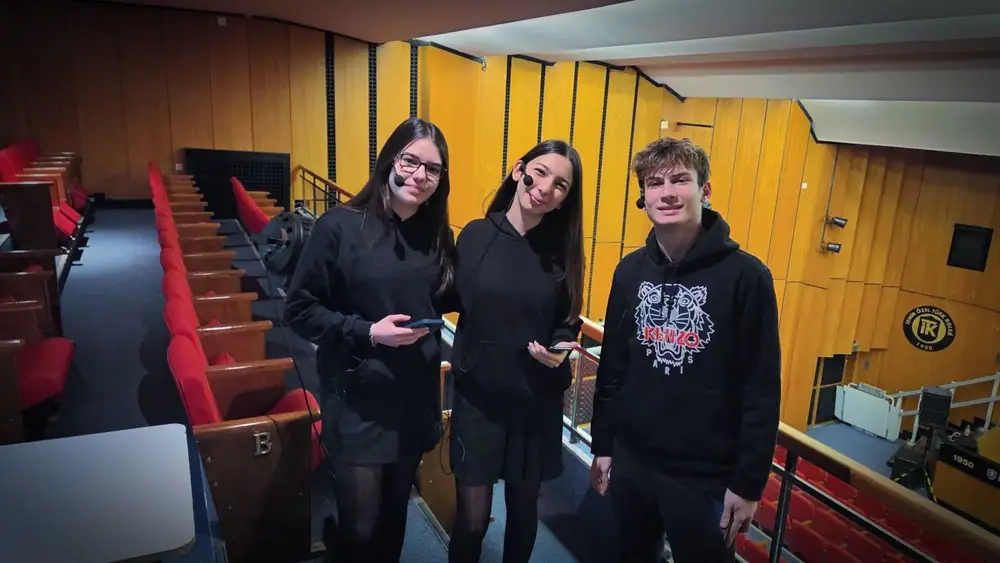
A group of students in Turkey is using a dedicated podcast to help preserve cultural heritage and local agriculture on the Karaburun Peninsula in the Gulf of Izmir.
“Traditional agricultural policies, harvesting processes and local consumption practices have been shaped by this product. It helps bring people closer to olive cultivation.”
Their focus is on one of the Mediterranean’s most distinctive fruits: the so-called date olives produced by the Erkence variety. Considered among the oldest olive varieties in the eastern Mediterranean, Erkence is known for a rare natural process that can remove the fruit’s bitterness while it is still on the branch.
Under specific conditions of dew, wind, and sunlight, the olives become a sweet local delicacy known as hurma zeytini, or date olives. The students cited the latest OECD-FAO data , noting that agricultural labor in Turkey accounted for about 30 percent of the workforce at the start of the 2000s and has since slipped to roughly 15 percent.
This is how we realized further use of technology was crucial,” the students told reporters. The format reflects their view that the pressures facing traditional agriculture are not the result of a single moment, but of decisions and challenges accumulated over time.
The grandfather represents inherited knowledge and long experience with the land, the daughter embodies the present generation navigating a changing agricultural landscape, and the granddaughter represents the future and the responsibilities of younger people. Through that dialogue, the podcast argues that preserving plantings such as the Erkence olive will require intergenerational cooperation. For Bektaş, the students are capturing a deep relationship between people and landscape that has shaped the cultivation of the Erkence olive for centuries.
Collected date olives “The Erkence type started its development in the region’s mountains and rivers with the help of blackbirds,” she said. “The birds eat previously matured olives and soften the pits. The softened pits are brought to the soil, and then to holdings.” At the base of the Karaburun Peninsula lies the ancient Ionian city of Klazomenai, where archaeologists uncovered one of the earliest known olive oil production installations in the world, dating to the sixth century BCE.
The complex included stone crushers and lever-press systems designed to process olives on a scale suggesting organized, near-industrial production more than 2,600 years ago. Going to It was sort of a flag race, and it was time for the olives to run.” Bektaş, erkence olives mature earlier than most other varieties and are among the softest and most fragile fruits in the Oleaceae family.
That makes them unsuitable for the harvesting methods commonly used for other olives. “Vibrating trees from their roots helps regular olives fall and a large cloth is placed under to catch them. This collection procedure is unsuitable for Erkence olives,” she explained, noting that the fruit must remain on the branch long enough for the natural transformation into date olives to occur.
In the peninsula’s distinctive ecology, harvesting Erkence is a high-stakes race. The fruit reaches its prized hurma sweetness only when it is ready to fall naturally to the ground, making timing critical.
For generations, local families have followed a labor-intensive ritual, entering the groves at dawn each day to gather the de-bittered olives at peak quality. Date olives harvesting When the olives are milled, the resulting oil is generally mild and appreciated locally.
But since priority is often given to producing date olives, Erkence oil is not always produced under the same quality-focused conditions as more specialized olive oils. “Erkence harvesting is a wheel of surprises ranging from November to January, in which it is required to be present in the farmland every day,” Bektaş told reporters. Producers must in addition compete with wildlife drawn to the sweet fruit. “The taste and sweetness of the date olives attract birds. Wild boars as well as humans.” The students’ podcast was developed as part of an environmental education initiative associated with Türkiye Çevre Eğitim Vakfı ( TÜRÇEV ), a Turkish foundation focused on environmental awareness in schools.
- Who: Karaburun Peninsula · Olive Oil Times
- Percentages: 30 percent · 15 percent
- Figures: 30 percent · 15 percent