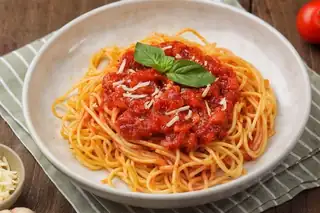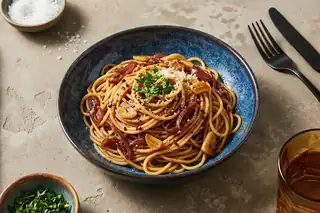
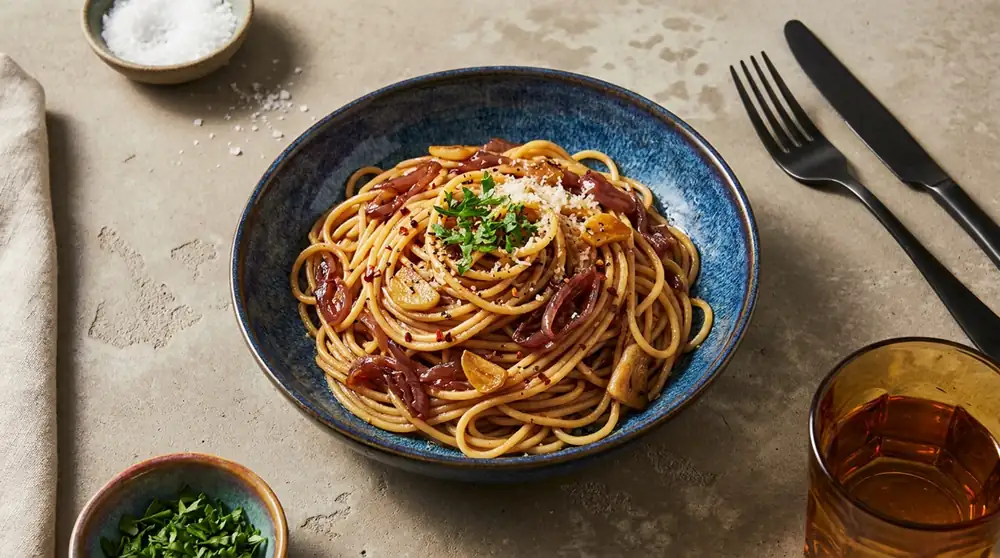
Pasta with intensely caramelized shallots and red wine brightens up every day
When almost half a kilo of onions lands in the pan, it might sound like a lot at first. But this is precisely the amount that forms the basis for this incomparable caramelized shallot pasta, which impresses with its deep aromas and velvety texture.
- 6 large shallots
- 5 cloves of garlic
- 30 ml olive oil 🛒
- 30 g butter (plus 15 g for finishing)
- 0.5 tsp salt (plus more to taste)
- freshly ground black pepper
- 0.5 tsp chili flakes (or to taste)
- 180 g tomato paste
- 80 ml dry red wine (e.g. Chianti or Pinot Noir)
- 300 g Pasta (e.g. Spaghetti, Bucatini or Rigatoni)
- 240 ml fresh parsley (finely chopped)
- coarse sea salt (for serving)
- grated Parmesan or Pecorino cheese (optional)
- Thinly slice the shallots. Thinly slice the garlic. Set them aside. Heat the olive oil and 30g of butter in a large pan over medium heat.
- Add the shallots and fry them, stirring occasionally, for about 15-20 minutes, until they are deep golden and caramelized. If they brown too quickly, reduce the heat slightly.
- Stir in the garlic, salt, pepper, and chili flakes. Fry everything for about 1 minute, until fragrant.
- Add the tomato paste, stir it into the shallots and let it cook for 2-3 minutes until it darkens slightly and develops a more intense flavor.
- Pour in the red wine, scraping up any caramelized bits from the bottom of the pan. Let the sauce simmer for 3-4 minutes, until thickened and glossy.
- Meanwhile, bring a large pot of salted water to a boil. Cook the pasta according to the package directions until al dente. Reserve 240 ml of the pasta water before draining the pasta.
- Add the cooked pasta, along with a splash of the reserved pasta water, to the shallot sauce. Mix well, adding more water if needed to loosen the sauce. Stir in the remaining 15g of butter until the sauce is silky smooth.
- Stir in the chopped parsley and season to taste. Serve the pasta immediately with grated Parmesan or Pecorino cheese, a pinch of coarse sea salt, and some freshly ground black pepper.
Caramelized shallot pasta is like a culinary hug.
In recent years, many people have rediscovered the joy of cooking at home and tried countless recipes. Some trends quickly fade away, but dishes with slowly braised ingredients remain a staple in everyday life. This caramelized shallot pasta has absolutely earned its place as a modern classic. It requires no expensive ingredients and is budget-friendly, yet delivers a flavor reminiscent of a restaurant meal. The key lies in patience during the sautéing process. The heat breaks down the shallots' structure, releasing their natural sugars. This creates a wonderful balance of savory and sweet notes.
To transform simple pasta into a real highlight for the evening, you only need a few simple steps. In this version, a generous knob of butter ensures a particularly creamy sauce. Once the shallots are soft, deglaze the pan with a generous splash of red wine. The alcohol cooks off, leaving behind a complex acidity and a dark color that's perfect for the colder months. The recipe is also very easy to adapt to your own taste. For a spicier version, replace the classic tomato paste with a spoonful of light or dark miso paste. Alternatively, a small drizzle of balsamic vinegar at the very end adds a delicate fruity acidity.
The undisputed star of the dish remains the shallots. They naturally possess a delicate aroma that strikes the perfect balance between mild onions and savory garlic. Slow caramelization mellows their sharpness, transforming them into a buttery soft delight. Since this recipe for caramelized shallot pasta yields a generous amount of sauce, there's often some left over for the next few days. This aromatic base isn't just fantastic with pasta. You can spread it on a slice of toasted sourdough bread the next morning, stir it into scrambled eggs, or use it as a quick seasoning paste for roasted vegetables. Of course, there's absolutely nothing wrong with simply mixing the entire amount directly into freshly cooked pasta and enjoying every last bit. Still craving pasta? Why not try a batch of our hazelnut pasta, tomato and garlic pasta, or eggplant and tomato pasta?