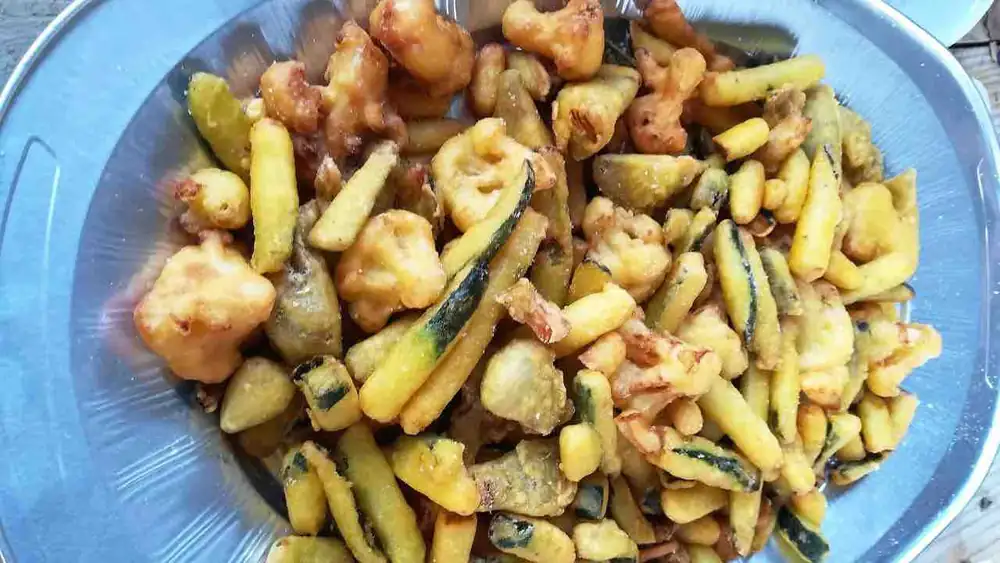
Crispy, dry, and ready-to-eat battered vegetables
Vegetables coated in a light, golden, and crispy batter: a quick and easy preparation that allows you to bring a delicious appetizer to the table, avoiding heavy or excessively greasy frying.
Making crispy, dry battered vegetables requires just a few ingredients, but above all, a little attention to detail. The vegetables must be cut into fairly even pieces, while the batter must adhere well to the surface without creating an overly thick layer. The temperature of the oil is also crucial: if it's not hot enough, the coating risks absorbing too much fat and losing the fragrant texture that makes this recipe so inviting.
The advantage is that you can use a variety of vegetables, choosing them based on the season and what you already have in the refrigerator. Zucchini, carrots, eggplant, peppers, and cauliflower florets are excellent candidates. The secret to a light and crispy batter is to work it quickly and fry a few vegetables at a time, so as not to cause a sudden drop in the oil temperature. In just a few steps, you can achieve golden fried vegetables that can be served immediately, while the coating is still fragrant and the insides of the vegetables remain pleasantly soft.
Ingredients for Crispy Battered Vegetables
- 1 courgette
- 1 small eggplant
- 1 carrot
- 1 pepper
- 200 g cauliflower
- 200 g of 00 flour
- approximately 250 ml of very cold sparkling water
- Sale q.b.
- Seed oil for frying to taste
Step-by-step process for crispy, dry vegetables ready in a flash
- First, prepare the vegetables: wash them thoroughly and dry them thoroughly. Remove any inedible parts and try to obtain similar-sized pieces so they can reach the right level of cooking at the same time.
- Cut the zucchini and eggplant into sticks or thin slices. Cut the carrot into thin sticks, clean the pepper, removing the seeds and internal fibers, and cut it into strips. Separate the cauliflower into small florets.
- Only start making the batter when you're almost ready to fry. Pour the flour into a bowl and gradually add the very cold sparkling water, stirring until the batter is thin enough to coat the vegetables without weighing them down.
- Pour plenty of seed oil into a frying pan and heat to the correct temperature. The oil should approximately reach 170-180°C. If you have a cooking thermometer, you can monitor this stage more precisely.
- Dip a few pieces of vegetables at a time into the batter, quickly let the excess drip off, and carefully transfer them to the hot oil. Don't overfill the pan: frying in small quantities helps maintain a stable temperature and promotes a crispier, drier coating.
- Gently turn the vegetables during cooking and fry them until the batter is evenly golden. Cooking times may vary slightly depending on the vegetables used and the thickness of the pieces.
- Remove the vegetables with a slotted spoon and immediately transfer them to paper towels to drain the excess oil. Repeat with all the remaining vegetables, making sure the oil returns to the correct temperature between frying cycles.
- Add salt only at the end and serve immediately. Battered vegetables are best when freshly fried, when the contrast between the crispy coating and the softer center is still evident.
The result is a colorful and versatile dish, perfect as an appetizer, a delicious side dish, or a shared appetizer. To make truly crispy, non-greasy battered vegetables, you don't need complicated preparation: it's the cold batter, the oil at the right temperature, and the skillet frying of a few pieces at a time that make all the difference. Drain and season the vegetables with salt and serve immediately: hot, golden, and fragrant, they'll be ready to conquer the table in just minutes.