The Best Automatic Espresso Machines for the Easiest Morning Latte
If drip coffee is too drab and pour-over tries your patience, you’re probably the right candidate for an espresso machine. But espresso machines can cause their own hang ups: the precision it takes to grind and tamp, the stray (and tiny) coffee grounds that can seem to permanently litter the counter around the machine, the sheer intimidation some of these semi-professional appliances can cause wit
“the best choice comes down to how involved you want to be in your daily coffee ritual.”
Our top picks
That’s where the super-automatic espresso machine shines. It’s a push-button alternative for shots of espresso, plus other barista-made drinks like lattes, americanos, flat whites, and, increasingly, iced drinks. They’re meant to be easy to use, so the most difficult aspect of these high-tech alternatives is actually figuring out which ones are worth the high price tag, because they can range from around $500 up into the thousands. We’ve tested plenty of these high-tech espresso makers over the years, and below I’ve recommended the best budget, mid-range, and splurge-worthy super-automatic espresso machines for those looking for an easy at-home alternative to the coffee shop.
Super-automatic vs. semi-automatic vs. manual — what does it all mean?
“Espresso machines exist on a spectrum,” explains Jenn Mudge, Director of Electrics Merchandising for Sur La Table, one of the retailers that’s long been in the business of at-home espresso, super automatic and otherwise. “At one end are fully manual lever machines that give you complete control over every step of the process then you have semi-automatic machines which balance hands-on brewing with added consistency. The super-automatic machines handle everything from grinding and brewing to milk frothing.”
If you’re in the store shopping for an espresso maker, you’ll recognize semi-automatic machines as the mid-sized plug-in appliances that have handled portafilters you have to twist in. If you have a friend who has a Breville espresso machine, semi-automatics basically look like that. Super-automatics are the bigger, boxier looking machines that look a bit like the coffee machine you have in your office, though they almost certainly make much better coffee.
As for which classification of espresso machine is the right one for you, Mudge says that, “the best choice comes down to how involved you want to be in your daily coffee ritual.” Another way you might put it: Do you want to be the barista, or do you want your coffeemaker to be the barista for you? More on that below.
Why you should (or shouldn’t) get a super-automatic espresso machine
If you’ve got spreadsheets of roasts, grinds, and bloom times, you don’t need a rec for anything that makes your coffee for you. Check out some of the prosumer models senior editor Noah Kaufman recommends in this espresso machine review.
If you’re not that intense about your coffee, you should know what you get and what you give up going the super-auto route. “The biggest tradeoff is control,” Mudge advised. “A coffee enthusiast who enjoys experimenting with every variable may prefer a manual or semi-automatic machine,” but, she says, what they take away in control super-autos compensate for in consistency. “They grind fresh beans for every drink, precisely control brewing, and make it easy to prepare specialty beverage. If you’re someone who wants a cappuccino every morning without thinking about grind settings or extraction time, a super-automatic is ideal.”
And espresso-savvy home baristas can still find value in coffee quality and fine-tunability in a super-automatic setup, especially if they’re willing to pay for it. “As you move up in price, you typically get better grinders, quiet operation, and greater beverage customization,” Mudge said. “Ultimately, the higher price reflects greater durability, more advanced technology and a more refined coffee experience.”
The bottom line: Super-automatic espresso machines are like the fancy cousins of single-serve coffee makers. So if you’ve been underwhelmed by some of the cheaper pod options out there, perhaps these are how you level up.
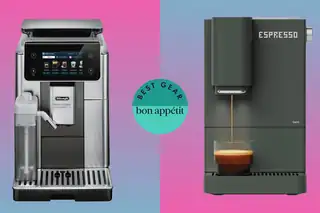
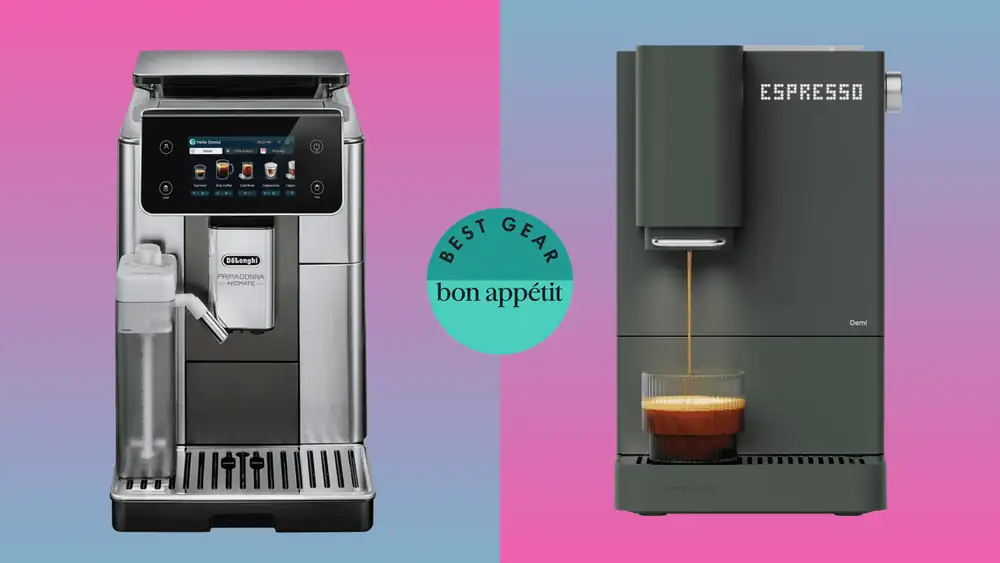
The Best Super-Automatic Espresso Machine: De’Longhi PrimaDonna Aromatic
Pros and cons
Pros
Cons
Specs
Dimensions: 18.25 in. S x 10.3 in. W x 16 in. H Drink styles: 38 Water tank capacity: 60 ounces Milk system: Yes, hot and cold Max. cup height: 5.46 in.
What we love: A coffee maker with over 30 presets could be overwhelming, but the Primadonna does a decent job of walking you through it (and talking in the first person which is a bit weird). The large icons are easy to press to make one-touch drinks. Customizing a drink is a little more complicated, as that icon is smaller and lower on the screen. The Primadonna is very much designed for one-touch brewing.
I like that it has a front-loading water reservoir (as do many Delonghi espresso machines), which is easier and cleaner to refill.
It made effective automatic adjustments via its Bean Adapter software, which walked me through choosing the bean type, making an espresso, rating whether it was too watery or too intense, etc., and then making internal changes to things like grind time and water temperature before saving that bean profile. The difference between a shot I received after turning the machine on cold and the one after Bean Adapter programming was tangible.
The milk carafes—one for hot drinks, one for cold foam—has a selector switch to choose how much aeration and the screen instructs you how to set before making your desired drink. Making milk drinks, something we consider the primary function of a super-automatic machine, is another place the PrimaDonna Aromatic shines: It creates vastly different milk textures and between a flat white and a latte and an iced cappuccino.
What we’d leave: Because it has so many presets the menu has a endless scroll feel to it. It’s also not great for someone who prefers a more tactile experience. All grind settings are digital, meaning there’s no clicking wheel to make the coffee coarser or finer. And you can remove yourself from hands-on operation even more by using Delonghi’s app to make adjustments.
I wish it could accommodate a taller cup, especially for larger iced drinks and the bean hopper is set far back on the machine making it hard to check the bean levels.
The best basic super-automatic espresso machine: Terra Kaffe Demi
Pros and cons
Pros
- Small footprint
- Four color choices
Cons
- Menu isn’t super inuitive
- Rear-mounted water tank
- No milk drinks
Specs
Dimensions: 15.7 in. D x 7.5 in. W x 12.8 in. H Drink styles: 4 Water tank capacity: 46 ounces Milk system: No Max. cup height: 5.7 in.
For my purposes, I consider a “basic” super–automatic machine one that keeps a very short drink list and doesn’t have a bag full of parts and attachments. I still think there are advantages to this style of machine compared to something like a capsule brewer (you can’t use fresh beans in a Nespresso, for example), but if you want something that will only cost a couple hundred dollars, I reviewed a number of those single-serve machines here.
What we love: Terra Kaffe Demi’s fewer frills also make this our most affordable pick. It provides both freshly-ground espresso shots and sufficient customization to find the right brew for you. It makes flavorful espresso shots that come closer to those a semi-automatic machine can pull than even the Delonghi machines above.
It’s also the most attractive super-automatic machine by a wide margin. With four color options you can match your kitchen’s color palette and the design beautifully integrates or hides the uglier parts of these machines, like the water spout and the bean hopper. You’ll feel good about having it permanently out on the counter.
What I’d leave: An integrated menu screen controlled by a single knob, gives a cool retro vibe, but it is a little annoying to customize the temperature or size of drinks (there’s a lot of twisting and pushing involved). The rear-mounted water tank is on the smaller side at just 40 ounces which matters because you’ll be refilling it more often and it can be harder to reach on a crowded countertop.
Finally, it doesn’t make milk drinks. If you want that from Terra Kaffe you have to spring for their flagship model, the TK-02. For much less than upgrading to the bigger machine though, you can get a good milk frother if you’re interested in daily cappuccinos.
How we tested super-automatic espresso machines:
To compare apples to apples, I only tested machines that actually offered one button operation. There are machines, like Breville’s Oracle series, that do the technical work of grinding, brewing, and steaming, but demand you stand at the machine and facilitate all that by setting and moving a portafilter like you would with a semi-automatic machine. That’s not what we’re doing here. Super-automatic machines allow the user to wake up in a groggy stupor, select their much-needed drink of choice, then walk away from the machine until it stops making noise and their coffee is ready. In many cases, these machines can even remember presets or offer user profiles so that once you set your preferences for strength, temperature, and volume, you never have to think about it again.
The main focus of my testing was to pull espresso shots, evaluate their taste and texture and then, if needed, pull them again with some customization settings to see if they improved. I also compared, when applicable, milk-based drinks, usually opting for similar but not identical presets from each machine, like a cappuccino and a flat white, to see if there were indeed noticeable differences between them. Finally, I walked through the rinsing, grounds disposal, and, if necessary, cleaning of many of these machines. (Some machines were tested via demos facilitated in-store, and in such cases I did not have full access to evaluate disassembly or long-term issues, though none of those machines made the list of top picks anyway.)
What we looked for in super-automatic espresso machines:
Taste
With almost all of our coffee reviews, we start with the actual taste and texture of the coffee we consistently get from the machine. If it doesn’t taste worth drinking, why bother?
Customization
The best super-automatic machines will let you control (and ideally fine-tune) elements like temperature, strength, size of the shot, and other factors that can have an impact on the final cup.
Ease of use
Of course the reason you buy a super-automatic espresso machine, generally, is to avoid any confusing hands-on mechanics or byzantine on-screen menus. Cleaning out grounds and drip trays and refilling the water tank and bean hopper need to be quick and simple, too.
Other super-automatic espresso machines we liked
Based on the testing results this is the runner-up machine. Like the De’Longhi PrimaDonna Aromatic above, Bosch’s machine makes dozens of drinks and delivers on those differences. Choosing the De’Longhi really just came down to differences in design that I thought would become more and more noticeable over time. Bosch’s generous water tank is side-mounted, but doesn’t slide out as easily. The integrated milk container sticks out the opposite side of the machine, compared to the slightly more space-friendly, front-mounted milk container on the De’Longhi. All those combine to leave a bigger countertop footprint. It does come at a lower price though.
But the Eletta Explore makes terrific coffee drinks with a price tag hundreds of dollars lower than the Primadonna. It still has that dialed-in milk frothing setting on the included cold and hot milk containers, and many of the same customization and app-enabled features that let you dial in the perfect drink. This is a slightly older model than the Primadonna and the milk frothing isn't quite as good as its more expensive cousin. Another notable difference: The Eletta Explore replaces the digital control with a more hands-on experience, utilizing a manual grinder adjustment knob.
If you’re in that hyperspecific segment of the market that doesn’t want to physically make your own espresso, but still wants control over the details of the process, consider the J10 Twin which has dual bean hoppers, letting you blend beans.
Unlike some of the fancy machines that keep all the control components internal, the J10 Twin has physical knobs for the grid settings. If you want milk drinks, you’ll have to buy an external container; Jura makes a basic one and an expensive, refrigerated one. Considering the price point, the interface feels a little low-tech. The interface uses manual buttons to operate and it’s actually a set of three screens, which can be a bit confusing to look at. Though, with a few rounds of practice becomes clear.
If a quiet morning is important to you, the Miele promises “silence” and does make espresso quietly. However, the menu of drinks leaves something to be desired with just a few milk drinks in addition to shots and coffee. For the price, we think it’s a bit limited when you can get more from machines that cost a few hundred less.
Terra Kaffe’s flagship super-automatic machine is extremely attractive, but couldn’t quite compete with Delonghi and Bosch on flavor and texture. It is, however, easy to fill, clean, and empty, as the water tank and grounds container both come out from the front of the machine. Unlike the slightly clunky interface of the Terra Kaffe Demi, the TK-02’s touchscreen interface is very more user-friendly and the accompanying app is helpful.
Super-Automatic espresso machines we don't recommend
Shots tasted OK and milk drinks, while available, were not spectacular. Another baffling aspect of this machine is the lack of any gasket or seal keeping the beans in the hopper fresh. A slightly cheaper version comes with a milk steaming wand, which goes against the “do nothing” ease we want from a super-automatic.
Jura makes a few machines and various prices which are worth comparing, but our comparison for this one came down to choosing this or the similarly priced De’Longhi PrimaDonna Aromatic which simply does more, including iced drinks. The E8 surpasses the milk frothing ability of the J8 (below) because it employs a similar system to the J10 Twin, but it suffers from the same menu navigation clunkiness. Shots of espresso were fine, but not rich and satisfying enough to justify the price tag.
While it’s tempting to want the quality of a Jura machine at a lower price point, I found the differences between this model and J10 to be substantial. The C9 doesn’t employ any kind of froth level selector and comes out of the main espresso dispenser head, unlike the J10 and E8 which have separate mechanisms for milk + espresso drinks. The differences between a cappuccino, a macchiato, and flat white were hard to notice, and there are no iced drinks on the menu. Even at that lower price point, I would expect more.
I’ve used this machine for a few months, and have liked the coffee I get from it. The price point is also friendly. But I don’t like pouring or removing the rear-mounted water tank when compared to a De’Longhi. The milk container is fully separate and attached with a hose, meaning it’s a bit awkward when using (again, compared to the De’Longhi system). Finally, as of this writing, my KF4 stopped dispensing anything, instead leaking liquid down through the mechanics even after cleaning and descaling. Troubleshooting hasn’t yielded any results as yet, so until I can understand why that happened, I can’t recommend anyone buy it.
Despite a good deal of customization — from pour volume to brew strength to manually controlled grinder settings — my initial espresso shots were relatively weak and lacked some of the crema I got from other similarly-priced machines. Milk-based beverages were drinkable, but not differentiated. My hot latte was a bit watery and, unfortunately, so was my iced cappuccino which fully melted the ice cubes before I could even take a sip. It also asked me to clean out the grounds and liquid trays every couple of drinks, much more often than other machines. And those trays are accessed via the side of the machine (versus the front on most) so you’ll have to watch clearance if you plan to slot this in next to some other countertop roommates.