Cellar bar or wine lounge? The new wine tourism
Many producers fear that opening their wineries to a wider audience will damage their image, but the market demands a more leisurely and accessible form of wine tourism.
“Lavinia, I make quality wine. I don't want my cellar to become a bar.”
If I had a euro for every time a producer said this to me, I'd probably already have bought a castle in Burgundy. It's a widespread, almost visceral fear. The idea of opening one's doors to informal consumption, free from the rigid protocol of a guided tour, is often perceived as a downgrade, a betrayal of the nobility of the product.
But today I want to challenge this belief, because the market is demanding precisely this paradigm shift. Let's be honest: wine is no longer popular.
We've turned it into a subject of study, burdened with such austerity that it alienates anyone simply seeking a moment of relaxation. Contemporary tourists seek leisure experiences: they want to feel good, relax, enjoy the scenery, and consume without a care in the world.
The concept of a “bar” in the cellar
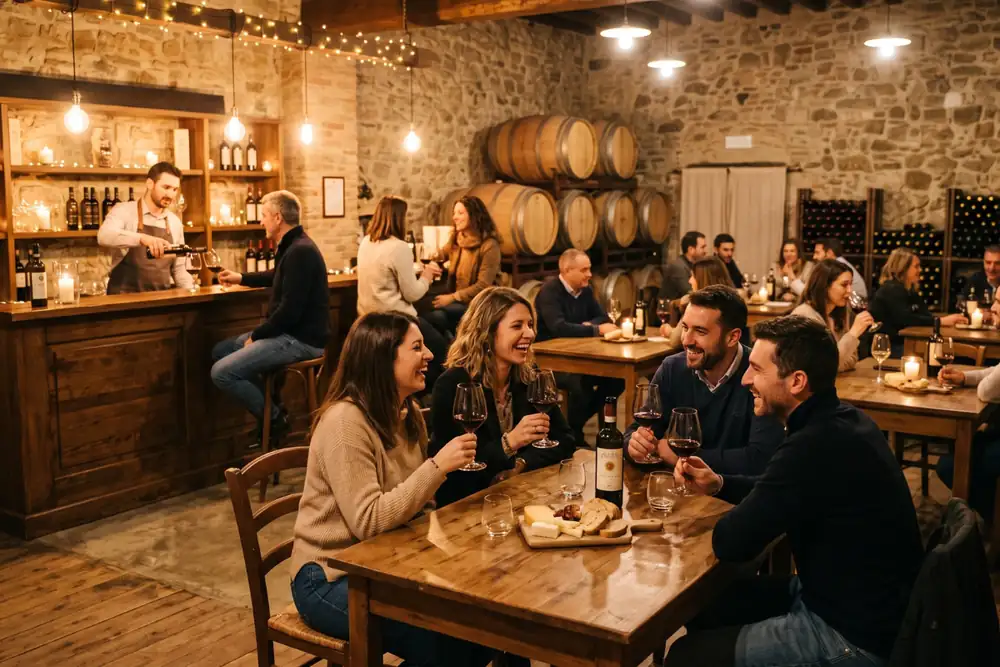
We must overcome the fear that a more liberal welcome will transform the winery into a noisy provincial bar. We're not asking you to become a bar. We're suggesting you become a sort of wine lounge.
It's a world of difference. A brand bar (or wine lounge) is an exclusive, distinctive place where customers can immerse themselves physically and emotionally in your company's universe, and of course, in your wine. Try asking yourself this question: if a customer can't come and enjoy your wine in complete serenity right in your home, in the place where it originates, where else should they do so?
Why should we force a tourist who just wants to relax in your garden to listen to a technical lecture on wine production?
The art of informal storytelling
Of course, opening the doors to free consumption doesn't mean giving up communicating your value. Indeed, this is where the real challenge lies.
It's perfectly fine for a guest to come to you "just" for a glass or two without booking a full tour. But it's up to you, or your Hospitality Manager, to be skilled enough to seize that informal moment to tell your story and encourage bottle sales. True mastery lies not in holding an hour-long monologue in the cellar, but in making the guest fall in love with your philosophy in the three minutes it takes to serve them a glass at the table, in a light, engaging, and non-invasive way.
It's a delicate balance. How do you open up to leisure tourism without devaluing the brand? How do you manage the space to accommodate high-end tours and those who just come for an afternoon aperitif?
Transforming a winery into an accessible and profitable destination is a complex strategic undertaking. For this very reason, we address this dilemma head-on in our hospitality and direct-to-consumer training courses. We work closely with companies to develop hybrid hospitality formats, teaching teams how to manage informal communication and transform a simple "bar" glass into a powerful loyalty and sales tool.
Key points
- Overcoming the fear of informality helps wineries attract a broader, less knowledgeable audience.
- The wine lounge replaces the bar: an identity-defining space where the brand can be experienced naturally.
- An informal story told in a few minutes is worth more than a long technical tour of the barrel cellar.
- The balance between formats allows for high-end tours and afternoon aperitifs to coexist.
- Hospitality Manager training transforms every glass of wine into a direct sales opportunity.