If your couscous is good but never quite like in a restaurant, the problem probably lies with the semolina
No matter how generous a couscous you prepare, with a fragrant sauce, tender vegetables, and succulent meat, it's always missing that little something. We'll reveal where the problem lies.
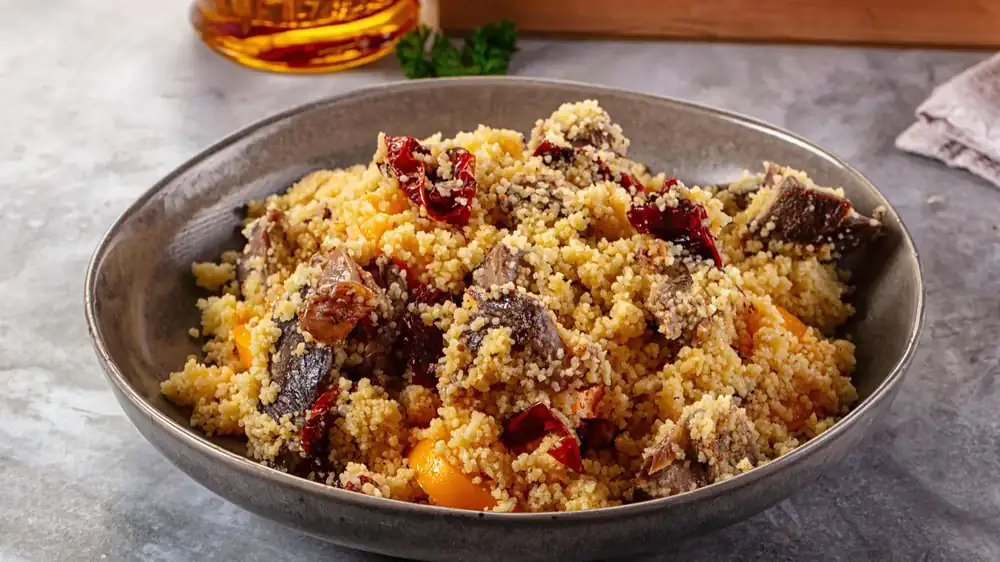
You've prepared the sauce, the vegetables have simmered, the meat is perfectly tender… But when it's time to sit down to eat, something's not quite right. Your couscous is good, certainly, but the semolina doesn't have that light and pleasant texture you get in a restaurant.
It's a bit dense, too moist, or, conversely, lacks flavor. Before revising your entire recipe, take a look at the package you're using. According to our colleagues at the 750g website, that's where the problem might lie.
Why doesn't your semolina taste the same as in a restaurant?
The first thing to check is the contents of your package. Contrary to what you might think, semolina and couscous grains are not exactly the same thing. Both are made from durum wheat, but they are not prepared in the same way. Semolina is cracked durum wheat. It comes in various sizes, from the finest to the coarsest.
It can be used in many recipes, such as semolina pudding, but also as an ingredient in couscous. Couscous itself is made from this semolina. Water is added to form small grains, which are then rolled and sifted. This is how you get the famous couscous grains that you find on supermarket shelves.
If you simply use a package of semolina to prepare your couscous, you're not using exactly the same product. For this dish, you need to choose the right couscous grains. Once you understand this difference, it becomes easier to grasp why the result can vary from one preparation to another. Durum wheat semolina can be used in various recipes, while couscous grains are specifically bred for this dish.
In fact, many women still prepare their own couscous grains from durum wheat semolina. They then repeat the various steps necessary to transform the semolina into small grains, before cooking them in a couscousier.