Beef goulash with gochujang: How the classic gets a Korean upgrade
A classic beef goulash is one of those dishes that creates a truly comforting atmosphere on dreary days. As the pot simmers on the stove for hours, an unmistakable aroma fills the entire house. But what happens when you combine this traditional favorite with flavors from Korean cuisine?
- 800g beef shoulder
- Salt and pepper (to taste)
- 2 onions
- 4 cloves of garlic
- 1 piece of ginger (approx. 3 cm)
- 2 tbsp neutral vegetable oil
- 2 tbsp tomato paste
- 2 tbsp Gochujang 🛒 (spicy chili paste)
- 1 tbsp soy sauce
- 1 tbsp sesame oil
- 1 tsp smoked paprika powder
- 1 tsp sugar
- 200 ml passata
- 400 ml beef broth
- 2 spring onions (for garnish)
- 1 tsp sesame seeds (for garnish)
- Cut beef shoulder into approximately 3-4 cm cubes and season generously with salt and pepper.
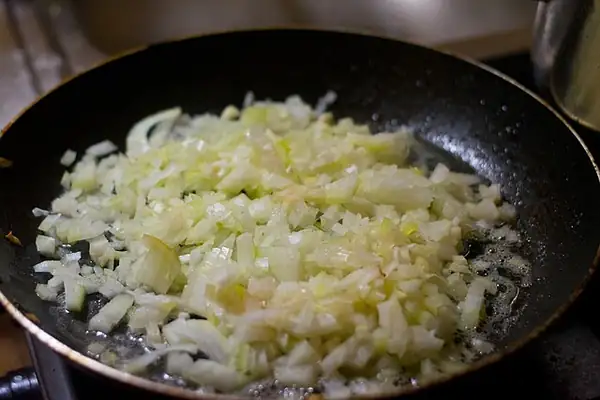
- Finely dice the onions. Peel the garlic cloves and grate them finely. Grate the ginger into a fine paste.
- Heat neutral vegetable oil in a large Dutch oven over high heat and sear the meat cubes in batches on all sides until well browned. Remove the meat and set aside.
- Reduce the heat to medium and sauté the onions in the same pot until soft and lightly golden. Add the garlic and ginger and stir everything for about 1 minute.
- Add tomato paste and gochujang and sauté both for about 2 minutes while stirring to allow the flavors to develop.
- Stir in soy sauce, sesame oil, smoked paprika powder and sugar, then add passata and beef broth to the pot.
- Place the seared meat back into the pot, bring everything to a boil, and then reduce the heat to low.
- Let the goulash simmer gently, covered, for about 1.5 to 2 hours, until the meat is tender and the sauce has thickened nicely. Stir occasionally.
- Season the finished gochujang goulash with salt and pepper. Slice the spring onions into thin rings and sprinkle them over the goulash along with sesame seeds.
Recipe for Gochujang Goulash
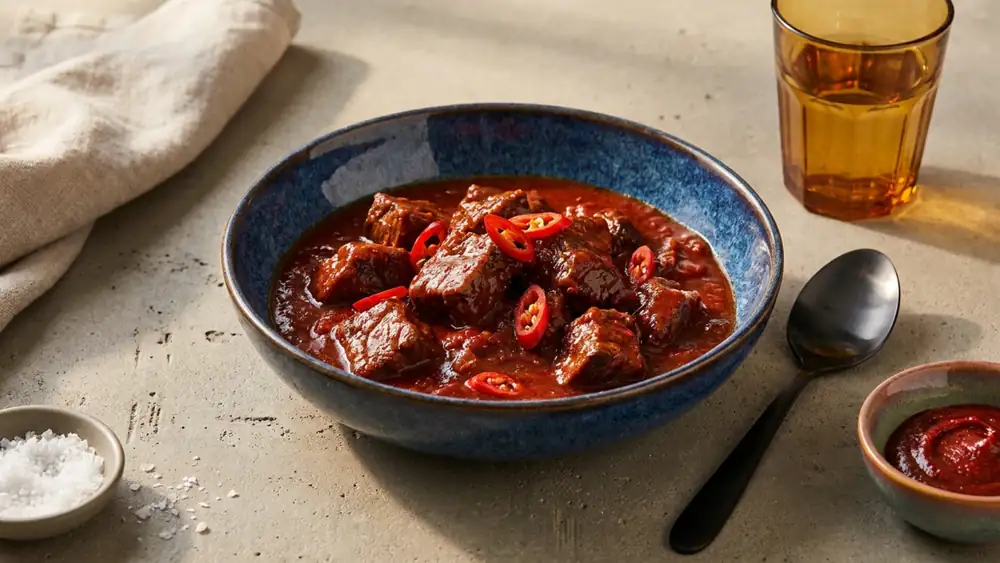
Gochujang is at the heart of this recipe. Anyone unfamiliar with this fermented Korean chili paste will quickly discover that it's capable of much more than simply adding heat. Through the fermentation process, it develops a complex, rich umami profile while also imparting a subtle, underlying sweetness. These qualities make it the perfect base for a robust sauce. As the paste dissolves during the long cooking time, it blends with the classic goulash ingredients to create a thick, glossy liquid. A splash of soy sauce adds extra flavor, while smoked paprika contributes a subtle smokiness. A small pinch of sugar rounds out the bold flavors and skillfully balances the heat of the chili paste.
To ensure the meat melts in your mouth and the sauce develops its characteristic depth, the first step on the stove is crucial. Beef shoulder is ideal for braising, as the marbled meat becomes wonderfully tender with long cooking. It's important not to sear the cubes all at once, but in several small batches. If too much meat is in the pot at the same time, the temperature drops rapidly. The beef then begins to simmer in its own juices instead of searing. Only high heat creates the desired browning on the bottom of the pot, which significantly shapes the character of the sauce. So take your time with this step and only turn the pieces when they easily release from the bottom and have formed a beautiful brown crust.
Once the meat has browned all over, return it to the Dutch oven. Now deglaze the pan with beef broth and strained tomatoes. The liquid loosens the valuable browned bits from the bottom of the pot, ensuring no flavor is lost. From this point on, the stovetop does most of the work. Over very low heat, with the lid on, let the dish simmer gently for about one and a half to two hours. This long cooking time breaks down the connective tissue in the meat until it's so tender it almost falls apart. At the same time, the sauce slowly reduces, thickens, and intensifies its flavor. You only need to stir it occasionally to prevent sticking.
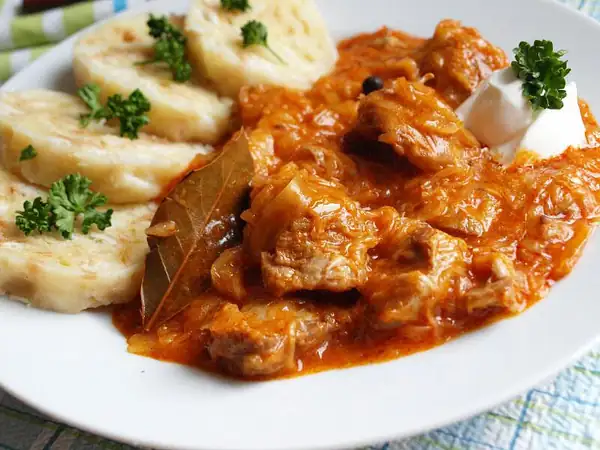
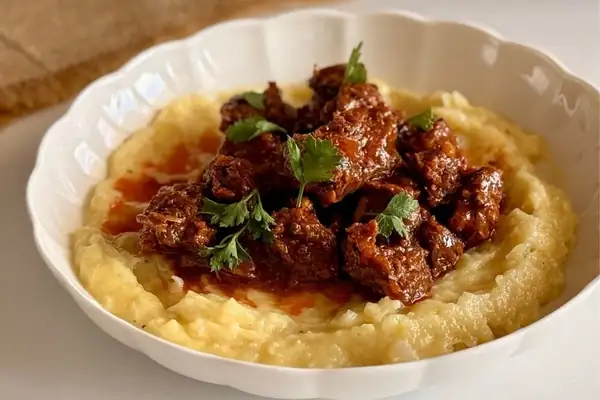
Just before serving, this hearty braised dish gets a fresh finishing touch. Finely sliced spring onions and a few toasted sesame seeds not only create a visually stunning contrast to the deep red, rich sauce, but also add a touch of crunch and a fresh onion note that beautifully lightens the richness of the dish. This meal is perfect for relaxed weekends when you don't want to spend hours actively cooking. The braiser does all the work itself, while you can use your time for other things. In the end, a warming comfort food awaits you that is guaranteed to taste fantastic even reheated the next day.