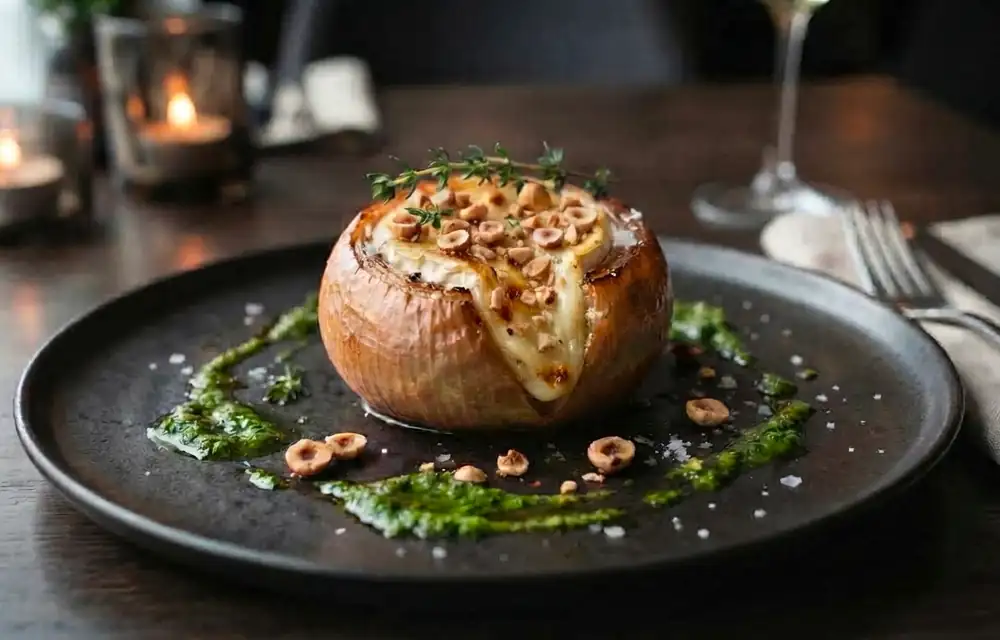
Onion stuffed with toma cheese, hazelnuts, and bagnet verd: a Piedmontese appetizer you wouldn't expect
There comes a time, in the early days of autumn, when the menu calls for a warm appetizer. Not yet a festive pie, not yet a November cream soup: something that says "new season" without being heavy. Stuffed onion with toma cheese is the cheapest and least used option.
Why it works
The dish is based on four elements, each with a specific purpose: • the onion adds sweetness, concentrated by the slow cooking in salt; • the toma cheese adds flavor and character, with the lactic and slightly animal note of mountain cheeses; • the hazelnuts add toasted and crunchy notes, which are essential in a soft dish; • the bagnet verd adds acidity and herbaceousness, preventing the whole thing from becoming cloying. It's the "comfort with contrast" concept: a reassuring dish with an element that awakens the palate with every bite.
The preparation
Salted Onions Select firm, regular-sized copper onions without sprouts. Cook them whole, unpeeled, on a bed of coarse salt in a moderate oven until a knife tip can easily penetrate. Cooking in salt has two advantages. The onion cooks in its own steam without losing any sugar, and the peel protects the pulp, which remains compact enough to be scooped out. Once lukewarm, remove the peel, cut off the top, and scoop out the center with a spoon, leaving two or three outer layers as a shell. The Filling: Chop the extracted pulp with a knife and sauté in a pan with a drizzle of butter until it loses its moisture and browns slightly. Add: • boiled and mashed potato, which gives body and holds the filling together without weighing it down; • aged Piedmontese toma or grated Raschera; • an egg for binding; • crumbled stale bread; • fresh thyme and marjoram, salt, and pepper. The filling should be soft but not wet. If it's too wet, add breadcrumbs. The gratin: Breadcrumbs and coarsely chopped toasted hazelnuts, with a drizzle of melted butter. Sprinkle over the stuffed onion just before baking. The brown vegetable stock: The outer skins and onion scraps are toasted in the oven until dark but not burnt. Cover with water, simmer with a sprig of thyme, strain, and reduce until a glossy, flavorful stock is obtained, which can be thickened with a knob of butter if desired. The bagnet verd: Piedmontese green sauce is made with parsley, garlic, capers, bread soaked in vinegar, and extra virgin olive oil. It should be chopped with a knife or briefly blended, so it remains rustic and doesn't become a puree. In the classic version, anchovies are added. Without them, the dish remains vegetarian.
Mise en place and service
Work ahead. The onions are cooked, hollowed out, filled, chilled, and stored ready-made. When you order, simply gratinate and pop them in the oven to bring them back to temperature. Regenerate without drying them out. Cover the onions for the first part of the baking process and only uncover them at the end for gratinating. The filling should be piping hot and the crust crunchy on the surface. Serve hot on a warm plate. Place the dish on a warm plate with a thin layer of brown sauce on the bottom, the onion in the center, and the bagnet verd in dots or in a small quenelle on the side, never on top of the crust, which would become soggy. Make the bagnet the same day. It loses color and freshness over time. Declare allergens. On the menu and in the allergen register: milk (tomme, butter), eggs, gluten (bread), nuts (hazelnuts), and fish if using anchovies.
Food cost e tips
It's one of the appetizers with the best perceived value for money. The onion is very cheap, the potatoes and bread are leftovers, and the base is made from scraps. The only significant ingredient is the cheese. The right positioning is as a "seasonal" appetizer, with a price consistent with the preparation and story, not the cost of the raw ingredients.
Choose the right size. Onions all the same size cook evenly and make identical portions. It's the difference between a restaurant dish and a paper plate.
Don't throw away the broken shell. If an onion splits open while you're emptying it, the pulp goes into the filling and the shell goes into the bottom.
Don't reuse salt. Discard the coarse cooking salt after use.
Toast the hazelnuts yourself. Hazelnuts toasted in the oven, then peeled, have a flavor that ready-made ones don't.
Taste the bagnet on the plate, not by itself. On its own, it can seem too acidic. On sweet onions, it's almost always just right.
Variation: with Bra sausage
For those seeking a non-vegetarian appetizer, the bagnet verd can be replaced with a few pieces of Bra sausage, crumbled raw over the onion just before serving. Bra sausage is traditionally eaten raw: purchase it from a supplier who guarantees its supply chain and preservation, strictly maintains the cold chain, and clearly indicates on the menu that the product is served raw. The contrast between the fresh, sweet meat and the warm, gratinated onion is very Piedmontese and very effective.
Pairings
Wine
Piedmontese whites like Arneis, Nascetta, or Timorasso: their savory flavor and slightly bitter note complement the sweetness of the onion and balance the toma.
Young, fresh reds like Dolcetto, Grignolino, or Freisa, served slightly chilled if the guest prefers a red: light tannins and good acidity, without overpowering the dish. Beer
An Italian Pilsner, with its clean flavor and herbaceous notes of hops, reminiscent of Bagnet Verd.
A saison for those seeking a more aromatic and spicy beer. Non-alcoholic: A dry tonic with a lemon zest and a sprig of thyme, or a mild kombucha. The acidity and bitterness are the perfect allies for this dish.