What to do with leftover stew? There are more options than you might think
Fortunately, the use of leftover stew is not limited to eating the same thing the next day, just with a different side dish. The juicy meat is a particularly grateful ingredient: it can be used in soups, casseroles, pasta, pancakes or even sandwiches.
How long will leftover stew last?
Many people say that stew is even better the next day than it was fresh. The flavors have time to meld, the meat absorbs the aromas of the spicy sauce, and the whole dish may seem a little rounder. However, this does not mean that it can be safely stored in the refrigerator indefinitely. According to the recommendations of FoodSafety.gov, cooked meat leftovers and meat stews should generally be stored in the refrigerator at 4 °C or colder for 3-4 days. Of course, this is only true if the food has been handled properly after cooking and serving. One of the most important rules is that stew should not spend half a day on the stove waiting for it to cool completely. Perishable foods should be placed in the refrigerator or freezer within two hours at most; in very hot environments above 32 degrees Celsius, this time is shortened to one hour.
Instead of big pots, smaller boxes should come
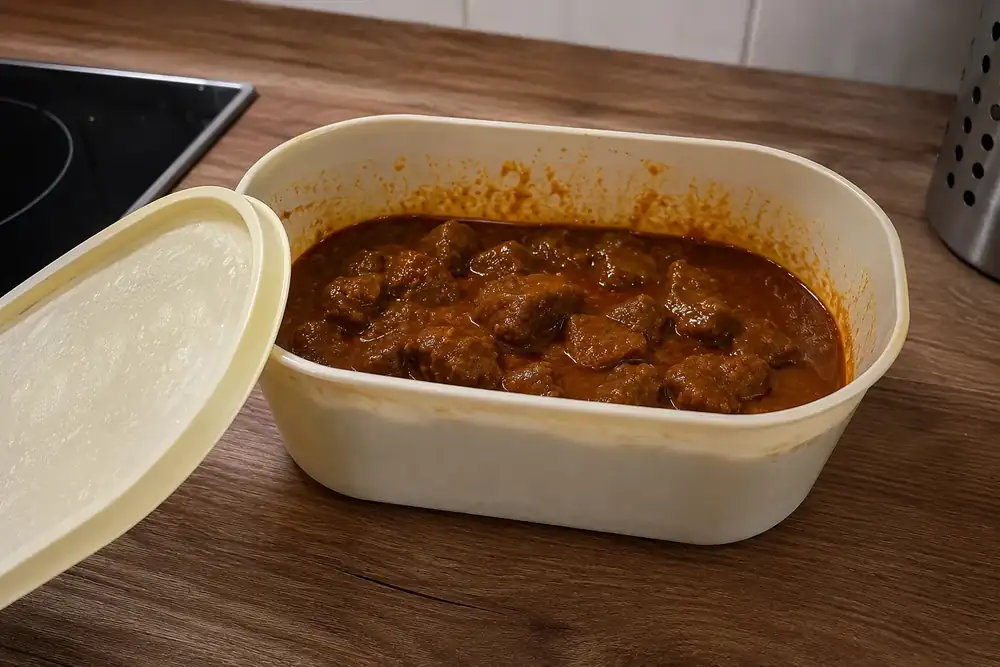
It is not a good idea to put several liters of stew in a single deep pot in the refrigerator. The middle of a large quantity cools more slowly, so it is better to divide it into smaller portions and store it in shallower, tightly closed containers. Smaller portions cool faster and more evenly. There is also a common misunderstanding here: you do not need to wait until the stew is completely at room temperature. From a safety perspective, it is more important that it does not sit in the kitchen for hours, lukewarm. For larger quantities, it is better to divide it into portions and then ensure that it cools quickly.
Using leftover stew: it doesn't just work with dumplings
The great advantage of stew is that you don't necessarily have to think of it as stew the next time around. In fact, we have a portion of tender, spicy meat and a concentrated, onion-pepper sauce – in other words, two ingredients that can be used to make a surprisingly wide variety of dishes. The easiest solution is, of course, reheating it. If you ate it with nokedli the first day, you can serve it with boiled potatoes, tarhonya or fresh bread the next day. However, it can be much more interesting to transform it a little.
Hortobágy pancakes – they were almost invented for this
If there is a classic leftover dish that makes yesterday's stew taste like yesterday's food at all, it is the Hortobágy meat pancakes. The meat can be chopped or minced, then a little juice can be used to make a creamy filling. The stew juice, softened with sour cream, can then be added to the pancakes, and then the whole thing can be put into the oven for a short time. It is a particularly good choice if the meat has already been used up as a separate main course, but there is still a considerable amount of juice left. In this form, almost everything can be used.
You can also make soup from it.
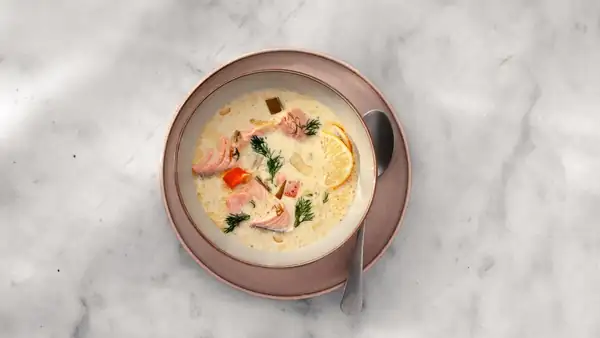
The finished stew essentially contains a significant part of the base of a goulash or ragout soup. If you let the meat and juice simmer in a suitable amount of liquid, then add potatoes, carrots, parsley root and a pinch of salt to taste, you get a dish with a completely different character.
However, it is worth paying attention to the fact that stew is already seasoned and salty. Therefore, it is worth adding salt and seasoning the soup only at the end. It is easier to add a little more salt than to try to save an oversalted pot of soup afterwards.
A larger portion also disappears in stews
Using leftover stew becomes really exciting when we don't stick to its original form. For example, meat cut into smaller pieces or shredded works well in potato casseroles, rice dishes, or vegetable casseroles. The gravy is especially valuable in this case. It holds the food together, adds moisture, and often doesn't even require a separate sauce. If it's very thick or intense, you can loosen it up with a little sour cream, stock, or water.
You can also make pasta sauce from stew.
It may sound unusual at first, but it is easy to make a rich pasta sauce from stew. It is worth cutting the meat into smaller pieces or breaking it up with a fork, and the juice can be further modified with a little tomato, sour cream or cream as needed. It is not worth trying to make an Italian ragout out of it. It works better if we accept the basic character of peppers and onions and choose broad noodles, dumplings or other, more substantial pasta. For example, with a little sour cream, it can be made into a particularly good, creamy sauce.
Hot sandwich, pie or tortilla: when there is only a little left
Half a serving of stew may not be enough for lunch on its own, but it is just enough as a filling. It is worth breaking the meat into pieces with a fork, then adding just enough juice to keep it juicy but not soak up whatever it goes into. It also works well in a hot sandwich with cheese, wrapped in a tortilla with vegetables and sour cream sauce, or stuffed into flatbread. In these versions, some fresh, acidic additions are useful – pickles, coleslaw, red onions or a few pickled vegetables – because they offset the rich, fattier character of the stew. This is perhaps the best part of saving leftovers: you don’t necessarily have to organize another big cooking around it. Sometimes it is enough to realize that those few spoonfuls of meat are actually ready-made sandwich fillings.
How to freeze stew?
If it is already clear on the second day that it will not be used up in the next few days, there is little point in keeping it in the fridge. It is better to freeze it as soon as possible. According to official food safety recommendations, freezing should be done within 3-4 days of storage in the fridge. Stew is a food that is particularly suitable for freezing. The meat and the juice usually tolerate low temperatures well, and after thawing, with proper heating, it will regain a pleasant texture.
It is a good idea to pack in portions that you will eat at once. This way you don't have to defrost a large box of food for a single dinner. A tightly sealed freezer container or a freezer bag are both suitable; in the latter case, it is worth squeezing out the excess air before sealing.
Put a date on the packaging. This seems like a trivial detail until a few months later we find three identical, brownish-red frozen packages, no one can tell when or exactly what was inside them.
How long can it be kept in the freezer?
It is worth distinguishing between food safety and quality here. According to the FoodSafety.gov table, the given freezing times for frozen foods stored at or below -18 degrees Celsius are primarily quality recommendations. For meat soups and stews, a period of 2-3 months is given, and for cooked meat leftovers, 2-6 months. For stews, as a practical rule of thumb, it is worth considering using them within a few months. The longer it is in the freezer, the more its texture and aroma may deteriorate, and improperly sealed food may dry out and take on freezer odors.
Defrosting and reheating: it doesn't matter how we do it
Frozen stew is best thawed slowly in the refrigerator. If a faster solution is needed, a microwave oven can also be used, but in this case the food must be reheated immediately afterwards. Smaller portions of stew can also be reheated directly from frozen in a saucepan, starting at a lower temperature and stirring regularly. When reheating, it is not enough if the juices are already bubbling at the edges while the meat is still lukewarm in the middle. The official recommendation is to reheat leftovers to an internal temperature of at least 74 degrees Celsius. For thick stews, it is therefore especially important to stir thoroughly so that it heats up evenly everywhere.
Using leftover stew is a real creative project
We often talk about saving leftovers as if it were a necessary compromise: something to do with what we regret throwing away. But with stew, it's more like a half-finished next course. The long cooking has already taken place, the meat is tender, the juices are concentrated, the flavors have come together - in other words, most of the work is done. That's why using leftover stew doesn't necessarily mean that you'll end up with the same thing on your plate three days in a row. The point isn't to save every last spoonful at all costs, but to store what you keep safely and use it when it's time. That way, your oversized pot of stew won't become a four-day must-have, but a very practical base for a few more meals.