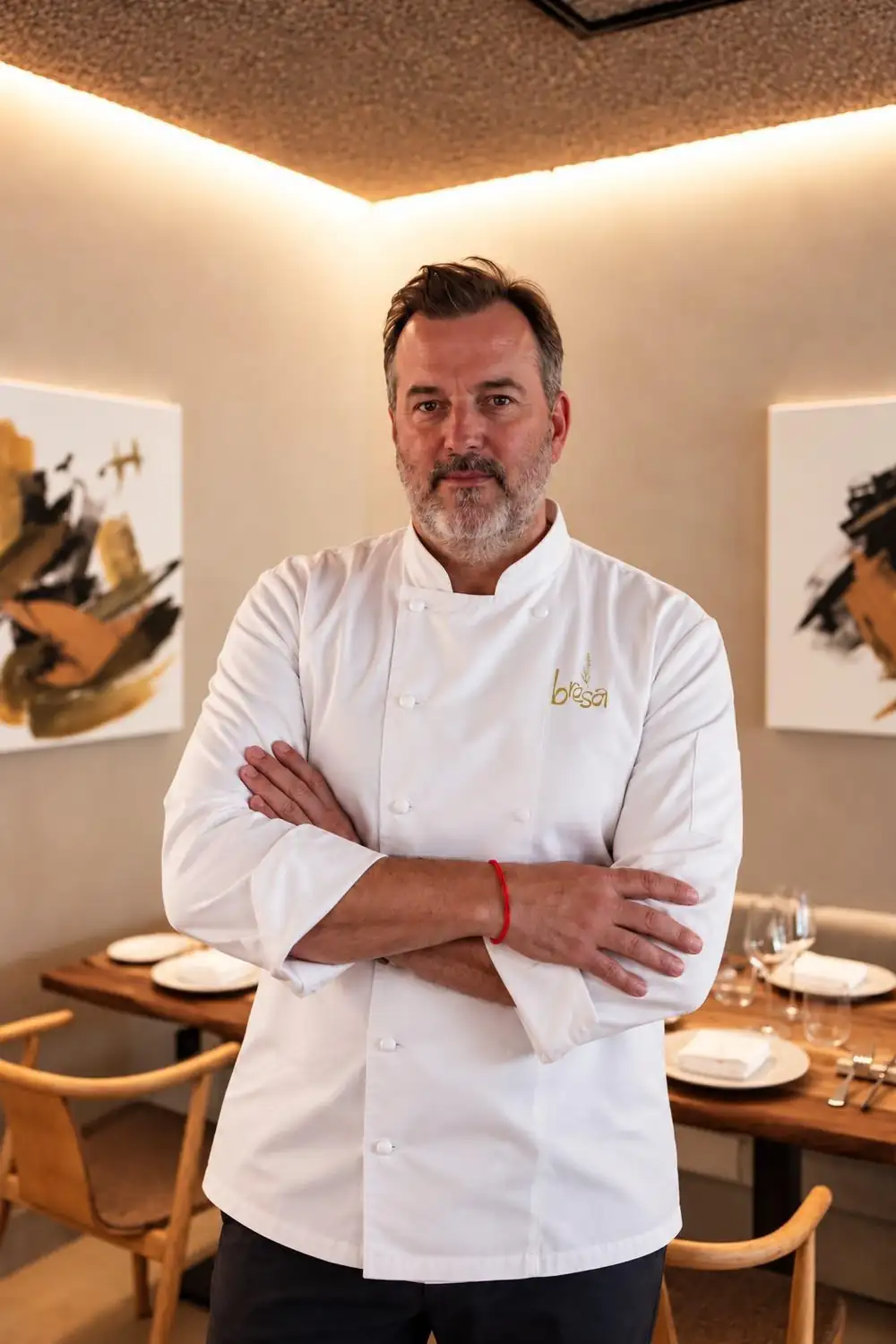
New temple of the product, with the Aparicio seal, in the Salamanca district
It's been almost 15 years since the Aparicio brothers opened their first Cachivache. Almost in record time, Javier and Paco became leading figures in Madrid's new tavern scene, and over the years they've positioned brands like La Raquetista and Salino at the top, which today remain two of the restaurants everyone recommends when asked where to eat with guaranteed quality at a reasonable price in t
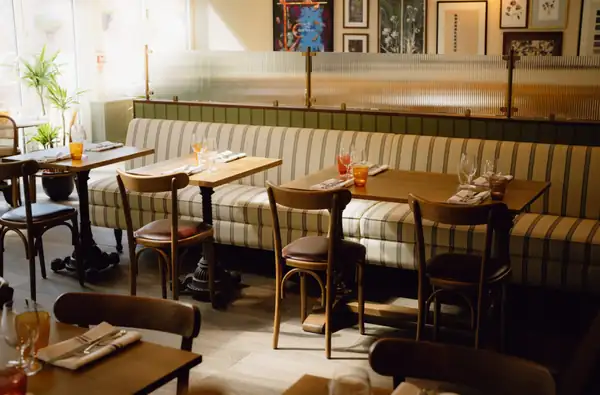
Very close to these latter establishments, Bresa (C/ Villanueva, 21) has just opened its doors, a restaurant focused on quality ingredients that conceptually distances itself from those other, fully established projects. There's no bar here, and everything revolves around the raw materials, which dictate the free, personal, and deeply considered menu that evolves with the seasons and finds its starting point in traditional Spanish cuisine.
Javier Aparicio tells us about this new venture, explaining that he wanted Alejandro Cano as head chef: "He's been with me for seven years and has worked with chefs of the caliber of Dabiz Muñoz and Víctor Infantes. He started very young, at 17, and I'm really excited to have him as my right-hand man in this new project." Together they champion a cuisine as elegant as the space Bresa occupies, where wood, stone, and natural materials take care of the rest.
We also took a peek into the wine cellar, which boasts fewer than 200 labels, and found a carefully curated selection of Spanish wines. But there are also wines from France, including a wide variety of Champagnes, as well as wines from Italy and Portugal. And fortified wine lovers ("for me, it's another great luxury") can rest assured, as some will even be available by the glass.
Bresa is very different from everything that came before. Can we talk about an evolution?
To begin with, there's no bar here. Basically, because this isn't a tavern. I do think this opening can be seen as another step in the evolution that's been underway since we started, when people said we'd reinvented the tavern. Since we began with Cachivache, there's always been a leap forward with each new project: La Raquetista was already leaning more towards a bistro format and was in a more gastronomic neighborhood; then came Salino, with a more substantial dining room, tables with tablecloths, the role of the sommelier... And Bresa represents an evolution from all of the above. Here, we've moved beyond the tavern concept and become more of a restaurant...
Is "gastronomic" the word you're looking for?
Well, I don't really know what you mean by "gastronomic" (laughs). Because I think Cachivache, La Raquetista, or Salino are also gastronomic, aren't they? This whole "gastronomic" thing sounds a lot like what Ferran Adrià used to do. And Bresa is a place that won't offer a tasting menu and will be based on the product. We're going to take advantage of the work we've been doing for years with the seasons and the producers to select the very best. That could be from Spain or nearby places, whether it's France, Italy, Ireland... It will depend on where the best product is available at any given time. And from that raw material, we develop the recipe.
And will we find any nods to your other projects?
Well, it wasn't my intention, but in the end I told Alejandro Cano, my head chef at Bresa, that we are going to include the Iberian ham croquette (the best in Spain in 2026). And then, from there, the menu will focus heavily on top-quality ingredients. For example, we'll have Cinco Jotas acorn-fed Iberian pork shoulder, a spectacular cured beef, an oyster that comes from Donegal Bay (Ireland) but is then aged in France... We'll also have a display case showcasing some of the products (fish, seafood, and caviar); a large wine cellar at the entrance with champagne and white wine; a table that's a kind of tribute to France, with sourdough breads, pâtés... We're even going to display the desserts, which will all be very traditional: fruit tarts, peach pavlova, a delicious butter puff pastry... And the idea is that when you arrive at your table, you'll already have a sense of the restaurant's vision.
And what will they perceive when they are in front of the plate?
Minimal manipulation of the product, with everything focused on showcasing the main ingredient. There will be no more than three or four elements. That's luxury for me right now. Because for cutting-edge cuisine, creativity, and techniques, there are already some wonderful young chefs with incredible talent. I already did that when I was young. Now I really want to work with the best product and handle it as little as possible, and I know there are many people who, like me, now crave this. People who are looking for nothing less than the best turbot, perfectly prepared.
I'm sure you have some favorite areas where you go to find those fetish products.
We'll try to get the hake from Burela whenever possible. O Percebeiro will bring us the clams from Lugo. A fisherman with his own boat will bring me the Motril prawns and other local products. I work with my usual supplier, Patrick Antón from La Belle Huitre, for Irish oysters. He's a really good guy. I'm also working with Pau Santamaría, Santi's son, who supplies select Catalan products. He has rock scorpionfish from there, good red prawns... He tells me what to get and sends it to me. I also have some squid caught by jig from Brittany, France, which I really like.
Is there room for hunting, mushrooms, and stews in Bresa?
There might be some, but without going overboard. I want the main products to be different. For example, if we're talking about meat, I could tell you about a Galician sirloin steak that belongs to a special selection from Discarlux. And maybe I'll include Miguel Vergara's Angus ribeye, which is incredibly tender, from 22-24 month old animals, which goes against all this talk about aging. I think people are increasingly inclined to eat meat with less aging. But I'm not closed to anything. I'm simply going to look for what I consider best at any given time to offer the customer. And little by little, together, we'll build the menu. Because here, the customer, the producers, the suppliers, and our kitchen all come into play.
As a diner, what do you ask of a restaurant these days? That which you value more and more.
What I value most, assuming that if you're in a high-end establishment the cuisine has to be up to par, is the quality of the ingredients. I know I always come back to the same point, but it's infuriating when they tell you what you're eating is wild sea bass when it's clearly farmed. Even so, I think that in Spain, in general, we eat some of the best food in the world. The raw ingredients are our country's true treasure. Another thing I consider a luxury these days is having professional service, people who have the knowledge to advise you and who manage the timing, the details... And finally, I place great importance on the presentation. That you're seated at a proper table, that the glassware is high-quality, that a pleasant atmosphere is created... And being able to stay somewhere for two hours, having lingered after your meal. That there are no waiting lists. That, for me, is luxury these days. Having all of that without having to pay 300 euros per person.
Would you say that Bresa's cooking style leans towards the classic?
I would say that we're going to try to create a very elegant cuisine where the dishes speak for themselves and aren't overly disguised. I know that many people these days really like extremes: spicy, acidic, lots of herbs, smoky flavors everywhere, even fat or mayonnaise in their dishes. And that's perfectly respectable; I like that kind of cuisine too, I really enjoy eating chili crab (laughs), but at Bresa, what we're going to try to do is create cuisine without too many sharp edges.