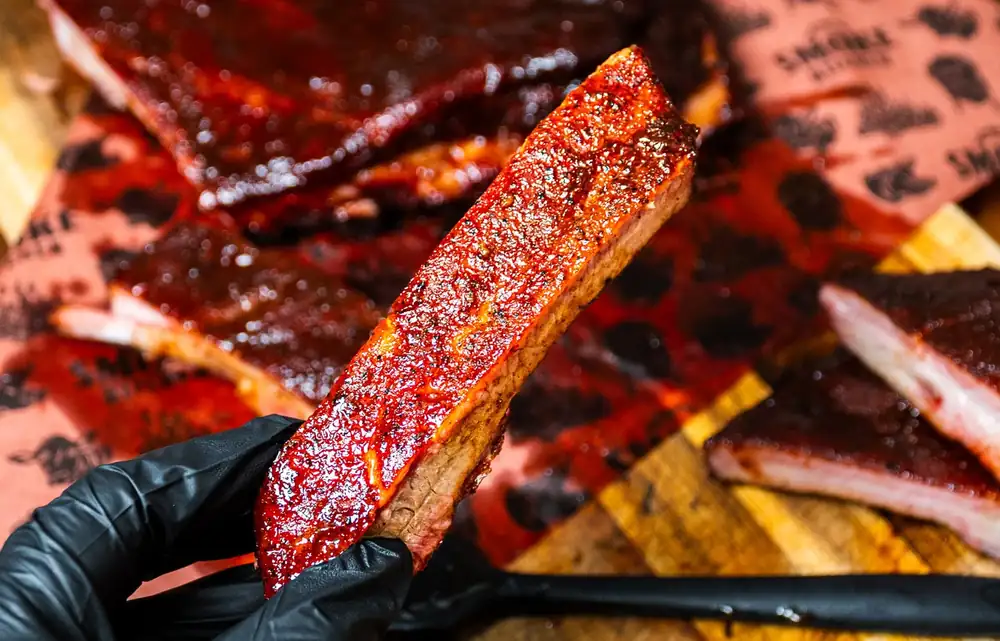
Smoked 3-2-1 Ribs (Foolproof Method)
The 3-2-1 method is a simple, time-based way to smoke pork spare ribs when you want predictable, tender results. Instead of chasing internal temperatures, you follow a clear smoking, wrapping, and finishing timeline that takes much of the guesswork out of the cook.
- 1 rack pork spare ribs
- 1 tbsp yellow mustard (you can also use oil Worcestershire as a binder to help the rub stick.)
- 2 tbsp bbq rub
- 50% water
- 50% apple cider vinegar
- 2 tbsp honey (brown sugar will also work.)
- ½ cup salted butter (1 stick, you use unsalted butter if your rub contains a lot of salt.)
- 1 tbsp bbq rub
- ½ cup bbq sauce
- Preheat your smoker to 225°F.
- Remove the membrane from the back of the ribs. Slide a butter knife under the membrane, grip it with a paper towel, and pull it off.
- Apply mustard binder to all sides of the ribs.
- Season the ribs evenly on both sides and along the edges
- Place ribs meat-side up on the smoker grates. Smoke for 3 hours.
- Lay out heavy-duty foil and add butter, honey, and the remaining 1 tablespoon of rub. Place the ribs meat side down and seal tightly.
- Return foil-wrapped ribs to the smoker meat-side down for 2 hours.
- Unwrap the foil and fold the edges into a “boat.” Flip the ribs meat-side up and smoke uncovered for 30 minutes.
- Use a basting brush to apply BBQ sauce, and optionally baste with juices from the foil. Smoke for 30 more minutes until the sauce sets. Remove from the smoker and serve.
This approach works especially well with spare ribs, which have more fat and connective tissue than baby backs and benefit from a longer, gentler cook. It’s a solid option for beginners or anyone cooking for a crowd.
What is the 321 method?
The 3-2-1 method is a foolproof way to smoke tender, fall-off-the-bone pork ribs. It takes all the guesswork out of the process by giving you a clear timeline to follow.
3 hours smoked uncovered to build bark and develop smoky flavor
2 hours wrapped in foil with added moisture to tenderize
1 hour unwrapped and glazed with BBQ sauce to set the bark and finish the ribs
This method is perfect for beginners because it removes the need to judge when the bark is ready or whether the ribs are done. I may have flunked math, but 3 + 2 + 1 = ribs worth bragging about.
Because 321 ribs are so hands-off, you can focus on prepping some epic BBQ sides like our smoked cornbread, mac and cheese, or southern-style coleslaw.
Ribs – I recommend St. Louis–style ribs, which are trimmed spare ribs with a uniform shape and even thickness. They cook evenly and are a great fit for the 3-2-1 method. Baby back ribs cook faster and can overcook with this timeline, so if you use them, a 2-2-1 approach works better.
Mustard – Acts as a binder to help the rub stick to the ribs. Don’t worry, you won’t taste it after smoking.
BBQ Rub – Use our ultimate rib rub, or your favorite all-purpose BBQ rub.
BBQ Sauce – I used Blazing Star BBQ Original, but any good-quality BBQ sauce works great. You can also use our homemade BBQ sauce if you prefer to make it from scratch.
Honey – Adds sweetness and helps create that sticky glaze during the wrap and final smoke. Brown sugar can be used instead for a richer molasses flavor.
Butter – Adds richness and moisture during the foil-wrapped phase. Stick with salted butter for maximum flavor.
What to put in your rib wrap
This recipe sticks to the tried-and-true combo of butter, honey, and a dusting of BBQ rub. It’s a method used by pitmasters all over the country, and it’s one I keep coming back to. No matter how many wild flavor combos I try, this wrap delivers every time.
That said, once you’ve got the basics down, the foil wrap becomes a great place to experiment. Think of it as your flavor playground.
The 3 Essential Components of a Rib Wrap
Flavor Boosters – A bit of BBQ rub is always welcome, but don’t stop there. You can add hot sauce, vinegar, aromatics (like garlic), or your favorite seasoning blend. This is where you can get creative.
Liquid Fat – Butter is the gold standard for adding richness and moisture, but you can swap in things like bacon fat, duck fat, or even broth for different flavors.
Sweetness – This balances out the smoke and seasoning. Honey and brown sugar are BBQ staples, but maple syrup, agave, or even fruit preserves (especially peach) can be a great twist.
Why BBQ snobs hate 3-2-1 ribs
It’s become oddly trendy in recent years to hate on the 3-2-1 method. Some self-proclaimed BBQ purists will tell you that blindly following this formula leads to overcooked, mushy ribs and ruined bark.
We recently ran a survey asking our readers to weigh in on the subject. The results? Almost perfectly split.
52.9% said they love fall-off-the-bone ribs, while 47.1% prefer a bit of bite
So, is the 3-2-1 method the best? That depends on your taste. Personally, I don’t use the 3-2-1 method all the, especially when I’m after that perfect competition-style bite. But when I’m cooking for a crowd or just want something hands-off and reliable, 3-2-1 is tough to beat.
If you’re new to smoking ribs or want a method that’s practically foolproof, this is a great place to start.
That said, 3-2-1 does involve a long foil wrap, which essentially braises the meat. This can soften the bark, push the texture toward “mushy” for some, and mellow out the more intense smoke flavor.
In my experience, most people outside the barbecue community love the fall-off-the-bone ribs texture you get with 3-2-1. It’s just the barbecue snobs who have a problem.
⏱Times and temps for 3-2-1 ribs
Smoker temp: 225°F for the entire cook.
Total cook time: ~6 hours 3 hours unwrapped on the smoker, meat-side up 2 hours wrapped in foil, meat-side down 1 hour unwrapped again to set the sauce and finish the bark.
3 hours unwrapped on the smoker, meat-side up
2 hours wrapped in foil, meat-side down
1 hour unwrapped again to set the sauce and finish the bark
1. Prep and season the ribs
Start by removing the membrane from the back of the rack. While this step is technically optional, leaving it on can result in a tougher bite. To remove it, slide a finger or butter knife under the membrane at one end, then grip it with a paper towel and peel it off in one piece.
Next, apply a light layer of yellow mustard to all sides of the ribs. Don’t worry, you won’t taste it. It acts as a binder to help the rub stick evenly.
Generously season the ribs with 2–3 tablespoons of your favorite BBQ rub (we recommend our homemade rib rub). Be sure to coat both sides and the edges so the flavor goes all the way through.
his allows the rub particles to separate completely before hitting the meat.
2. Smoke for three hours
The “3” in 3-2-1 refers to the first three hours of smoking. Place the ribs meat-side up on your smoker grates and cook at 225°F, uncovered. This stage builds deep smoke flavor and sets the bark.
You can use any smoker, pellet grill, or charcoal setup—as long as it holds a steady 225°F for the full cook. I used my Weber Searwood XL with a hickory pellet blend, but fruit woods like apple or cherry also work great for pork.
After two hours, check ribs for any dryness, and if needed, spritz with a 50 / 50 mixture of water and apple cider vinegar.
After three hours, the ribs should have darkened in color and developed a firm bark that feels slightly dry, not sticky. About ¼ inch of bone should also be starting to show at the ends.
That’s your cue to move on to the wrap.
3. Wrap the ribs
The “2” in 3-2-1 is what gives this method its signature tenderness. This phase is essentially a braise, locking in moisture and layering on flavor.
Lay out a sheet of heavy-duty foil and add butter, honey, and a sprinkle of BBQ rub to the center. Remove the ribs from the smoker and place them meat-side down directly on top of the mixture.
Pro Tip: I highly recommend heavy-duty foil as the sharp rib bones can easily penetrate foil and we want a nice tight seal.
If you don’t have heavy-duty, lay a few sheets on top of each other to ensure there are no holes.
Wrap the foil tightly to seal in steam, then return the ribs to the smoker for two hours at 225°F.
4. Unwrap and sauce
Now that your ribs have smoked for three hours and braised in foil for two, it’s time for the final step, the “1” in 3-2-1. This last hour firms the ribs back up, sets the sauce, and brings the bark to life.
Carefully open the foil and flip the ribs meat-side up, folding the foil into a “boat” to catch any juices. I like to let them smoke uncovered for 30 minutes before saucing. This helps tighten the bark without risking burnt sugar.
After 30 minutes, brush on your BBQ sauce and continue smoking for an additional 30 minutes, until the glaze has set and become tacky.
The surface should look glossy and feel tacky to the touch.
At this point, you can try checking the internal temperature of the ribs to determine doneness. You should aim for a temperature between 203°F and 207°F. With the 3-2-1 method, you don’t need to overthink it, and I usually don’t bother temping.
5. Rest and slice
Once your ribs come off the smoker, let them rest for 10–15 minutes, loosely tented with foil. This helps the juices redistribute so they don’t run out when you slice.
For the cleanest cuts, place the rack meat-side down to easily see the bones, then slice between them with a sharp knife. Flip them over to serve meat-side up.
3-2-1 ribs FAQs
Do you have to sauce your ribs? – Nope! Saucing is totally optional. You can baste the ribs with the liquid from the foil wrap during the final hour instead, or serve the sauce on the side so guests can add it to taste.
Can you smoke the ribs at a higher temperature? -Yes, you can. If you’re running your smoker at 250°F, try a 2-2-1 timeline. At 300°F, something like 2-1-30 (2 hours unwrapped, 1 hour wrapped, 30 minutes to glaze) works well. Just keep an eye on doneness—ribs cook faster at higher temps.
Can you make this recipe with baby back ribs? – Absolutely. Just keep in mind that baby backs are leaner and cook faster than spare ribs, so a 2-2-1 method is a better fit. The rest of the process stays the same.
What’s the best wood to use for ribs? – Pork has a fairly mild flavor, so it pairs well with a wide range of smoking woods. Hickory adds bold, classic BBQ flavor, while fruitwoods like apple, cherry, or pecan offer a milder, sweeter profile.
3-2-1 ribs recipe
Whether you’re new to smoking ribs or just want a stress-free way to feed a crowd, the 3-2-1 method delivers juicy, fall-off-the-bone results every time.
Ribs ingredients
2 tbsp bbq rub - use your favorite pork rub, or try our Ultimate Rib Rub Recipe — a bold, smoky-sweet blend crafted specifically for pork ribs.
Spritz ingredients (optional)