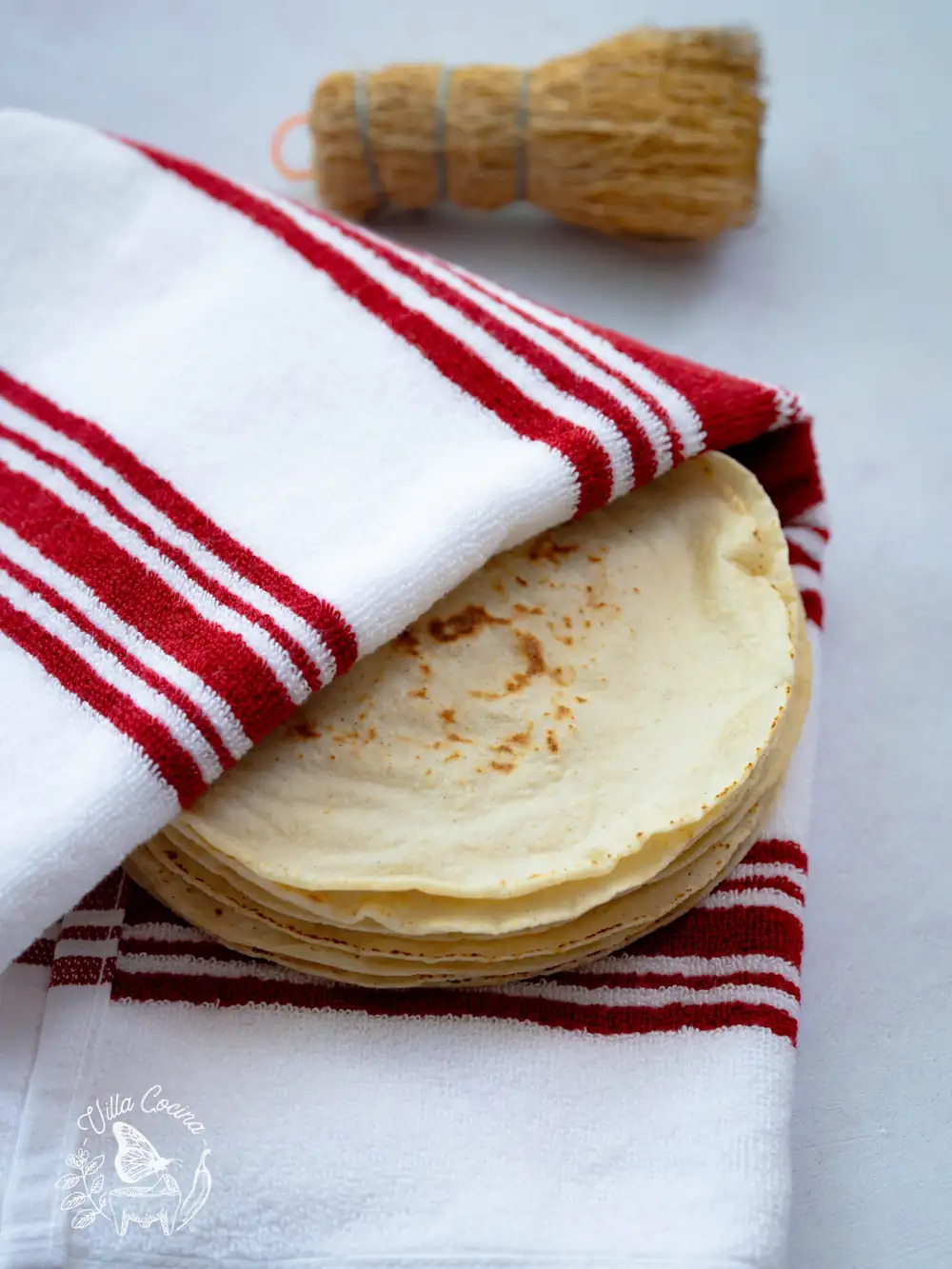
Corn Tortillas
Corn tortillas are the heart of Mexican cuisine. Made from nixtamalized corn turned into masa, these soft, fragrant tortillas form the base for countless dishes.
If you love authentic Mexican food, learning to make them at home is a game-changer.
Freshly made tortillas, straight from the comal, are like having freshly baked bread – it instantly elevates the experience, and you’ll soon realize what you’ve been missing out on. They’re extremely flavorful, super soft, and perfectly round for tacos, enchiladas, or quesadillas.
The beauty of corn tortillas? Just two ingredients: Masa Harina and water (plus a pinch of salt if you like)!
- Masa Harina is the instant, faster way to make corn tortillas. It’s a type of flour made from dried corn kernels that have been soaked in a lime solution until soft, then ground into a fine powder. Note that it’s referred to as corn flour, but it’s not the same as cornmeal.
When searching for masa harina, it’s important to follow a few tips to choose the very best quality:
- Choose the right one: Select masa harina specifically labeled for tortillas, not cornmeal or masa for tamales, which is not as fine and won’t work for tortillas.
- Freshness matters: Ensure it hasn’t been sitting out for a long time.
- Texture matters: It’s crucial the corn flour is finely ground for the best results.
Make the Masa
Place the masa harina in a large bowl. Gradually pour in the water while mixing by hand, until the masa is fully hydrated, forms a mass that holds its shape, and has no dry patches.
Then, knead for 3-5 minutes until the dough is smooth, pliable, still hydrated, and doesn’t stick to your clean hands.
Divide and Shape
Press and Cook The Tortillas
Cook the underside just until the edges begin to deepen in color and the tortilla releases from the comal, about 20 seconds. Then, flip and fully cook the other side until lightly browned, about 1 minute 15 seconds.
Finally, flip once more to allow the tortilla to puff up and develop golden brown spots, about 30 seconds.
Keep Tortillas Warm
Masa: Key Tips
- Adjusting Water for Masa: The amount of water used for the masa can vary depending on the temperature of the water and the room. To get it right, add water gradually as you knead and stop as soon as the dough reaches the right consistency.
- Fixing Masa Consistency: Don’t panic if the masa turns out too soft or dry – you can easily fix it! If the masa is too loose, gradually add small amounts of masa harina until it firms up and no longer sticks to your hands. If it’s too dry and cracks, add water a little at a time until the dough is soft and well-moistened.
- Use Packaging as a Guide: The water amount suggested on your brand’s masa harina can serve as a helpful guide. With practice, you’ll get a feel for the perfect dough consistency that works best for you.
- If the masa starts to dry out while you’re working with it, dip your fingers in water and lightly moisten the dough as needed.
A Tortilla Press is a game-changer for achieving perfectly round and evenly thick tortillas, which is crucial for proper puffing and cooking.
- I highly recommend the 10” Cast Iron Tortilla Press from Victoria, which I own and have gifted to others due to its excellent size and material.
- Alternatively, Masienda’s Doña Rosa Tortilla Press is a stylish and highly-rated option, available in a range of vibrant colors to match your kitchen style.
Round Plastic Liners: You can either cut your own from grocery bags (making sure to use the non-inked side) or opt for a convenient pre-cut option like Masienda’s Tortilla Press Liners.
A Comal is vital for elevating the tortilla-making experience. I use the Masienda Comal by Made In, which is perfect after seasoning.
- For this recipe, I use King Arthur’s Masa Harina, which yields the perfect texture and flavor of traditional Masa. It’s definitely a top favorite!
If you don’t have a comal, you can use a non-stick griddle or a cast-iron skillet. Keep in mind that you may need to adjust the heat, as different materials distribute temperature differently.
Does Your Tortilla Need to Puff?
Not always! Many factors can prevent tortillas from puffing, such as unexpected holes that allow air to escape or bubble buildup. Don’t be discouraged if your tortillas don’t puff – it’s not a failure! With practice, you’ll get better, and even non-puffed tortillas can be amazing. Just ensure they’re cooked through and store them in a tortilla warmer to further soften.
Enjoy your delicious homemade tortillas, puffed or not!
More Useful Tips
- Protect your work surface: Place a towel under the tortilla press to prevent scratching or damage.
- Season your comal: If using a carbon steel comal or cast-iron skillet, make sure it’s properly seasoned to prevent rust and sticking.
- Prevent drying out: Avoid overcooking or under-heating the tortilla, as this can cause it to dry out. Keep the comal at the right temperature.
- Handle with care: Gently place the tortilla on the comal, avoiding smacking or slamming, which can cause bubbling. Make sure it lies flat.
- Flip with ease: If you can’t flip the tortilla by hand, use a spatula to help you out. No need to burn yourself.
Recipe Video Tutorial
Below is my easy to follow video tutorial on how to make Corn Tortillas.
Storage
Refrigerate – Cool tortillas completely, then wrap in parchment paper and place in a ziplock bag. Label and date the bag. Store in the refrigerator for up to 1 week.
Freeze – Cool tortillas completely, wrap in parchment paper and place in a freezer-safe bag. Label and date the bag. Store in the freezer for up to 3 months.
Thaw in the refrigerator before using.
- Vacuum seal bags – removes air, preserves freshness, and prevents flavor transfer. This set keeps tortillas organized without taking up valuable kitchen space.
Reheating – Heat a comal or griddle over medium heat. Place a few tortillas in a single layer on the hot surface, flipping occasionally until they are soft and pliable. Once warmed through, remove and wrap them in a kitchen towel or tortilla warmer to keep them warm.
Mexico’s Ancient Culinary Magic!
For centuries, tortilla makers in Tlaxcala and throughout Mexico have perfected the art of pressing edible flowers and herbs into tortillas.
This labor-intensive technique, passed down through generations, demands precision, patience, and a profound understanding of the region’s flora.
Such a traditional technique is more than just a culinary practice – it’s a connection to Mexico’s rich cultural heritage.
Tips for Using Edible Flowers and Herbs
- Ensure the flowers and herbs are edible and safe for human consumption.
- Choose fresh and high-quality ingredients for the best flavors and aromas.
- Clean and dry thoroughly with care.
Decoration Ideas
- Edible flowers: floral, aromatic, with sweet flavors.
- Fresh cilantro: bright, fruity, and citrusy.
- Fresh oregano: peppery, herbaceous, and earthy.
- Fresh thyme: savory, slightly minty, and abundant in fragrance.
- Hierba buena (spearmint): cool, refreshing, and uplifting.
- Fresh parsley: mild in flavor but earthy and fresh.
Mold the tortilla with a press, leaving it slightly thicker than desired. Arrange the petals and leaves as you like. Cut out individual petals for easier placement, as using whole flowers can be tricky (but not impossible).
Once you’ve made your design, place the top liner, press one more time just to make sure everything sticks to the masa and you get it to the final thickness. Be careful not to press too hard.
Remove the top liner and lay the tortilla over the hot comal, decor side up. Then, continue to cook as you normally would.
Important Note: Keep in mind that the flowers and herbs may indent the tortilla, making it slightly more challenging for the tortillas to fully puff. However, it’s not impossible! If they don’t puff, don’t worry! Simply cook them thoroughly and wrap them in a towel to steam and soften.
Are Corn Tortillas Gluten Free?
Corn tortillas are naturally gluten-free, but watch out for cross-contamination and check packaging labels for confirmation.
Some recipes may include a small amount of all-purpose flour, so always verify that only corn was used and no gluten-containing ingredients were added.
Why is My Tortilla Cracking or Breaking?
Tortillas can crack if the dough is too dry or if the comal isn’t hot enough. On the other hand, too much water in the dough can cause them to break while shaping.
Can I Use Corm Meal To Make Corn Tortillas?
No, cornmeal is not suitable for making corn tortillas as it’s too coarse and will produce a crumbly and fragile texture.