Sweet and Sour Chicken: Embark on a Gastronomic Adventure Without Leaving the Kitchen
Sweet and sour chicken is more than just a dish; it's a hallmark of Chinese cuisine, captivating gourmets worldwide. Its vibrant, balanced flavor and the perfect combination of tender meat and rich, aromatic sauce make it an ideal choice for a family dinner or a holiday feast.
The History and Magic of Asian Balance
Sweet and sour (tian xuan) is the quintessence of Chinese culinary philosophy. This balance is achieved through the harmonious combination of sweetness (often from sugar, honey, or fruit) and acidity (vinegar or citrus). In the traditional version, which developed over millennia in Shandong province, the sauce often included black rice vinegar, soy sauce, and ginger.
Modern variations, influenced by Hong Kong and Cantonese cuisine, are often enriched with pineapple juice, ketchup for color, and tomato paste for depth. Our goal is to take the best of tradition and adapt it to modern tastes while preserving the very sparkle for which this dish is so prized.
Secrets to Perfect Texture: How to Make Chicken Tender
The main mistake when preparing this dish is ending up with dry, tough chicken. The meat should be juicy inside and covered with a crispy, but not thick, crust.
Marinating is the basics
To keep chicken tender, it requires pre-cooking. In Chinese cooking, the "velveting" technique is used for this.
Ingredients for the basic marinade:
- Chicken fillet (breast or boneless thigh) - 500 g
- Light soy sauce - 1 tbsp.
- Corn starch - 1 tbsp.
- Egg white (small) - 1 pc.
- Ginger - 1 cm of root, grated
Marinating process:
- Cut the chicken into 2-3 cm pieces.
- Mix with the remaining ingredients and leave for at least 20 minutes.
Starch and protein will create a protective film that will retain moisture during high-temperature roasting.
Proper breading and frying
Many recipes call for dredging the chicken in flour. This is acceptable, but for a more authentic texture, it's better to use a mixture of starch and a small amount of flour, or simply cornstarch.
- Heat vegetable oil in a wok or deep frying pan to 170-180°C.
- Fry the chicken pieces in small batches to maintain the oil temperature. Fry until golden brown (3-4 minutes).
- Remove the chicken to a paper towel to drain any excess oil. This stage marks partial cooking. It will be fully cooked in the sauce.
Classic Recipe: Sweet and Sour Kung Pao Chicken
While gong bao isn't traditionally a purely sweet and sour dish, its vibrant flavor profile pairs beautifully with fruity notes. We offer an adapted version that will amaze you with its depth.
Chicken and vegetables
- Fried chicken - 500 g
- Bell pepper (preferably red and yellow) - 1 pc.
- Garlic - 3 cloves
- Green onions - for garnish
Ingredients for sweet and sour sauce
- Rice vinegar (can be replaced with apple cider vinegar) - 3 tbsp.
- Sugar (cane sugar is best) - 3 tbsp.
- Light soy sauce - 2 tbsp.
- Tomato paste (or good quality ketchup) - 2 tbsp.
- Corn starch - 1 tsp.
- Water or pineapple juice - 50 ml
Preparing the sauce
In a small bowl, combine all the sauce ingredients, including the starch. Dissolve the starch thoroughly to avoid lumps.
Final assembly
- Heat 1 tablespoon of vegetable oil in a clean wok or frying pan.
- Add the coarsely diced onion and pepper. Sauté briefly for 2 minutes, until slightly softened (it's important to keep some crunch!).
- Add crushed garlic, sauté for 30 seconds until fragrant.
- Pour in the prepared sauce. Stir constantly. The sauce will begin to thicken right before your eyes thanks to the starch.
- Once the sauce comes to a boil and becomes thick and glossy, add the pineapple chunks and the previously fried chicken.
- Stir quickly to coat each piece with the sauce. Cook for no more than 1 minute.
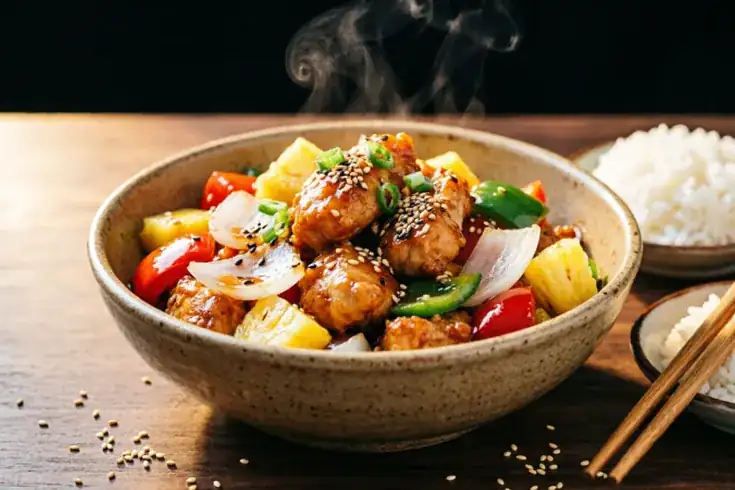
- Remove from heat. Serve immediately, sprinkled with chopped green onions and sesame seeds.
Gourmet Option: Chicken in Citrus Sweet and Sour Sauce
If you're tired of the classic tomato flavor, a citrus note will add a fresh, light touch, perfect for a summer menu.
Ingredients for citrus sauce
- Orange juice (freshly squeezed) - 100 ml
- Lemon juice - 1 tbsp.
- Honey or maple syrup - 2 tbsp.
- Rice vinegar - 1 tbsp.
- Zest of one orange
Preparation
All other steps for the chicken and vegetables remain identical. The main difference is in preparing the sauce:
- In a saucepan, combine orange juice, lemon juice, honey, vinegar, zest and ginger.
- Bring the mixture to a boil over medium heat. Let it simmer for a minute to allow the flavors to develop and the honey to dissolve.
- Reduce heat and pour in the diluted starch in a thin stream, stirring continuously.
- The sauce will thicken. Pour it into the wok with the fried chicken and vegetables, coat, and serve.
Pro tips for perfect sound
To ensure your dish doesn't look like a random jumble of ingredients, but rather resembles the work of a chef, pay attention to the details.
Working with temperature conditions
Chinese wok cooking requires very high temperatures. If you're using a home stovetop, work quickly and cook in small batches. An overheated wok will caramelize the vegetables around the edges while preserving their juiciness inside. If the vegetables begin to simmer rather than fry, the temperature is too low.
The Secret to Crispy Vegetables
Vegetables such as broccoli, carrots, or green beans can be blanched beforehand. Place them in boiling salted water for 1 minute, then immediately transfer to ice water. This technique locks in the color and leaves the vegetables crisp, which contrasts with the tender chicken and rich sauce.
Balance of acidity and sweetness
Never add sugar and vinegar to a sauce at the same time. Honey and sugar caramelize better if added at the very beginning, while heating the sauce base. Vinegar, being volatile, is best added at the end to preserve its vibrant flavor.
Pineapple alternative
If you don't like canned pineapple, you can substitute it with the following ingredients to add the desired tartness and fruity sweetness:
- Kiwi (firm, not overripe, diced).
- Tangerines (peeled slices).
- Pickled apricots (in moderation).
What to serve with
Sweet and sour chicken is a rich, flavorful main dish. It needs a neutral companion to pull the sauce together.
- Classic white rice. It should be fluffy, not sticky.
- Noodles. Egg noodles, lightly fried with sesame oil, are ideal.
- Fresh Salads. A light cucumber salad with rice vinegar and sesame seeds makes a wonderful refreshing addition.
The influence of soy sauce
Soy sauce isn't just salt. Asian cuisine uses different types:
- Light Soy Sauce: It is saltier and is used to add basic flavor and texture.
- Dark Soy Sauce: Less salty but thicker and deeper in color, it is often used for glazing and to give a dish a desired brown color.
For our sweet and sour sauce, use light soy sauce to avoid overloading the dish with color, but if you want a richer, more restaurant-like hue, you can substitute 1 teaspoon of light soy sauce for dark soy sauce.
Sweet and sour chicken is a hymn to the harmony of flavors. Once you master the basic marinating and frying techniques, you can adapt this recipe to your family's tastes, experimenting with fruits, vegetables, and spices. The key is to maintain balance—between the sweetness that envelops the palate and the tartness that whets the appetite. Create your perfect recipe today and enjoy the authentic flavors of Asia without leaving your kitchen.