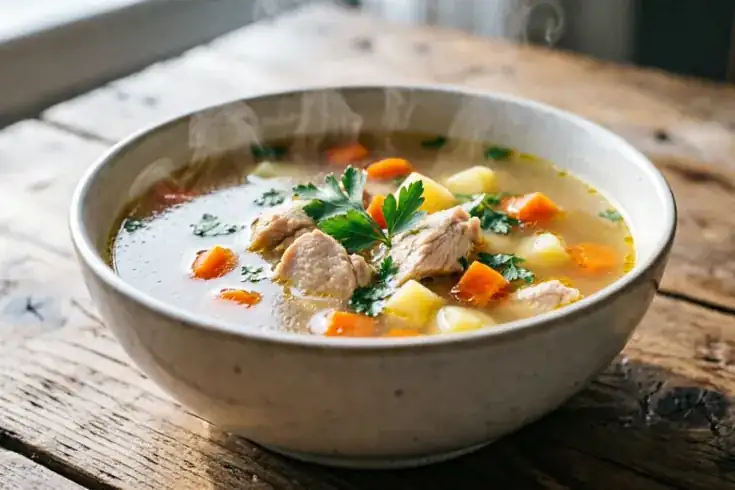
A classic on a plate: chicken soup to warm body and soul
Chicken soup is more than just a first course. It's a symbol of comfort, care, warmth, and health. For centuries, it has remained a cornerstone of cuisines around the world, from the exquisite French consommés to the noodle classics of the East.
The secret to its incredible popularity lies in its simplicity, the availability of ingredients, and, of course, the deep, rich flavor achieved with proper preparation. We'll delve into the world of golden broths, discuss which parts of the chicken produce the best broth, reveal the secrets of perfectly julienned carrots, and share several variations of this timeless dish.
The Gold Standard: The Art of Making the Perfect Chicken Stock
The foundation of any great soup is its broth. If the broth is weak, watery, or cloudy, the soup as a whole will be unimpressive. The ideal broth should be clear, rich, and amber or golden in color.
Many people make the mistake of starting soup with a whole store-bought chicken. While this is possible, for maximum flavor and nutrition, it's important to choose your ingredients more wisely.
Choosing the Right Chicken
For a rich, healthy broth, the best parts of chicken are those rich in collagen and connective tissue.
1. Bones and frame
Bones are the foundation of the flavor. Ideally, you'll need chicken carcasses, backs, necks, or soup stock. These parts contain the most gelatin, which gives the broth a pleasant, enveloping texture.
2. Meat
If you want meat in your soup, use chicken drumsticks, thighs, or wings. They stay juicy even after long cooking. Chicken breast, while great for diet salads, quickly becomes dry and lacks flavor in broth.
3. Vegetable "bouquet"
Don't forget the classic set of aromatic vegetables known as "mirepoix" (or its Russian equivalent): onions, carrots, and celery. These are added to the broth whole or in large pieces.
Steps to prepare clear broth
Clarity is a sign of mastery. Cloudiness occurs when the protein boils and coagulates too quickly.
Preparation
Wash all chicken parts thoroughly. If you're using a whole chicken, it's recommended to remove the skin and cut any larger pieces into smaller pieces to enhance the flavor.
First drain
This is the key to clear liquid. Place the chicken in a saucepan and cover with cold water. Bring to a boil over high heat. Once the water boils and begins to foam (suddenly), drain all the water. Rinse the meat and the saucepan. This will remove any curdled proteins and particles that can make the broth cloudy.
Cooking
Cover the chicken with cold water again. This time, you can add a whole peeled onion, one large carrot, a couple of celery stalks, and a few black peppercorns.
Bring to a boil over medium heat. As soon as you notice the first signs of boiling, immediately reduce the heat to low. The broth should barely simmer, just barely moving. Only occasional, lazy bubbles should appear on the surface.
Time and patience
Bone-in broth should be simmered for at least 3-4 hours. If you're using a whole young chicken, 1.5-2 hours is sufficient. Skim off any scum that forms during simmering, but don't stir the broth with a spoon. Add salt at the very end to avoid oversalting, as the water will evaporate.
Recipes for the Soul: Variations on Classic Chicken Soup
Once you've mastered the technique of making the perfect broth, you can move on to soups. The variety of fillings and toppings is astounding, allowing you to create something new every time.
1. Classic Chicken Soup with Homemade Noodles
This is perhaps the most well-known version, beloved by children and adults alike. Home, dinner, an evening with the family.
For the broth:
- Chicken parts (drumsticks, backs) - 1 kg
- Water - 3 liters
To fill the soup:
- Onion - 1/2 pc.
Preparation
- Cook the broth as described above, strain it, and discard any bones and vegetables that have lost their flavor. Separate the meat from the bones and chop.
- For the filling, cut the carrots into thin strips and the onion into small cubes.
- Bring the broth to a boil. Add the chopped vegetables. Cook over medium heat until the carrots are tender (about 10 minutes).
- Add bay leaf and salt to taste.
- When the vegetables are almost done, add the noodles. Cook according to package directions (usually 3-7 minutes). Be careful not to overcook them.
- At the very end, add the minced meat and a generous amount of fresh herbs. Let the soup sit, covered, for 10-15 minutes before serving – the flavor will deepen.
2. Chicken soup with rice and herbs
A great alternative to noodles, rice makes the soup more filling and adds a delicate texture.
Ingredients
- Ready-made chicken broth - 2.5 liters
- Chicken fillet (boiled) - 300 g
- Round grain rice - 1/2 cup
- Potatoes - 2 medium tubers
- Onion - 1 pc.
- Carrots - 1 pc.
- Fresh thyme or rosemary - 1 sprig
- Salt, pepper
Preparation
- Rinse the rice thoroughly until the water runs clear. Cut the potatoes into small cubes.
- Add the potatoes to the boiling, strained broth. Cook for 5 minutes.
- In a frying pan, lightly sauté finely chopped onions and carrots in a small amount of oil (if desired, you can do without it, stewing the vegetables in the water from the broth).
- Add rice and sautéed vegetables to the pan. Add a sprig of thyme.
- Simmer until rice and potatoes are cooked through (about 15-20 minutes).
- Five minutes before the end of cooking, add the chopped boiled chicken breast, salt, and pepper. Remove the thyme sprig.
- Serve with chopped parsley.
3. Jewish Noodle Soup: The Secret of Lemon and Yolk
In Ashkenazi cuisine, chicken soup is considered a true medicine. Its hallmark is a highly concentrated, golden broth, often laced with lemon juice for a subtle tartness.
Ingredients
- Rich chicken broth (simmered for at least 4 hours) - 2 liters
- Noodles (very thin web or homemade) - 100 g
- Boiled chicken meat - 200 g
- Carrot - 1 pc. (cut into circles)
- Fresh dill
- Juice of half a lemon
- Egg yolk - 1 pc. (for thickening and color, optional)
Preparation
- Bring the broth to a boil. Add the carrots. When they are soft, add the noodles. Cook until tender.
- 2 minutes before the noodles are ready, add salt, pepper and lemon juice.
- If using a yolk, remove the soup from the heat. In a separate bowl, whisk the raw yolk with a couple of tablespoons of hot broth to prevent it from curdling. Slowly pour this mixture into the pan in a thin stream, stirring constantly. The soup should not boil after this step.
- Add the meat and sprinkle generously with dill.
Secrets of haute cuisine from an experienced chef
To take your homemade chicken soup beyond the ordinary and make it truly restaurant-quality, consider a few often-overlooked details.
How to achieve the perfect color
If you're aiming for a deep golden or even brownish hue in your broth, don't be afraid to use onions in their skins. A peeled but unwashed onion, halved and fried in a dry pan until blackened on one side, will impart a rich color and additional flavor to the broth as it cooks.
Another technique is roasting the bones. Before adding water, lightly fry the bones and chicken parts until golden brown. This will create an effect similar to making a consommé.
Vegetables: Size Matters
If you want the vegetables in the soup to remain whole and firm, add them to the already boiling broth 15-20 minutes before the end of cooking.
If the goal is to give the broth maximum flavor, then carrots and onions are added at the very beginning and then completely removed.
For an appetizing cut, stick to a consistent style. Thin strips (julienne), which are easy to eat with a spoon, are considered classic.
Herbs and Spices: Balance and Freshness
Don't use too many dried herbs. They can impart an earthy, unpleasant flavor to the broth. Spices added at the very beginning (peppercorns, bay leaves, and root vegetables) should be simmered for a long time.
Add fresh herbs (dill, parsley, green onions) only at the very end, just before turning off the heat or after serving. The heat from the broth will release their essential oils, preserving the vibrant flavor and aroma.
Filling and serving
Never add salt at the beginning of a broth if you're using inexpensive poultry, perhaps frozen. Salt draws out moisture, and the broth may lose flavor. Adjust the salt level toward the end.
To give the soup a light silkiness and a delicious fat, some chefs recommend carefully skimming the fat from the surface of the broth after it has completely cooled, and then using it to sauté vegetables.
The secret of "yesterday's" taste
Like many rich dishes, chicken soup improves on the second day. After cooling, the fat hardens into a crust on the surface, trapping the flavors inside. Reheating it the next day yields a much deeper, richer flavor.
Benefits of Chicken Soup: Not only tasty, but also healthy
Chicken soup has earned its reputation for good reason. Scientific research confirms that it does indeed have a number of beneficial properties, especially when it comes to colds and restoring energy.
Anti-inflammatory effect
Warm broth can help relieve cold symptoms. The steam from the soup helps clear the nasal passages, and the warm liquid helps loosen mucus in the throat and lungs. Certain components found in chicken and vegetables may have a mild anti-inflammatory effect.
Ease of assimilation
Broth is a light source of protein and minerals that are easily digested even by a weakened body. It doesn't overload the digestive system, which is critical when you're feeling unwell.
Hydration
When you're sick, your body loses a lot of fluid. Chicken soup is a great way to replenish your fluid balance while also providing essential electrolytes found in meat and vegetables.
Subtleties: What to Avoid
To make the perfect soup, it's important to know not only what to do but also what to avoid. The main enemies of good chicken soup are haste and overheating.
Avoid rapid boiling
Boiling water with vigorous bubbling breaks down the structure of the proteins released from the meat, causing them to settle on the surface, turning the broth cloudy and gray. Always simmer at a barely noticeable simmer.
Do not use ready-made bouillon cubes.
Despite their convenience, cubes contain excess salt, flavor enhancers (MSG), and preservatives. These instantly overpower the delicate, natural flavors of chicken and vegetables, ruining all your slow-cooking efforts.
Be careful with fat
While chicken fat adds richness, too much of it makes the soup heavy and less nutritious. If you're using fatty parts of the chicken (such as whole thighs with skin), skim off as much of the solidified outer layer as possible as it cools.
Chicken soup is a philosophy unto itself. It's a meditative process that demands attention to detail: from the first draining of the water to the last pinch of herbs. By mastering the slow-cooking technique, you'll create not just a meal, but a true elixir that invigorates, warms in the cold, and reminds you of life's most joyful moments. Anyone who learns how to make broth properly forever discovers the world of true, profound home cooking.