Which side of the foil should I put in the oven: shiny or matte, and does it even make a difference?
Why does foil have two different sides?
The difference between the shiny and matte surfaces of the foil isn't due to any special properties, but to the production technology. To ensure the aluminum sheet is thin enough without tearing, it is rolled in two layers at once. The side that touches the polished rollers becomes smooth and shiny. The side that doesn't touch the smooth surface is unpolished and remains matte. That's the secret.
Baking foil: is there a difference between the sides?
In terms of thermal conductivity and safety, there's no difference between the two. Aluminum conducts heat equally well from any surface, and no metal particles are released into the food.
The shiny side does reflect slightly more infrared radiation, while the matte side absorbs it slightly better. But in a conventional oven, where heat comes from all sides and warms the food itself, this nuance is practically unnoticeable. Research and culinary experiments show that dishes wrapped with the shiny or matte side inward have similar taste and texture.
The only noticeable difference is that the matte side is slightly rougher, so food may stick to it more easily. The shiny surface is smoother, allowing grease and sauces to drain more easily.
Which side of the foil should I bake meat and chicken on?
For meat and chicken, the principle is simple: if you're wrapping the entire product, the side doesn't matter. But if you're laying foil on a baking sheet, it's best to place the product on the shiny side. It's smoother, prevents the meat from sticking, and allows the fat to drain better.
If you're roasting a whole chicken in foil, seal the edges tightly to prevent steam from escaping. This is more important than choosing the right side. For a crispier crust, you can unwrap the foil at the end of cooking and let the chicken brown uncovered.
Which side of the foil should I bake potatoes and other vegetables on?
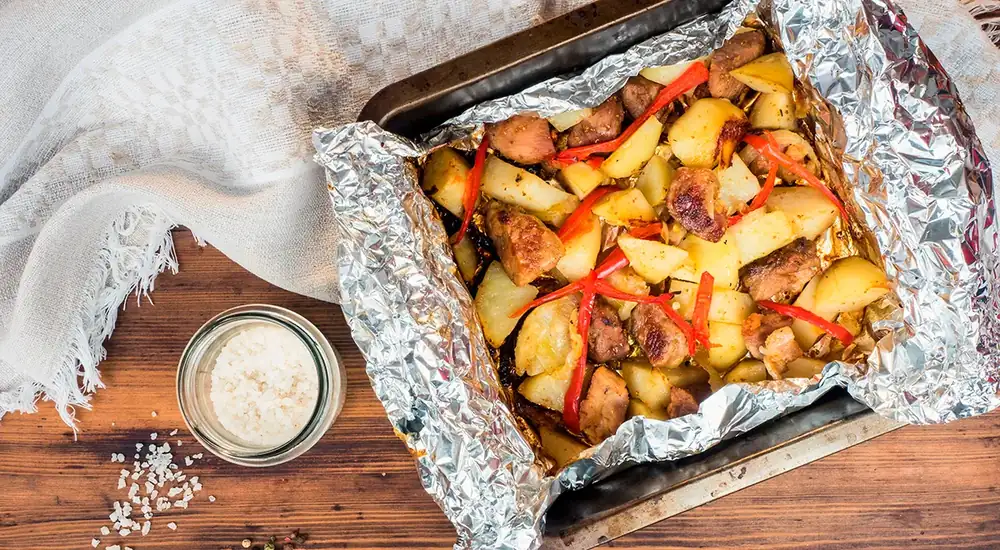
The same logic applies to vegetables. If potatoes or vegetables are baked in a foil packet, the side facing the foil doesn't matter. The main thing is to seal the edges tightly so the vegetables can steam in their own juices.
If you're cooking vegetables on open foil, it's best to use the shiny side as the work surface. It's less likely to stick and makes it easier to remove vegetables. For grilling or open flames, there's a separate recommendation: wrap the food with the shiny side facing out, so it reflects some of the heat from the coals and prevents burning.
Which side of the foil should I bake the fish on?
Fish is delicate and prone to sticking. Therefore, it's especially convenient to use the shiny side as the inside. It's smoother, and the fish fillet or carcass won't fall apart when unwrapped.
If you're baking whole fish in foil, seal the edges tightly. This will preserve the fish's juiciness and prevent the fish from wafting into the kitchen during cooking. You can lift the foil slightly 5 minutes before the end of cooking to allow the fish to brown.
Frequently asked questions
Is there a health difference between the shiny and matte side?
No. Both sides are completely safe. Foil does not release harmful substances into food at normal baking temperatures. The myth that the matte side "leaves metal" is not scientifically proven.
Can foil be reused and which side?
Foil can be reused as long as it hasn't been in contact with acidic foods (such as tomatoes or lemon) and isn't heavily soiled. Either side can be used. If the foil is warped or torn, it's best to use a new sheet.
The shiny side reflects or conducts heat
The shiny side does reflect slightly more infrared radiation than the matte side. However, this is of little practical importance in the oven, as the heating is provided by hot air rather than direct infrared radiation. On an open flame or grill, the reflection may be more noticeable.
Do I need to grease the foil before baking?
It's not necessary, but for foods that tend to stick (fish, skinless chicken, high-sugar vegetables), a light brushing of oil will help. This is especially true if you're using the matte side. The shiny side is smoother and requires less oiling.
What is important to remember
The difference between the shiny and matte sides of foil isn't a matter of safety or taste, but rather convenience. Both sides conduct heat equally well and are food-safe. The shiny side is slightly smoother, making it less prone to sticking and easier to remove. The matte side absorbs heat slightly better, but this is practically unnoticeable in a home oven.
If you're roasting meat, chicken, fish, or vegetables in a closed foil, the side facing the foil doesn't matter. If you're placing the food on an open baking sheet, it's easier to use the shiny side. The key is to seal the edges tightly to lock in the juices and flavor. And remember: high-quality, thick foil is more important than the side facing the food.