Beyond Kentucky: Bourbon finds its broader voice
For most of its modern life, bourbon has meant one place. Kentucky. The association is so strong that, for many drinkers, it feels like a rule rather than a tendency. In reality, bourbon has always been legally portable. It must be made in the US, from at least 51 per cent corn and matured in new charred oak.
Kentucky built the reputation, the flavour expectations and the cultural narrative of bourbon. Its limestone-filtered water, pronounced seasonal temperature swings and vast reserves of ageing stock created a model that others rarely challenged. More than 90 per cent of the world’s bourbon still comes from the state today.
A growing number of distilleries outside Kentucky are beginning to assert themselves. Not through imitation, but through difference. Climate, grain and maturation are starting to shape distinct styles. Bourbon is no longer being defined solely by one place. It is beginning to behave more like a category with regional expression.
To understand that shift, it is worth starting with a distillery that, for years, sat quietly at the centre of American whiskey production. MGP Distillery in Lawrenceburg, Indiana.
For much of its history, MGP operated out of sight. It produced whiskey at scale for other brands, many of which went on to build strong reputations of their own. The distillery’s role was essential, but largely invisible.
That invisibility made sense in a market where provenance was rarely questioned. Bottlers built brands. distilleries supplied liquid and the distinction between the two was not always front of mind for consumers.
Over the past decade, that has changed. Drinkers have become more informed and more curious. Questions around origin, production and authenticity have moved from niche interest to mainstream expectation.
MGP was uniquely positioned for this moment. It had mature stock, technical expertise and decades of production history. What it lacked was a visible identity. Through the development of its own brands, including Ross & Squibb and Remus Bourbon, that identity has come into focus. This is not simply a case of vertical integration. It is a shift in narrative.
MGP is no longer just a source of bourbon, it is an origin in its own right. That transition speaks to a broader change in the category. Production alone is no longer sufficient. Provenance has become part of the value.
If MGP represents the hidden backbone of American whiskey, Wilderness Trail Distillery offers a different, but equally telling, case.
Wilderness Trail is not outside Kentucky geographically, but it sits outside the traditional conversation. Despite being one of the largest producers of whiskey in the United States, it has remained relatively quiet in consumer consciousness. Its influence far exceeds its visibility.
Part of that comes down to focus. Wilderness Trail has built its reputation on process rather than promotion. Fermentation, yeast management and grain selection sit at the centre of its approach. It has also supplied distillate and expertise across the industry, further embedding itself into the category without necessarily putting its name on the label.
There is a parallel here with MGP. Both distilleries demonstrate that scale and influence do not always translate into recognition. Both are now moving, in different ways, towards greater visibility.
In Wilderness Trail’s case, that visibility is tied to a growing appreciation for technical precision. As consumers become more interested in how whiskey is made, distilleries that can speak credibly about process gain relevance.
For distilleries outside Kentucky, credibility has always been the central challenge. Not because of any legal constraint, but because of expectation. Kentucky established the flavour profile most drinkers recognise. It set the benchmark.
MGP’s strength lies in its history. It does not need to claim legitimacy. Its liquid has been trusted for decades. The shift is simply one of visibility. Other distilleries approach the challenge differently. They build identity around what makes them distinct rather than what aligns them with Kentucky.
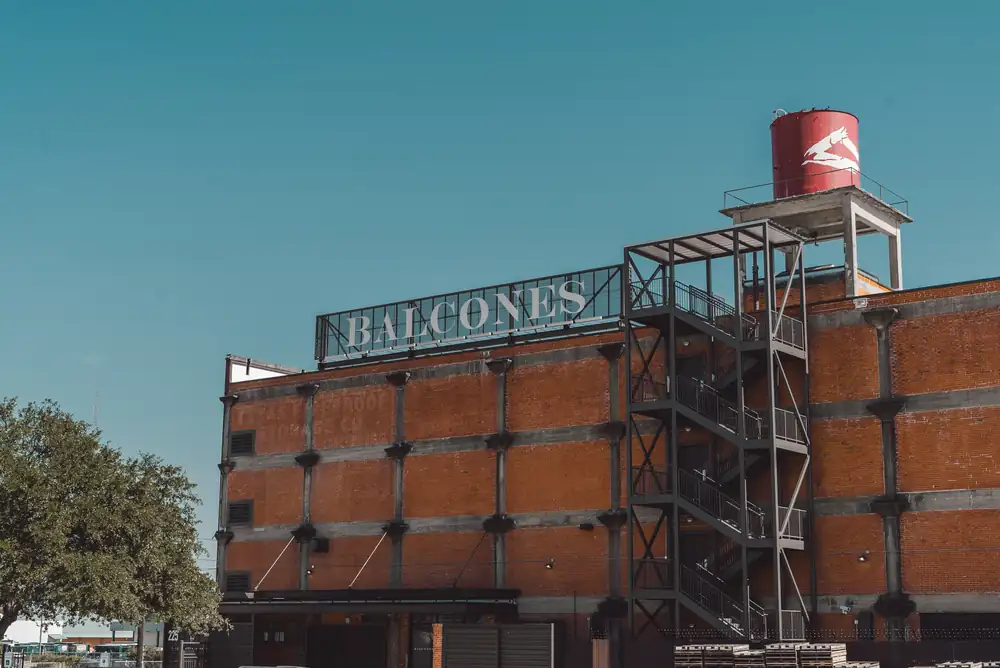
One of the clearest examples is Balcones Distilling in Waco, Texas who are using climate as a creative force. Kentucky’s climate plays a defining role in how bourbon matures. Warm summers and cold winters drive the expansion and contraction of spirit within the cask. Over time, this interaction builds structure and complexity. Texas takes that dynamic and intensifies it.
Higher average temperatures and more extreme swings accelerate the maturation process. The spirit interacts with the wood more aggressively, leading to faster extraction and greater concentration. The result is not simply bourbon that ages more quickly, but bourbon that develops differently.
Balcones has built its identity around this distinction. Its whiskies often display greater intensity, more pronounced oak influence and a different balance of flavours. Grain selection and distillation technique contribute, but climate remains the defining factor.
If bourbon can express itself differently depending on where it is made, then place becomes more than a backdrop. It becomes a driver of style.
Historically, bourbon has not been discussed in regional terms. Unlike Scotch, which is often framed through the lens of Speyside, Lowlands, Campbeltown, Islay or the Highlands, bourbon has been treated as a single flavour family.
Indiana brings scale and consistency, underpinned by a long production heritage. Texas introduces climatic intensity and bold flavour profiles. Even within Kentucky, producers like Wilderness Trail are reshaping expectations through process and precision.
These differences are not yet codified into formal regions, they remain fluid and evolving, but they are becoming distinct enough to register. If this trajectory continues, bourbon may begin to develop a more nuanced identity. Not fragmented but layered.
One of the key drivers behind this shift is transparency. Sourcing has long been part of American whiskey, brands often built reputations around liquid they did not distil and for years, this was accepted practice whereas today, it is increasingly scrutinised.
Drinkers want to know where their whiskey comes from, they expect clarity around distillation and maturation. This demand has reshaped how distilleries and brands present themselves.
MGP’s evolution reflects this new reality; by stepping forward as a producer, it aligns with a consumer base that values provenance as much as flavour which leads to innovation within inherent tradition.
What is striking about the rise of non-Kentucky bourbon is how little it disrupts the core of the category. The rules remain unchanged, bourbon must still be made from at least 51 per cent corn and matured in new charred oak but what changes is the context in which those rules are applied.
Climate, grain and maturation environment introduce variation within a familiar framework. This allows distilleries to innovate without abandoning tradition. Balcones stretches the boundaries of flavour while remaining firmly within the definition of American whiskey. MGP reframes its role without altering its production and in another state, Wilderness Trail pushes process without breaking convention.
There is also a practical dimension to this evolution, as demand for premium bourbon has grown significantly over the past decade and Kentucky distilleries have invested heavily to meet that demand, but maturation cannot be accelerated indefinitely which ultimately creates market space.
Distilleries outside Kentucky can enter the market with different flavour profiles, different timelines and different narratives. They are not competing directly with Kentucky’s heritage as they are offering an alternative perspective but still must adhere to the macro production rules and laws.
For retailers, this broadens the range. For consumers, it increases choice. For the category, it adds resilience. But of course, not every non-Kentucky distillery succeeds.
The temptation to replicate Kentucky styles remains strong and without the same environmental conditions, those attempts often fall short. They feel like approximations rather than expressions.
The more compelling producers embrace their differences, build identity around place, process, or perspective. MGP leans into its production heritage. Balcones leans into climate. Wilderness Trail leans into technical precision. Others will need to define their own position with clarity and uniqueness if they are to stand out. For decades, bourbon’s story has been singular centred around Kentucky, heritage, family and tradition and that story always remains intact.
What is changing is the addition of new narratives, distilleries stepping into view, regions expressing themselves and producers building identity around how and where they make their whiskey.
Kentucky will remain the heart of bourbon; its infrastructure, stock and reputation ensure that. But what will change is the space around it. Distilleries like MGP Distillery and Wilderness Trail Distillery are already shaping that shift in different ways. Over time, the category will become more layered, more expressive and more open to interpretation.
For most of its history, bourbon has been defined by one place, that clarity helped build its global success, now it is entering a more complex phase and the rise of distilleries beyond the traditional narrative will not weaken bourbon holistically, it will strengthen it.
The next chapter of American whiskey will not be written in one place alone.