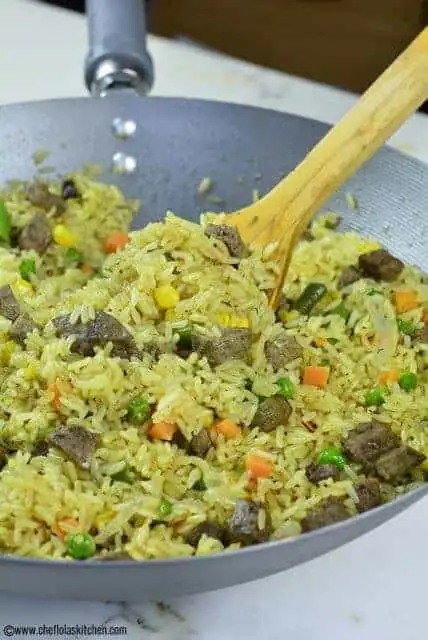
Nigerian fried Rice
Nigerian fried rice is one of the most beloved party dishes. It's savory, packed with veggies and tender beef liver, and it comes together in under 30 minutes.
- 1 lb beef liver
- 2 tbsp cooking oil
- ½ tsp salt (or to taste)
- ½ tsp black pepper
- ½ tsp paprika
- 3 cups long-grain rice
- 3½ cups chicken stock (turkey or vegetable stock)
- 1 tsp curry powder
- 1 cup diced onion
- 1 cup mixed vegetables (carrots, sweet peas, sweet corn, and green beans)
- 2 tsp chicken stock powder
- ½- inch fresh ginger (minced or grated)
- 2 tsp dried thyme
- 1-2 tsp curry powder
- 1 habanero pepper (seeds removed and minced, or cayenne pepper to taste)
- salt to taste (to taste)
- 2-3 tbsp cooking oil
- Cut the beef liver into about 2-inch-thick slabs. Rinse and pat them dry with paper towels.
- Season the beef liver with salt, black pepper, and paprika. Heat the oil in a skillet over medium-high heat, then add the beef liver slabs and fry until browned and cooked through, turning occasionally.
- Remove from the pan and set aside to cool. Then dice into small cubes. About half an inch thick.
- Rinse the rice thoroughly until the water runs mostly clear. Add the rice to the pot with the chicken stock. Cover and bring to a boil, then reduce the heat and cook until the rice is tender and the stock has been absorbed. The rice should be tender but firm, with every grain separate, not soft or mushy. Do not overcook the rice. Allow it to cool. See note 1
- Heat 2–3 tablespoons of oil in a skillet or wide pot over medium-high heat. Add the diced onion and fry for 2 minutes. Add the ginger and minced habanero pepper and fry for about 30 seconds.
- Add the mixed vegetables and fry for 2 to 3 minutes, until they are tender but still slightly crisp.
- Add the chicken stock powder, thyme, and 1 teaspoon of curry powder. Stir well and cook for another minute.
- Stir in the cooked liver into the vegetables and cook for 1–2 minutes.
- Add the cooled rice to the pan in batches. Gently toss everything together until the rice is evenly coated with the vegetables and liver. Stir-fry for 3–5 minutes, allowing the flavors to come together.
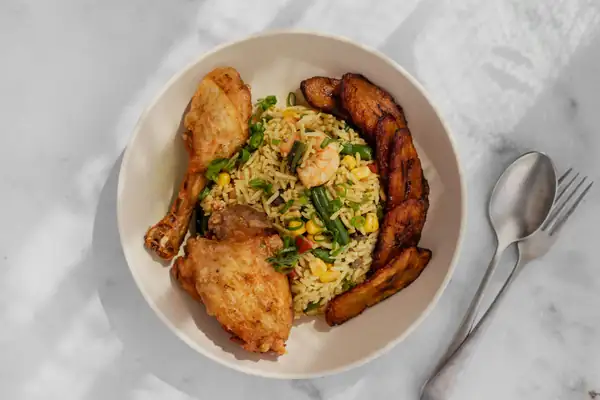
- Taste and adjust the seasoning if needed. Serve hot with fried or grilled chicken, moi moi, Nigerian salad, fried plantains, or your favorite side dish.
The Rice That Shows Up at Every Celebration
There are a couple of rice dishes that define every Nigerian party, every holiday, every milestone. Nigerian Fried Rice and Jollof Rice rank the highest. You will rarely find one without the other on a Nigerian party table, and I honestly cannot decide which one I love more.
But honestly, you don't have to wait for a special occasion to make it at home!
What makes our Nigerian fried rice so different from the Asian fried rice most people are familiar with is the seasoning. There is no soy sauce or other strong sauces here. The depth of flavor comes from curry powder, thyme, seasoning cubes, and an abundance of fresh vegetables: carrots, green beans, sweet peas, and sweet corn that give our rice its characteristic color, texture, and freshness.
The beef liver is what makes our version particularly special and distinctly Nigerian. It adds a rich, subtle depth you cannot quite put your finger on, but you would definitely notice if it were missing.
I understand not everyone loves beef liver; you can use shrimp, chicken, or even beef as a substitute. Leave the meat out entirely for a vegan version.
What Is Nigerian Fried Rice?
Nigerian Fried Rice is a popular West African rice dish made with cooked rice, mixed vegetables, and seasoned protein, mainly beef liver, but chicken, beef, or shrimp can also be used.
The rice is first cooked until just tender, then stir-fried with vegetables and protein over relatively high heat. Curry powder gives the rice its familiar golden color and distinctive flavor, while chicken stock adds extra depth.
A good Nigerian Fried Rice should be flavorful, colorful, and separated, not mushy or clumped together.
Why You'll Love This Nigerian Fried Rice Recipe
Easy to make: Once your ingredients are prepared, everything comes together quickly.
Full of flavor: The combination of chicken stock, curry powder, thyme, and vegetables gives the rice a delicious savory taste.
Colorful and festive: The bright vegetables make it perfect for parties and celebrations.
Customizable: You can use chicken, beef, shrimp, liver, or a combination of proteins.
Great for meal prep: It keeps well in the refrigerator (when cooked properly) and reheats beautifully.
Making It Right
The secret to really good Nigerian Fried Rice is properly cooked rice, well-seasoned stock, fresh vegetables, and good heat.
Don't rush the rice
and stay away from vegetables with high water content, especially if you are new to making this recipe.
Once you get those things right, making delicious Nigerian Fried Rice at home becomes so easy.
What Vegetables Can I Use?
Common vegetables in Nigerian Fried Rice include low-water veggies like carrots, green beans, peas, and sweet corn. You can also use bell peppers, but you need to take proper care because their water content can easily make the fried rice go sour within hours.
You can adjust the vegetables based on what you have available. Some people also add cabbage.
The important thing is to cut the vegetables into small, fairly even pieces so they cook quickly and blend nicely with the rice.
Fresh Rice or Leftover Rice?
Both work well, and I use whichever one I have available. However, traditionally, we like to use freshly cooked rice so we can control the doneness. We cook the rice until just done or almost done. Then, we allow the rice to cool to the touch before frying.
Hot, freshly cooked rice is too wet and will turn mushy the moment it hits the hot oil. If you are short on time, simply spread the rice on a sheet pan to let the steam escape quickly, or pop it in the fridge for 10 to 15 minutes before using. This helps the fried rice last longer without getting sour within hours.
Leftover rice, while not traditional, is actually easier to work with. Since cold rice is drier and firmer, the grains separate easily in the pan, don’t clump together, and crisp up nicely over high heat.
The downside is that you may miss some of the depth of flavor if the rice wasn’t cooked in stock. However, if you cooked the rice in stock the night before, leftover rice is actually the best choice for fried rice. This gives you maximum flavor depth along with the perfect, non-sticky texture for frying.
Notes on How to Make Nigerian Fried Rice:
Do not overcook the rice during the initial cooking stage; otherwise, you will end up with soggy fried rice.
High heat is essential during the final stir-fry. Medium heat will steam the rice rather than fry it.
Keep the vegetables crunchy. They should be tender but still have bite. Overcooked, soft vegetables make this dish feel heavy and dull.
Use chicken or turkey stock, not beef stock. Beef stock is too heavy and overpowers the mild flavors of the dish.
Wash the rice thoroughly before cooking to remove excess surface starch. This is what prevents the rice from clumping in the pan.
Can I make Nigerian fried rice without beef liver?
Yes. While Beef liver is traditional, the most popular substitute is shrimp, beef, and chicken. Other less common options include sausage, diced turkey, and ground beef. These substitutes add a completely different but equally delicious dimension to the rice.
Why is my fried rice soggy?
This almost always comes down to one of three things: The rice may have been overcooked or contained too much moisture, it wasn't cooled properly before going into the pan, or the heat wasn't high enough during the stir-fry. Make sure your rice is firm and cool before it hits the pan, and always fry on high heat.
What Kind of Rice Is Best for Nigerian Fried Rice?
Long-grain parboiled rice is my preferred choice. Parboiled rice is firmer and less sticky than regular white rice, which means it holds its shape during the stir-fry rather than clumping or breaking apart, making it ideal for stir-frying.
You can also use other long-grain varieties, but avoid rice that becomes very soft or sticky when cooked.
Why does Nigerian fried rice use curry powder?
Curry powder is not just a spice addition here; it gives Nigerian Fried Rice much of its characteristic golden color and flavor. It is as essential to this recipe as soy sauce is to Asian fried rice. The color will also depend on the type and amount of curry powder you use. Do not skip it or substitute it with something else.
Can I add more vegetables?
Yes. Diced bell peppers are a popular addition that adds sweetness and color. Spring onions work well too.
How do I store and reheat leftovers?
Store in an airtight container in the refrigerator for up to 3 days. Reheat in a hot pan with a small drizzle of oil, stirring frequently, for 3 to 4 minutes until heated through. Add a splash of stock if the rice seems dry when reheating.
Other rice recipes you might want to try:
Coconut Fried Rice - Rice cooked in broth and coconut milk. Simply delish!
Easy shrimp pineapple fried rice - Ready in about 30 minutes.
Jollof rice - The other half of every Nigerian party spread and one of the most iconic rice dishes in West Africa.
One-pot chicken and Rice - Simple, hearty, and a weeknight dinner that never disappoints.
East African Pilau - Fragrant, beautifully spiced rice that deserves far more attention than it gets.
Baked Seafood Jambalaya - a twist on the traditional Jambalaya.
For the Beef Liver
2 tablespoon cooking oil
½ teaspoon salt or to taste
½ teaspoon black pepper
½ teaspoon paprika
For the Rice
1 teaspoon curry powder
Stir fry
2 teaspoon chicken stock powder
2 teaspoon dried thyme
1-2 teaspoon curry powder
2-3 tablespoon cooking oil