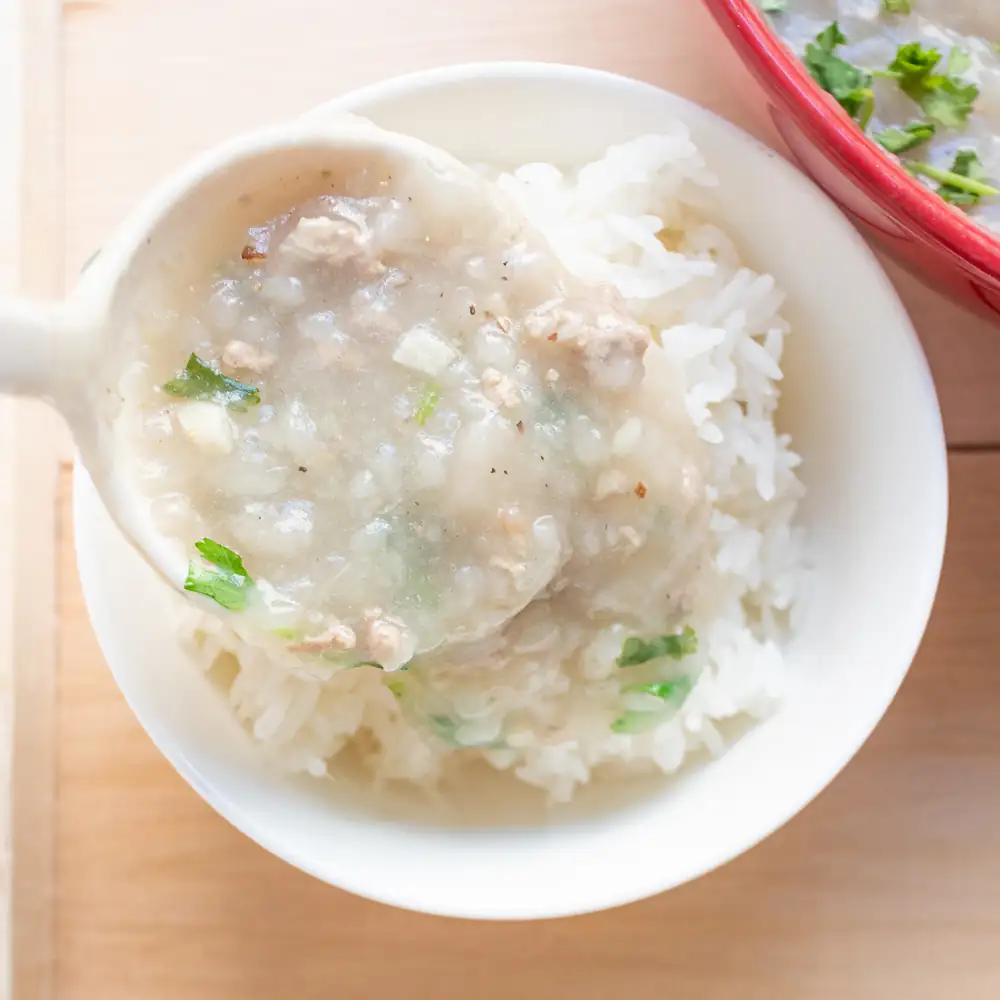
Canh Khoai Mỡ Trắng (Sopa vietnamita de Ñame Blanco Rallado con Cerdo Molido)
Un toque de nostalgia es exactamente cómo describiría esta sopa.
- 1 ñame blanco pequeño y fresco (aproximadamente 2 libras)
- 8 onzas de carne de cerdo molida
- 2 cucharadas de aceite neutro (yo uso aceite vegetal)
- 1 cucharada de ajo (aproximadamente 3 dientes picados)
- 2 cucharadas de chalota finamente picada
- 6 tazas de agua
- 2 cucharaditas de caldo de pollo en polvo o condimento de champiñones en polvo
- 2 cucharaditas de salsa de pescado (yo uso la marca Three Crabs)
- 1 cucharadita de sal marina finamente molida (dividida)
- 1 cucharadita de pimienta negra molida (y un poco más para decorar)
- 1/4 taza de hierbas aromáticas picadas gruesas, cebolletas y/o cilantro (para decorar)
- Deja la piel, corta la raíz por la mitad y extrae la pulpa con una cuchara de metal, desechando la cáscara. Otra opción es pelar la raíz, cortarla en trozos y procesarla en una batidora o machacarla con un mortero hasta obtener un puré.
- Calienta el aceite en una olla a fuego medio. Agrega el ajo y la chalota picados y sofríe durante unos 20 segundos hasta que estén ligeramente dorados y fragantes. Añade la carne de cerdo molida y sazona con la mitad de la sal y la pimienta. Sofríe hasta que esté bien cocida.
- Vierta el agua en la olla y póngala a hervir.
- Agrega el ñame blanco rallado y cocina a fuego medio-bajo durante 15 minutos para que los sabores se mezclen. Revuelve ocasionalmente, raspando bien el fondo de la olla con un cucharón de madera para que el ñame, rico en almidón, no se asiente y se queme.
- Agrega el caldo de pollo o el sazonador de champiñones en polvo, la salsa de pescado, la sal y la pimienta negra molida. Prueba el caldo y ajusta la sazón si es necesario.
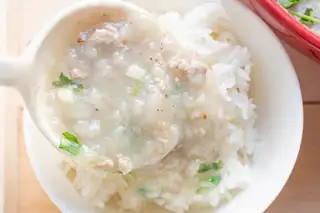
- Vierta la sopa en un tazón para servir. Adorne con hierbas aromáticas picadas, cilantro y cebolletas, a su gusto. Añada una pizca de pimienta negra recién molida para realzar el aroma y disfrútela sola o acompañada de arroz blanco al vapor para una comida completa.
A taste of nostalgia is exactly how I would describe this soup.
I recently made it for my daughter who had it for the very first time. I told her we’re having slimy potato soup, among other fun names.
I thought the thick, velvety texture would bother her, but it didn’t. She loved it.
Growing up in a traditional Vietnamese immigrant household, a side soup is a staple part of our daily rice-based family meals (cơm gia đình).
Vietnamese white yam soup is one of many comforting side dishes found in a traditional family meal. It’s thick, viscous, and savory. It’s incredibly satisfying when poured over a bowl of steamed rice.
What is Canh Khoai Mo?
Canh khoai mỡ or more specifically, canh khoai mỡ trắng, is a traditional Vietnamese vegetable soup made from white water yam.
While you usually see the purple version (ube), the white version offers the same slippery and velvety texture that gives the soup its signature consistency.
How to Make Canh Khoai Mo
Because the raw root is incredibly porous, it is traditionally grated with a sharp metal spoon.
Once grated, the yam is simmered in a simple, savory broth. Shrimp is a classic base for this broth, but ground pork is another popular option that we are using today.
This combination of yam and ground pork makes the soup canh khoai mỡ trắng thịt bằm.
Thit bam means ground pork. Canh means vegetable soup and khoai mo refers to this type of velvety white yam, often the white version by default.
The soup is finished with a crack of black pepper and fresh garnishes, most traditionally rice paddy herb (ngò ôm).
Serve the soup alongside steamed jasmine rice and other braised dishes for a complete family-style meal.
Why You Will Love this Recipe
We are using ground pork here for a quick protein. Because it’s ground and we’re using it loosely in the soup, there is really no need to marinate it beforehand. You can simply add it straight to the pot and season it as it cooks. This soup comes together in about 20 minutes, giving you a taste of home in a jiffy.
What You Will Need
To make canh khoai mo, gather the following ingredients:
- White water yam (khoai mỡ): This root can be a bit hard to find. I usually pick mine up from SF Supermarket in Sacramento. In Vietnamese markets, it is typically labeled as khoai mỡ. If you can’t find this specific label, look for its alternative name, ñame root (pronounced NYAH-meh). This white yam can get expensive per pound. So if you need a more budget-friendly substitute, look for yampi root instead.
- Ground pork: We are using this as the main protein to build the savory base for the soup.
- Water: You can also sub with lightly salted or unsalted stock. If using store-bought chicken stock, I like to do a 1:1 ratio with water as I think American chicken stock is too concentrated for Vietnamese vegetable soups.
- Seasonings: Fish sauce, bouillon powder, salt and black pepper. Don’t want to use bouillon powder? No problem. You can skip if using chicken stock or simply replace with additional salt. But for me, I like to keep it traditional with bouillon powder, what we call bột nêm or hạt nêm in Vietnamese.
- Shallots and garlic: Peeled, finely diced and sautéed quickly in a bit of oil to release their aroma and build the soup base.
- Garnishes: I’m using cilantro here but you can also use traditional rice paddy herbs (ngò ôm) or a combination of both. If those flavors are too strong, thinly sliced green onions work too.
Pro Tips for Grating Yam
Learn from my mistakes. Once fully peeled, this yam is as slippery as a wet bar of soap. Unless you want to chase it across your kitchen counter, do not peel.
Instead, leave the skin on. Slice the yam in half and just scrape out the exposed flesh with a spoon, using the rough skin for grip. Once you have hollowed it out, discard the skin.
Unlike potatoes, the flesh won’t oxidize and turn yucky brown. It will remain white so you can grate ahead of time.
Storage and Reheating
Store the cooled soup in an airtight container or keep it in the covered pot in the refrigerator for up to three days.
When you are ready for leftovers, reheat the soup on the stove and add a splash of water if it has thickened too much.
What is the difference between white and purple khoai mo?
The primary difference is the color. Other than that, they function identically in recipes and provide the same starchy, thick texture as the purple yam.