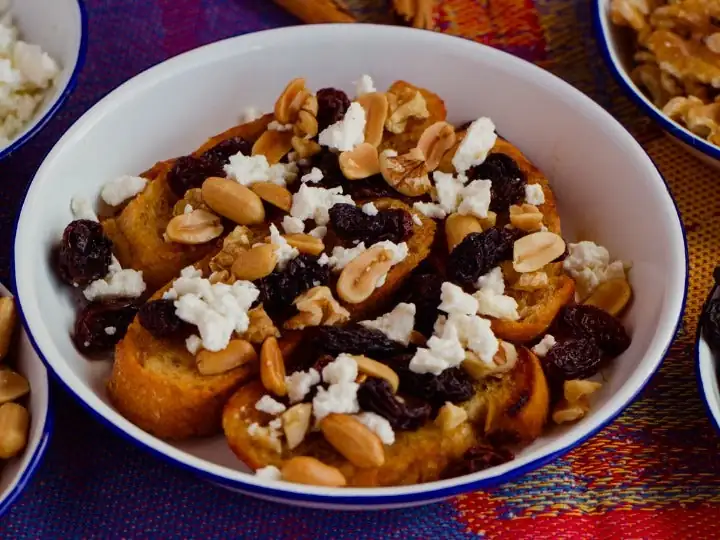
Traditional piloncillo and cheese capirotada: no oven required
Lent is a time marked in gastronomy by the consumption of white meats like chicken and fish, but there are also very classic drinks and desserts associated with this season. In Mexico, one of the most classic desserts during Lent is capirotada, traditionally baked in the oven.
- 8 hard, old bobbins
- ½ cup of raisins
- 100 grams of grated coconut
- 100 grams of roasted peanuts
- 100 grams of chopped walnuts
- 200 grams of fresh cheese, Cotija or panela
- 6 tortillas
- 2 tablespoons of butter
- 2 piloncillos
- 2 liters of water
- 1 cinnamon stick
- 2 cloves
- 1. In a pot, place the piloncillo, water, cinnamon, and cloves to begin preparing the honey.
- 2. Heat the pot over high heat and once it starts to boil, reduce to low heat, stirring constantly to prevent burning. You'll know it's ready because it will have a thick consistency.
- 3. Cut the bread roll into slices of the same thickness, making sure they are not too thick, and set aside.
- 4. Spread a little butter on the bottom and sides of a pot.
- 5. Place and arrange the tortillas at the bottom of the pot.
- 6. Cover with a layer of bread, cheese, raisins, walnuts, coconut, peanuts and piloncillo honey, repeat the same process until you have several layers.
- 7. Finally, drizzle with a little more piloncillo honey.
- 8. Cook the capirotada on the stove over low heat, covered, for 15 minutes or until the bread has completely absorbed the piloncillo honey.
- 9. Serve and enjoy.
- 10. Tip: If your bread rolls are not old or hard, you can brown them in a pan or toaster to make them crispy.
There are many ways to make capirotada, they vary from region to region, but the one we're sharing with you is one of the most classic. The flavor is sweet, but not cloying, and it's a perfect dessert to share with the whole family. We assure you they'll even want seconds of this delicious dessert.
How to make capirotada without an oven?
How to make capirotada without an oven?
- In a pot, place the piloncillo, water, cinnamon, and cloves to begin preparing the honey.
- Heat the pot over high heat and once it starts to boil, reduce to low heat, stirring constantly to prevent burning. You'll know it's ready because it will have a thick consistency.
- Cut the bread roll into slices of the same thickness, making sure they are not too thick, and set aside.
- Spread a little butter on the bottom and sides of a pot.
- Place and arrange the tortillas at the bottom of the pot.
- Cover with a layer of bread, cheese, raisins, walnuts, coconut, peanuts and piloncillo honey, repeat the same process until you have several layers.
- Finally, drizzle with a little more piloncillo honey.
- Cook the capirotada on the stove over low heat, covered, for 15 minutes or until the bread completely absorbs the piloncillo honey.
- Serve and enjoy.
- Tip: If your bread rolls aren't old or hard, you can toast them in a pan or toaster to make them crispy.
Making capirotada without an oven is that easy; the flavor is delicious and the consistency is perfect. Without a doubt, it's a dessert that will brighten up dinner or a family meal.
What is the origin of capirotada?
What is the origin of capirotada?
Although capirotada is a very traditional dessert in Mexico, its origins date back to Ancient Rome, where it was made with pieces of bread, water, liver, cheese, and cucumbers; it was more of a savory dish than a dessert. The Dictionary of Mexican Gastronomy describes capirotada as a dessert prepared with fried slices of bread soaked in honey or milk, and garnished with some nuts.
It is such an old dessert that its exact origin is still unknown, but it has a great similarity to the traditional Spanish savory capirotadas.