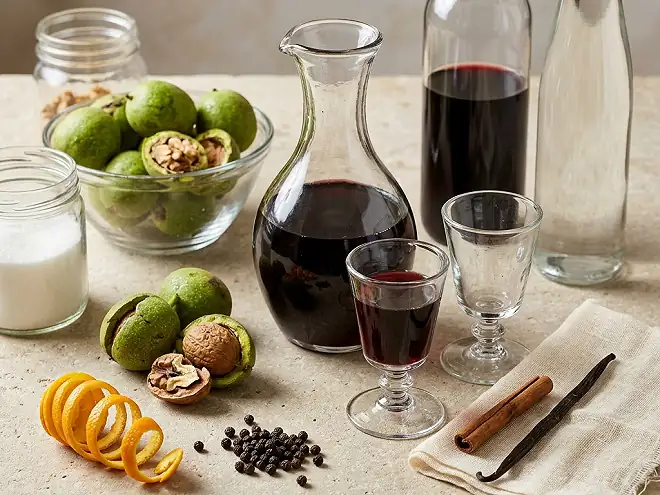
Old-fashioned walnut wine
6 pers.
Ingredients · Servings 6
- 40 Green Walnuts
- 4 liters Red wine
- 1 liter of brandy
- 1 kg Sucre
- 1 cinnamon stick
- 1 orange zest
Method · 15 min
- Wear gloves if possible, as walnut husks stain hands, work surfaces, and fabrics easily. Place the green walnuts in a sturdy plastic bag or on a well-protected surface, then roughly break them into several pieces using a hammer or other heavy object. You don't need to get uniform pieces; the important thing is to open the walnuts so they can release their aromas during maceration.
- Place the walnut pieces in a large, clean, perfectly dry jar with an airtight seal. Add the cinnamon stick and orange zest, making sure to use only the colored part of the peel to avoid excessive bitterness. Then pour in the red wine and brandy. Stir thoroughly with a large spoon to distribute the ingredients evenly and begin infusing the flavors.
- Carefully seal the jar, then place it in a cool, dry, dark place. Let the mixture macerate for at least two months. During this time, the nuts, spices, and zest will gradually infuse the alcohol and wine with their flavor. You can gently shake the jar occasionally to ensure even maceration and promote a consistent release of aromas.
- After the first two months of maceration, open the jar and add the sugar all at once. Stir thoroughly to help the sugar crystals begin to dissolve in the liquid. Then carefully close the container. This step balances the alcohol's strength, softens the natural bitterness of the green walnuts, and gives the walnut wine its smooth, supple, and luscious character.
- Let the mixture rest again for at least one month, still in a place protected from heat and light. During this second phase, stir the jar daily to dissolve the sugar and even out the flavors. If you have the time, extend the maceration further: a traditional walnut wine often gains depth, balance, and complexity after several additional months.
- When the maceration seems sufficient, filter the mixture for the first time using a fine-mesh sieve, a chinois, or a clean cloth placed over a container. This first filtering removes any large pieces of walnut, the cinnamon stick, and the orange zest. Work slowly to extract as much liquid as possible without excessively clouding the mixture or letting too much residue pass through.
- Pour the filtered liquid into a clean jar and seal it tightly. Let it rest undisturbed for 48 hours. This allows any remaining particles in suspension to settle naturally to the bottom of the container. The result is a clearer, more transparent, and more pleasant walnut wine to serve, with a more refined texture.
- After 48 hours of resting, filter a second time using a finer filter, such as cheesecloth, a very clean cloth, or a suitable filter. Then pour the walnut wine into clean, dry glass bottles and seal them tightly. Store them in a cool, dark place. Like many traditional preparations, this walnut wine continues to improve with age.
- Serve walnut wine chilled, preferably in small glasses as an aperitif. Its flavor evokes fruity, spicy, and slightly tannic notes, similar to certain characterful sweet wines. You can pair it with cheeses, a Roquefort pastry, foie gras, or even a sweet and savory appetizer like melon. As it is an alcoholic beverage, always enjoy it in moderation.
135/pers.
From mid-June to mid-July, green walnuts release their full aroma. With red wine, a touch of brandy, cinnamon, and a twist of orange, here's the secret to a homemade aperitif steeped in tradition. Every family loves to prepare this old-fashioned walnut wine, shared during holidays and large gatherings. Simple to make, it embodies the art of French hospitality and the pleasure of savoring good times together.