Potatoes: Healthy Cooking Options
Many consider potatoes the enemy of a slim figure, but the problem usually lies not in the root vegetable itself, but in the cooking method. Frying in large amounts of oil, rich sauces, mayonnaise, and an abundance of cheese turn a relatively light product into a calorie-heavy dish.
Baked jacket potatoes with cottage cheese filling
For this dish, use large, uniform-sized potatoes to ensure even cooking. Combine four potatoes, 150 grams of low-fat cottage cheese or Greek yogurt, a bunch of green onions, a few sprigs of dill, salt, black pepper, and a teaspoon of olive oil.
Wash the potatoes thoroughly with a brush, prick them with a fork in several places, and place them on a baking sheet. Bake in a preheated oven at 200 degrees Celsius (400 degrees Fahrenheit) for 45-60 minutes, until soft. Test for doneness with a knife: it should penetrate the flesh easily.
While the potatoes are baking, mix cottage cheese or yogurt with finely chopped green onions and dill, and season with salt and pepper to taste. Cut the cooked potatoes in half lengthwise, lightly mash the flesh with a fork, even in the skins, and spread the cottage cheese filling on top. Drizzle with olive oil and serve immediately.
This version provides complex carbohydrates from the potatoes, protein from the cottage cheese, and minimal fat. If desired, you can add a fresh vegetable salad or a handful of arugula to the dish.
Mashed potatoes with roasted garlic and olive oil
Regular mashed potatoes are often made with large amounts of butter and cream, which dramatically increases the calorie content. This recipe replaces the butter with olive oil, and enhances the flavor with roasted garlic.
Take 600 grams of potatoes, one head of garlic, two tablespoons of olive oil, salt, and black pepper. Trim the top of the garlic head to expose the cloves, drizzle with a teaspoon of olive oil, wrap in foil, and bake in the oven at 200 degrees Celsius for 30-40 minutes until soft.
Peel the potatoes, cut into large chunks, and boil them in salted water for 15-20 minutes until completely soft. Drain, reserving about a cup of the cooking liquid. Mash the potatoes with a potato masher, add olive oil, and gradually whisk in the cooking liquid until you achieve the desired consistency. Peel the roasted garlic, add it to the puree, season with salt and pepper to taste, and mix well.
The puree is tender, with a rich garlic flavor, without heavy cream or a lot of butter. It's a great side dish for fish, chicken, or turkey.
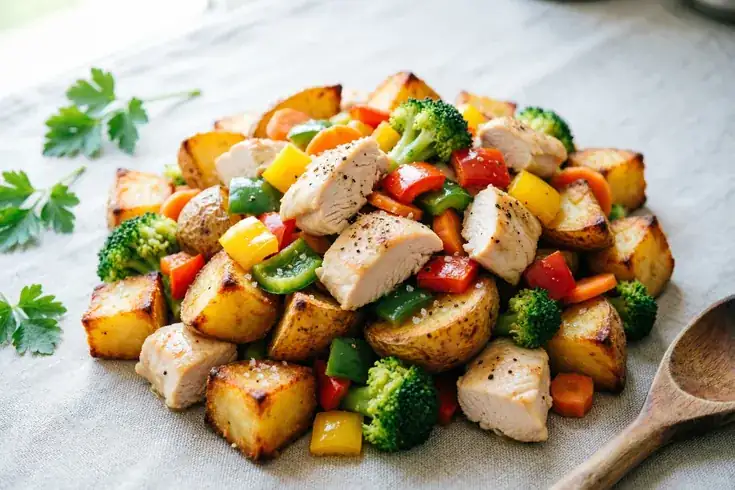
Potatoes with vegetables and chicken fillet in the oven
This recipe turns potatoes into a complete meal, packed with protein, vegetables, and complex carbohydrates. Combine 400 grams of potatoes, 200 grams of chicken breast, one bell pepper, 150 grams of broccoli or cauliflower, one small onion, a tablespoon of olive oil, salt, black pepper, and dried herbs.
Peel and slice the potatoes, cut the chicken breast into potato-sized pieces, cut the pepper into strips, cut the onion into half rings, and separate the broccoli into florets. Combine the potatoes, chicken, and vegetables in a bowl, add olive oil, salt, pepper, and herbs, and mix well.
Place everything in a single layer on a parchment-lined baking sheet. Bake in a preheated oven at 200 degrees Celsius (400 degrees Fahrenheit) for 25-30 minutes, stirring once halfway through. Check for doneness by the tenderness of the potatoes and chicken.
The result is a balanced dish with protein from the chicken, complex carbohydrates from the potatoes, and fiber from the vegetables. Oil is used minimally, and most of the flavor comes from the herbs and natural juices of the vegetables and chicken.
All three recipes are built on the same principle: minimal added fat, an emphasis on the potato's natural flavor, and a combination with protein and vegetables. This eliminates the potato's role as a source of excess calories and makes it a convenient and filling addition to your daily diet.