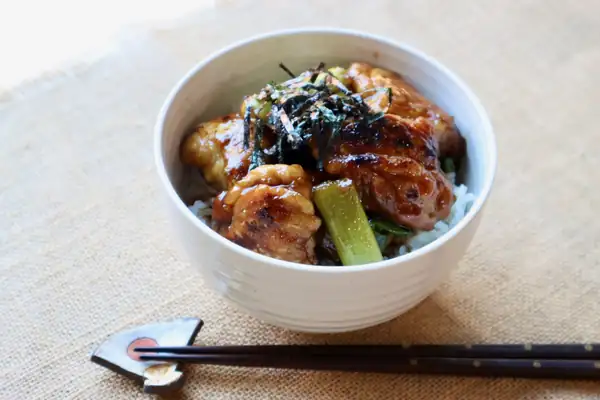
Japanese curry with braised pork belly, daikon and egg
cooked Japanese riceto serve
Ingredients · Servings 4
- 500g well-fatted pork belly (skin-on or skinless)
- 20cm daikon
- 6 tbsp cooking sake
- 2 tbsp Japanese soy sauce
- 2 tbsp mirin
- 2 tbsp dark brown soft sugar
- 1 pack (about 90-100g) Japanese curry roux (see tip)
- 4 boiled eggs (cooked to your liking), shelled
- cooked Japanese rice to serve
- 2.5cm piece of ginger peeled and cut into thin matchsticks, or pickled ginger, and chopped spring onions, to garnish
- shichimi or hot sauce, to serve (optional)
Method · 2 h 30 min
- Put the pork belly in a pan that fits it snugly in one even layer, then cover it with water and bring to the boil. Remove any scum that rises to the surface, then cook over a low but steady boil for 45 mins. Remove the pork to a board or plate using a slotted spoon and leave to cool, leaving the broth behind in the pan.
- When the pork is cool enough to handle, rinse it well under cold running water to remove any additional scum that’s clinging to the meat. Drain well, then cut it into 4cm cubes and return these to the broth.
- Peel the daikon and cut it into 2.5cm-thick rounds. Use a sharp knife to remove the hard corners along the circumference of each round so they have a neater shape, if you like (this is optional, but it looks nicer and helps keep the daikon from breaking apart).
- Add the daikon to the pan along with the sake, soy, mirin, sugar and as much water as you need to keep everything just submerged. Put a cartouche (a circle of baking parchment the same diameter as the pan) directly on the surface of the broth. Bring to the boil.
- Reduce the heat to a rapid simmer and cook for another 45 mins-1 hr until the pork can be easily pierced all the way through using a chopstick. The liquid may reduce slightly during this time, but the cartouche will help circulate the heat even if the ingredients aren’t fully covered. Top up the water as needed if the pan is too dry. When the pork and daikon are tender, remove them to a bowl using a slotted spoon, and set aside.
- Check the instructions on the curry roux package and note how much water it requires (usually 600-750ml). Measure out the same amount of broth into a jug, then discard any excess broth still in the pan (alternatively, boil the broth until it has reduced enough to reach the required quantity). If there isn’t enough broth in the pan, top it up with water until it reaches the required amount.
- Tip the measured broth back into the pan, then add the roux. Return the broth to the boil, whisking often to break up the roux and thicken the sauce. Stir the pork and daikon back into the pan along with the eggs (halve the eggs, if you like).
- Divide the curry between plates or wide bowls along with a mound of cooked rice. Garnish with a generous amount of fresh or pickled ginger to contrast the sweetness, plus the spring onions and some shichimi or hot sauce, if you like.
kcal601
fat37g
saturates14g
carbs27g
sugars16g
fibre0.1g
protein34g
salt4.34g