How to Make Balsamic Vinegar Glaze at Home Without Thickeners—You'll Never Buy It Again!
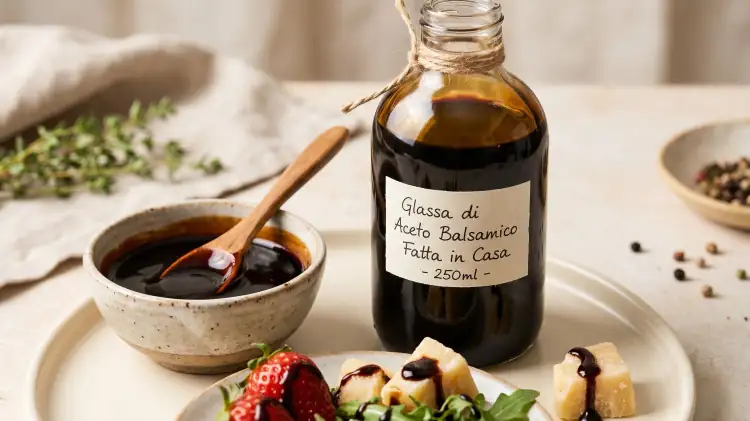
Today we're making a magical condiment that will transform any dish: homemade balsamic vinegar glaze.
It's a delicious sweet and sour sauce, incredibly thick and glossy, much more authentic than the one you buy at the supermarket.
Our version, in fact, is completely free of thickeners or artificial colorings. It only takes a few minutes in the kitchen and two basic ingredients!
Making the perfect balsamic vinegar reduction is a breeze and will bring you enormous satisfaction at the table.
You can use it to enhance succulent meat dishes, such as a pan-fried pork fillet or a classic beef steak.
This DIY balsamic vinegar spread is also fantastic for adding a boost of flavor to appetizers or vegetarian side dishes.
Any ideas? Try it on a colorful and tasty beetroot carpaccio for a unique contrast.
It's even great on gourmet salads: pair it with a delicious spinach, strawberry, and feta salad to impress your guests.
Or use it to top and make irresistible a fresh salad of fennel, pears, parmesan, and balsamic vinegar. Put on your apron and let's get started!
Doses & Ingredients
- Doses for 1 piece
- Very low difficulty
- Preparation time 5 min
- Cooking time 25 min
- Low cost
- Food availability very easy
- Choose a medium-density balsamic vinegar of Modena PGI, not too cheap but not the highly prized aged one either - 500 ml.
How to make homemade balsamic vinegar glaze
- 1. Begin by choosing a small, heavy-bottomed saucepan. Pour in all 500 ml of balsamic vinegar. Immediately add the granulated sugar and the tablespoon of honey, which will help the sauce become perfectly glossy. Stir well while still cold with a wooden spoon: continue stirring until the sugar begins to dissolve completely into the liquid.
- 2. Place the saucepan on the stove and turn the heat to medium. Wait patiently for the liquid to boil: you'll know it's boiling when light bubbles begin to form on the surface. Then, reduce the heat to low to begin reducing the sauce. Let it simmer gently for 20-25 minutes, uncovered. Remember to stir occasionally to prevent the sugars from sticking to the bottom of the saucepan and burning.
- 3. Now we come to the most important step: checking the consistency. Dip a spoon into the liquid: your glaze is ready when it coats the spoon, leaving a thick, covering layer on the back of the spoon. Keep in mind one crucial detail: when hot, it will still seem a little runny, but as it cools, it will thicken considerably. Be careful not to overcook it, or you risk getting a hard caramel with a bitter aftertaste! Turn off the heat and remove the saucepan from the heat to let it cool. Let the reduction sit for about 10-15 minutes directly in the saucepan: you'll notice that it will immediately become much more syrupy.
- 4. Take your bottle or a handy dispenser and place a funnel on the neck. Pour the still-warm glaze into it, proceeding very carefully. Let the bottle cool completely to room temperature, making sure not to cap it at this stage. Only once it's completely cooled can you seal it tightly to preserve it. Your delicious sauce is ready: enjoy it immediately on fresh strawberries, aged cheeses, meat fillets, or delicious salads!
How to preserve balsamic vinegar glaze
- Your homemade balsamic vinegar glaze keeps very well and for a very long time. You can store it conveniently in your pantry, choosing a cool, dry place away from light and heat. Stored in its airtight bottle, it will keep perfectly fresh for about a month. If you prefer, or during the hottest summer months, you can store your dispenser directly in the refrigerator. Be careful, though, as the cold will tend to harden it considerably. Always let it sit at room temperature for 10-15 minutes before using it on your dishes!
Chef's advice
- For a truly Michelin-starred result, the first secret lies in choosing the main ingredient. Don't waste a fine, aged traditional vinegar, but avoid those that are too watery: a good medium-density PGI balsamic vinegar is the perfect choice. Want to add an extra aromatic boost? Add a sprig of fresh rosemary or thyme directly to the saucepan. Let it infuse during the cooking process and remove it before bottling: you'll obtain an exceptional aroma, ideal for accompanying meats. If you accidentally get distracted and your reduction becomes too thick as it cools, don't panic, you can still fix it! Add a tablespoon of very hot water, return to the heat to low, and stir vigorously to regain the right creaminess. Finally, don't leave out the honey: this is precisely the trick that gives the sauce that wonderful, mirror-like shine.
Why is my balsamic glaze getting hard?
caramelize the sugars too much.
Remember the golden rule: turn off the heat as soon as the sauce.
"veil" the spoon. As it cools, it will thicken naturally without turning into solid caramel!
How can I use balsamic vinegar cream in cooking?
Parmigiano Reggiano.
Use it to elegantly garnish a beef fillet, to add flavour.
gourmet salads or to give a sweet and sour kick to simple grilled vegetables.
How long does homemade icing keep?
about a month.
If you prefer to store it in the refrigerator, always remember to let it come to room temperature for 10-15 minutes before using, otherwise it will be too thick to pour.
What is the best balsamic vinegar for making glaze?
medium density PGI balsamic vinegar.
Avoid cheap, watery supermarket products, but don't waste a highly prized, aged Traditional Balsamic Vinegar DOP: cooking it would destroy its incredible, delicate flavour.
aromatic complexity.