13 Tips You Need When Baking The Perfect Carrot Cake
When it comes to frosting, you need to be patient and wait until your cake is completely and totally cool . Frostings are usually composed of butter, sugar, and other cream or dairy-based products (really, fats), so adding them to a hot or warm cake is going to cause them to immediately thin, melt, and slough off of your cake. Once your frosting is at room temperature, give your cake two or three
Adding citrus to your cake batter also helps to bring additional depth to your warming spices like cinnamon and clove. You can do this in the way of adding juice or zest to your mixture.
Either way and whichever citrus fruit you decide to add, you'll appreciate the additional oomph to your carrot cake. Try this orangey carrot cake recipe for an easy way to whip up the combo. After you try that, mix up the citrus and swap in bergamot, tangerine, or even yuzu. We'd even argue that adding citrus makes carrot cake a breakfast item.
Be mindful while grating
The main ingredient for carrot cake is, obviously, carrots. The orange veggies need to be worked into the batter where their inherent sweetness can be put on display while adding both substantiality and moisture to the spiced cake. To have a successful end product, the way you grate said carrots is of the utmost importance. Choose large carrots for this — not baby carrots — and make sure you've washed and peeled them so you aren't adding any tough or dirty outer skin. You'll want to break out your standing box grater and navigate to the small hole side when it comes to grating carrots for carrot cake. The larger holes are probably okay, but be safe and go with the smaller ones. You may be thinking, "My delicate hands were not made to grate carrots; I'll grab the food processor!" However, the issue with a blender or food processor is that it won't evenly
Don't fear the spice
Carrot cake gets its molasses-like color and beautiful bite from a plethora of different spices, and skimping on them can greatly hurt this lovely dessert. Carrot cake, which came about somewhere between the 16th and 18th century in England, relied on spices to lift the sweetness of the carrots when the white or brown granulated sugar we use for baking today wasn't readily available. Such spices usually included things like mace and clove, which lifted and brightened a dessert that would've been similar to an English pudding. Today, spices like cinnamon, ginger, clove, and even pumpkin pie spice aren't out of place in carrot cake recipes. These warming spices help to brighten and show off the sweetness of the carrots, so skimping on them may leave you with a more vegetal taste. If you're in the mood to experiment, cardamom is an option, as is clove, allspice, or
Make sure your carrots are fresh
As with any recipe, you want to put your best foot forward when it comes to your ingredients. You wouldn't want month-old tomatoes from the fridge in your Caprese salad. You wouldn't reach for mealy or canned Golden Delicious for your prize apple pie. In the same line of thinking, you wouldn't want old, mushy, or dried-out carrots for your carrot cake. There are several reasons you'd want to add the absolute best and freshest carrots you can to your cake. First, carrots bring moisture to your cake, so if you're using old or dried-out carrots, your finished cake could be dry and crumbly instead of dreamy and moist. Second, carrots add texture to your cake. An older carrot could be either too mushy or too dry, but either scenario isn't going to give you the bit of bite you want in each layer of cake. Lastly, carrots add sweetness to your cake, so using a handful of old
Keep an eye on the baking soda ratios
If you're an avid baker, you understand the importance of baking powder versus baking soda and the correct ratios for each. Regarding carrot cake, you're dealing with a batter that's very dense and usually loaded with mix-ins. Baking soda, which is on the list of ingredients for just about every carrot cake, ever, helps to lift and aerate your batter, giving you a fluffy, light cake instead of a dense, thick, hockey-puck-like situation. The baking soda gives off carbon dioxide, which helps add bubbles to the batter and gives you a tender crumb that Paul Hollywood would be proud of. In carrot cake, making sure you use enough baking soda is even more important since carrots are dense and moist, weighing the batter down. To ensure you use the correct amount of baking soda in your carrot cake, make sure you're reaching for a fresh box of the good stuff. Older baking sod
Oil, not butter, for this batter
One of the biggest, most humbling moments for those making a carrot cake for the first time is if they've confused butter for oil in their batter, or thought that they'd do a little jazz with their recipe and swap in the beautiful, golden dairy goodness they got from the farmers market in place of the lackluster vegetable oil hanging in the pantry. The switch is a crucial mistake to make. Butter in a carrot cake will not give you the tender, lighter crumb you want, whereas oil will, thanks to its higher fat content. Butter also imparts a very specific flavor which can overshadow the warm and sometimes delicate spices you're adding to your batter. Using a neutral oil like canola or vegetable allows your carrots and your spices to shine without being weighed down by unnecessary richness. Sure, vegetable or canola oil may not seem as rich, sexy, or even homey as good o
Play this or that with mix-ins
It can be tempting to want to mix in a lot of different things to your carrot cake. Recipes abound with added coconut, pineapple, walnuts, pecans, raisins, currants, and everything in between. But adding too many mix-ins to your carrot cake can be disastrous, resulting in a dense, too-rich, too-many-competing-flavors dessert. If you were to add walnuts, raisins, and coconut, your cake batter would be extremely weighed down. The baking soda you've added to aid in the lift of your cake wouldn't be able to fight against the literal weight of so many heavy ingredients, and your cake — while possibly tasting good — would fall flat (literally). It could also lead to your cake being too moist, giving it a less-than-desirable shelf-life and prone to molding. There are plenty of ingredients you can add to elevate your carrot cake, so lean into perhaps one or two to br
Use a scale while baking
Unlike cooking, baking is a science. You're kind of required to follow the recipe and ratios to get a cake that'll rise, cookies that'll spread, or a souffle that'll puff up appropriately. This isn't the creation of a pasta dish where a bit of this and a sprinkle of that is totally up to you. This is — at its core — science. As such, you should be using a scale while baking your carrot cake. There are several reasons for this. First, a scale is much more accurate than the scoop and swipe method you've been using via measuring cup. If you're dunking a measuring cup into a bag of flour, you may be creating bubbles within a layer of clumps. You could also run the risk of packing too tightly. Likewise, if you use the spoon method, and sprinkle your flour into a measuring cup, you could be going too light and using less than the recipe says. By using a scale, you can weigh
Adding nuts? Toast them first
Walnuts, pecans, hazelnuts, and coconut are all popular additions to a classic carrot cake. They add crunch, texture, and earthiness to the classic dessert. But neglecting to toast any or all of these nuts before adding them to your cake could have you and your guests missing out on a richness that can't be gotten from plain, raw nuts. Adding toasted walnuts to carrot cake, for example, can greatly amplify the overall flavor. The nuts become a bit more crunchy and take on a rich toastiness that juxtaposes the sweetness of your carrots while accentuating the spices in your batter. If you do choose to go the route of toasting nuts or coconut, it's an extremely simple process. Chop your nuts into pieces if they're whole, then add to a skillet. Cook them over medium heat on your stovetop until they're fragrant — then pull them off and pour into a heat-proof bowl
Bake in layers
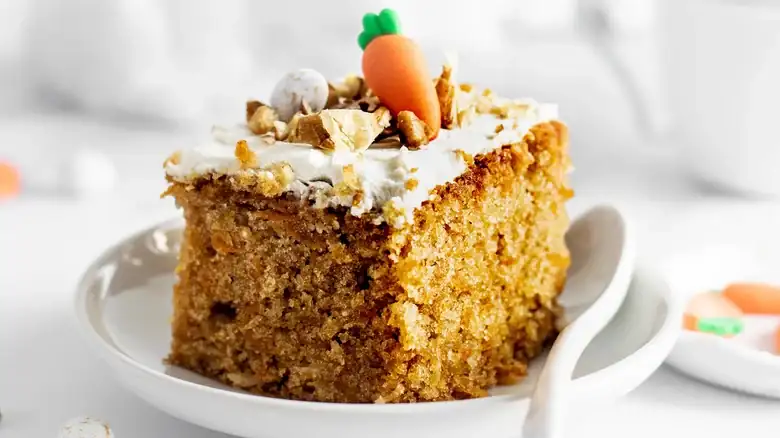
If you're familiar with carrot cake and versed in its many, delicious ways, you know that nine times out of ten it's presented as a layer cake between two and three tiers high with cream cheese frosting between each layer and around the outside. If you're a big fan of shortcuts, it may seem like the easiest way to get those luscious layers of carrot cake would be to bake one large cake, cool it, then cut it in half or into thirds. That's not the way to go and is a common mistake that everyone makes when it comes to layered cakes. For a drier, airier cake, the one-cake method may work. But for carrot cake, it's a recipe for disaster. Carrot cake is very moist, thick, and has the propensity to be denser than other cakes. Trying to saw it in two could lead to a layer practically crumbling in your hands or falling apart once you'd try to assemble it. Instead, spl
Be careful about underbaking
A classic mistake while making a cake is pulling it out of the oven far too early. Although your batter will continue to cook for a bit in its hot cake pan even out of the oven, pulling a cake out 10 minutes before it's "done" time is going to result in a dense middle and possibly very undercooked interior. With carrot cake, many home cooks are fooled into thinking the cake is done before it is since the batter is already dense and brownish. To avoid this baking snafu, make sure you always perform the toothpick test before pulling your cake out of the oven. Simply insert a wooden skewer or toothpick into the middle of your cake. If it comes out clean, it's safe to remove your cake from the oven. If it comes back with batter on it, leave that cake alone. Additionally, you'll want to avoid constantly opening and closing the oven door, as each time you do, heat escape
Cream cheese frosting is the way to go
Call us boring, call us purists, call us whatever you want — but we stand firm in our assertion that cream cheese frosting and carrot cake belong together. The tangy yet sweet thick frosting works well with the spiced cake and tends to not add too much sweetness or too much savoriness to your cake. If you're working to create your own perfect cream cheese frosting, there are a few tips for making it as luscious as possible. First, make sure you're using room-temperature butter and cream cheese. Opting for right-out-of-the-fridge for either of these could lead to lumps when you're trying to incorporate the two, and a lumpy frosting is not a good look on a beautiful cake of any kind. Second, make sure that you give your frosting between one and two hours to come to room temperature before frosting your cake. A cold frosting won't spread very well and could tear yo
Frost after its cool
Once your carrot cake is in the oven and your frosting is made and set aside — coming up to room temperature — you're likely getting ready to frost your cake. But frosting is a bit more complicated than simply slathering on the sweet stuff. There are some pretty basic rules you should follow to ensure a good-looking and, just, overall good carrot cake. When it comes to frosting, you need to be patient and wait until your cake is completely and totally cool. Frostings are usually composed of butter, sugar, and other cream or dairy-based products (really, fats), so adding them to a hot or warm cake is going to cause them to immediately thin, melt, and slough off of your cake. Once your frosting is at room temperature, give your cake two or three hours out of the oven to cool completely. Many folks also utilize a crumb coat before going in with the final frosting to
Say yes to citrus
Burke/triolo Productions/Getty Images As a parting note, one thing you should be adding to either your carrot cake batter or the frosting is a kiss of citrus. Carrots deliver an earthy sweetness; cream cheese frosting brings a bit of tang; and notes of citrus — like oranges, tangerines, grapefruit, and even lemon — help to brighten everything while still allowing the richness of this cake to shine. Adding citrus to your cake batter also helps to bring additional depth to your warming spices like cinnamon and clove. You can do this in the way of adding juice or zest to your mixture. Either way and whichever citrus fruit you decide to add, you'll appreciate the additional oomph to your carrot cake. Try this orangey carrot cake recipe for an easy way to whip up the combo. After you try that, mix up the citrus and swap in bergamot, tangerine, or even yuzu. We'd even argue that adding citrus