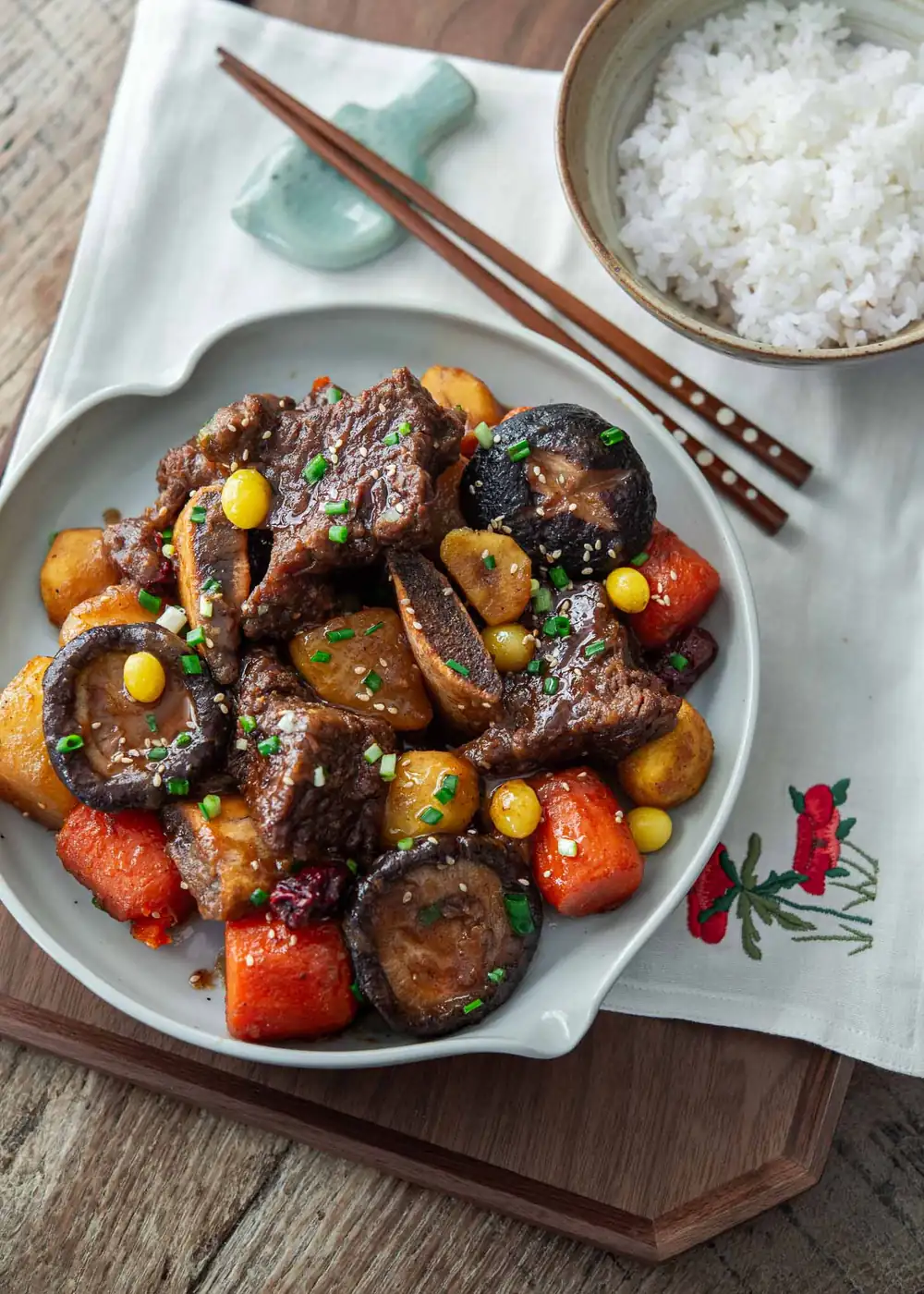
Best Galbi Jjim Recipe (Korean Braised Short Ribs)
Galbi Jjim is a beloved Korean dish made by braising beef short ribs until they turn fall-off-the-bone tender in a savory-sweet sauce. Simmered with vegetables, it becomes a comforting dish often reserved for celebrations.
- 3-1/2 to 4 lbs (1.5-1.8 kg) beef short ribs (Korean style preferred)
- 1/2 onion (diced)
- 1/2 Korean pear (peeled, seeded, and diced)
- 1/2 kiwi (peeled and diced)
- 5 cloves garlic
- 1/2 cup (120 ml) soy sauce
- 3 tbsp (36 g) dark brown sugar
- 3 tbsp (45 ml) sweet rice wine (mirim)
- 2-1/2 cups (600 ml) sea kelp stock (divided)
- 1 tsp (5 g) ginger paste
- 1 tbsp (15 ml) sesame oil
- 1 tsp (2 g) ground pepper
- 2 carrots (peeled and cut into big chunks)
- 3/4 lb (340 g) Korean radish (peeled and cut into chunks)
- 6 fresh or dried shiitake mushrooms (see note for dried shiitake)
- 1 large piece (10–15 g) dried sea kelp (dashima)
- 4 cups (960 ml) water
- 5 dried jujubes
- 8-10 peeled chestnuts (see note below)
- 12 ginko nuts (see note below)
- 1 green onion (finely chopped)
- 1 tsp toasted sesame seeds
- Parboil and Prep the Ribs: Place the short ribs in a large pot of water and boil for about 10 minutes over medium-high heat. This removes impurities and excess fat. Drain and rinse the ribs under running water, scrubbing off any bone fragments. Cut a few shallow 1/2-inch slits into the meat so it absorbs flavor better during braising.
- Make the Sea Kelp Stock: While the ribs are boiling, simmer dried kelp (dashima) in 4 cups of water over medium-low heat for 5 minutes. Remove and discard the kelp. Measure out 2 1/2 cups of the stock to use in the recipe.
- Prepare the Braising Sauce: In a blender or food processor, combine onion, pear, kiwi, garlic, soy sauce, brown sugar, rice wine, and 1/2 cup of the kelp stock. Blend until smooth.
- Start Braising the Ribs: Place the parboiled ribs in a Dutch oven or heavy pot. Pour the blended sauce over them and add the remaining 2 cups of kelp stock, ginger paste, sesame oil, and pepper. Bring to a boil, then reduce the heat, cover, and simmer for about 1 1/2 hours. Skim off any fat from the surface as it cooks. After 1½ hours, check the thickest piece. The ribs are ready for the vegetables when a fork slides into the meat with little resistance and the meat has begun to pull back from the bone. If the beef still feels firm, continue simmering before adding the vegetables.
- Prep and Add the Vegetables: Trim the edges of the carrot and radish pieces if you like — this helps them hold their shape during braising. Score the tops of fresh shiitake mushrooms with a cross pattern for a decorative look. Add the carrots, radish, and rehydrated dried shiitake mushrooms. Simmer for 20–30 minutes, until the vegetables are tender. If using fresh shiitake mushrooms, wait and add them during the final 10–15 minutes.
- Finish the Galbi Jjim: Add the fresh shiitake mushrooms and, if using, the dried jujubes, chestnuts, and ginkgo nuts. Cook uncovered for another 10–15 minutes. If the sauce is still thinner than you like, continue simmering uncovered for 5–10 minutes until glossy and slightly reduced. If it becomes too concentrated, add a small splash of water or reserved kelp stock. Remove from the heat and let the galbi jjim rest for 10 minutes before serving.
- Serve: Garnish with chopped green onions and sesame seeds. Serve Galbi Jjim warm with rice and kimchi.
Galbi Jjim (갈비찜) is one of those dishes that makes the table feel special the moment it appears. Growing up, my mom only made these Korean braised short ribs for birthdays, Chuseok, or Seollal, since beef ribs were considered too expensive for everyday meals. It remains one of my favorite dishes to include in a spread of traditional Korean Chuseok foods.
The short ribs are slowly braised until tender in a glossy sauce made with soy, garlic, and the natural sweetness of Korean pear. Some people experiment with different cooking methods, but I always return to traditional slow braising. It creates that rich, fall-off-the-bone texture and deep gravy that no shortcut can truly replace.
This recipe stays close to tradition, with a few of my own touches that make it one of the best Galbi Jjim versions you’ll try. Serve it with rice, kimchi, and a few simple side dishes, and you’ll have a holiday-worthy Korean meal at home.
Many people confuse Galbi Jjim with Galbitang (갈비탕), another beef rib dish. Galbitang is a clear, savory soup often served at weddings, while Galbi Jjim is a saucy, festive braise made for holidays and celebrations.
My Tested Method for the Best Galbi Jjim
No long soaking required – Some traditional methods soak short ribs to draw out residual blood. I skip the long soak and parboil the ribs for 10 minutes instead. Parboiling removes surface impurities, excess fat, and small bone fragments without adding another hour to the preparation.
Quick sea kelp stock – Instead of plain water, I simmer a piece of dried kelp for just a few minutes. This easy step builds a clean umami base that makes the braising sauce taste deeper and more balanced.
Dutch oven braising – I tested this recipe in the slow cooker, Instant Pot, and stovetop. The Dutch oven wins every time. It gives the sauce body, keeps the ribs juicy, and allows you to add vegetables at just the right time so they don’t turn mushy.
Authentic with flexible add-ins – The recipe follows the traditional holiday style I grew up with, but I also show you optional ingredients like chestnuts, jujubes, and ginkgo nuts if you want to make it truly festive.
Proven family recipe – This is the version I make for my own family today, blending the taste of my mother’s cooking with small tweaks I’ve learned over years of testing.
Key Ingredients You’ll Need
Beef short ribs: Look for thick Korean braising ribs cut into individual bone-in pieces, usually about 2–3 inches long. They are much thicker than the thin flanken-cut ribs used for LA Galbi (Korean BBQ short ribs) and become tender during the long braise. Korean markets may label them “galbi jjim ribs.” Choose well-marbled pieces with plenty of meat around each bone.
Korean pear and kiwi: Korean pear adds natural sweetness and helps flavor the sauce, while kiwi provides the strongest tenderizing effect. Because kiwi is powerful, half a fruit is enough for this quantity of beef. If Korean pear is unavailable, use a crisp apple such as Fuji or a Bosc pear for similar sweetness. The ribs will still become tender through slow braising even if you omit the kiwi.
Korean radish: Preferred over daikon because it holds its shape better during braising and soaks up flavor without turning mushy.
Sea kelp stock: A quick umami-rich broth made by simmering dried kelp (dashima) in water for 5 minutes. This small step deepens the flavor of the sauce far more than plain water.
Optional festive add-ins: Add dried jujubes, chestnuts, and ginkgo nuts for a holiday version of Galbi Jjim. These ingredients create a special-occasion feel, but you can skip them and still enjoy a delicious dish.
How to Make Galbi Jjim, Step by Step
Here’s a step-by-step visual guide to making Galbi Jjim at home. The photos will walk you through the process, and you can find exact measurements and detailed instructions in the recipe card below.
Prep the ribs first. If your short ribs come uncut, slice them into individual segments with one bone attached. Trim away excess fat and the tough ligament along the bone.
Parboil the ribs. Give the ribs a quick parboil to remove impurities. This keeps the broth clean. Once drained, rinse the ribs under running water to wash away any bone fragments.
Make the kelp stock. While the ribs are parboiling, simmer a piece of dried kelp (dashima) in water for a few minutes. This quick stock adds a subtle but important layer of umami. I always prefer it over using plain water—it makes the final sauce much richer.
Blend the sauce. In a blender, combine aromatics and fruit: onion, pear, kiwi, garlic, soy sauce, and sugar. Add a splash of the kelp stock and blend until smooth. This mixture becomes the base of the braising sauce.
Combine ribs with the sauce. Score the cleaned ribs with a few shallow cuts to help them absorb the sauce. Place them in a Dutch oven. Pour in the sauce along with more kelp stock, sesame oil, and ginger.
Start braising the ribs: Bring the pot to a gentle boil, then reduce the heat and let the ribs braise slowly until the meat turns tender and starts to pull away from the bone. As it cooks, skim off any excess fat on the surface to keep the sauce clean and rich.
Optional step: shaping the vegetables. For a more polished presentation, round off the sharp corners so the vegetables are less likely to break apart. I also like to lightly score the tops of shiitake mushrooms with a cross pattern. It creates a decorative touch when you serve the dish.
Add the vegetables and festive touches. When the ribs are nearly tender, add the carrots, radish, and rehydrated dried shiitake mushrooms. Save fresh shiitake mushrooms for the final 10–15 minutes so they retain their shape. For holidays, you can also add chestnuts, dried jujubes, or ginkgo nuts.