Why pasta sticks: these six mistakes ruin your macaroni (and how to avoid them)
Admit it: you've ended up with a clump of spaghetti stuck to the colander more than once, wondering why the pasta was sticking.
What really happens inside the pot
When pasta is placed in hot water, it absorbs liquid and releases starch—that white powder that clouds the water and that many mistake for dirt. This is perfectly normal. In fact, it's actually useful. Much of that starch is an ally, not an enemy: it helps the sauce cling to the pasta instead of sliding off and settling at the bottom of the plate. That's why it's a good idea to reserve a ladleful of the cooking water before draining, because it thickens and binds any sauce.
The problem arises when the pieces are stuck together for too long. The starch on the surface acts as glue, and if the clay cools while piled up, the block is beyond repair. There's no last-minute trick that will save it.
Overcooked pasta amplifies the effect. The longer it soaks in water, the more it hydrates, the softer it becomes, and the more starch it releases. "Al dente" isn't some chef's pose: it's cooked pasta that retains its firmness when you bite into it.
And beware of the most repeated myth: adding a splash of oil to the water. It doesn't separate the pieces, because the oil floats, it doesn't mix with the water, and the pasta cooks practically the same. All you'll achieve is a slippery surface.
Oil in water doesn't prevent pasta from sticking: it just makes it slippery and ruins the sauce.
The six mistakes that almost all of us make
- Cooking too much pasta in a small pot. With no room to move, the pieces clump together from the very first minute. The classic guideline is one liter of water for every 100 grams.
- Don't stir it at first. The first two or three minutes are key: stir right after adding it and then stir again a couple of times.
- Overcooking. Use the time indicated on the package and test a piece one minute before.
- Adding oil to water doesn't prevent sticking and leaves the surface slippery.
- Rinse it as usual. In a warm dish, drain it and add it directly to the sauce: the water will remove the starch you need.
- Leave it to cool. If it gets piled up in the colander, it will stick together even if you cooked it perfectly.
Salt doesn't work miracles either. Salt the water to add flavor and adjust the amount depending on how salty the sauce is, but don't expect it to prevent the pasta from sticking together.
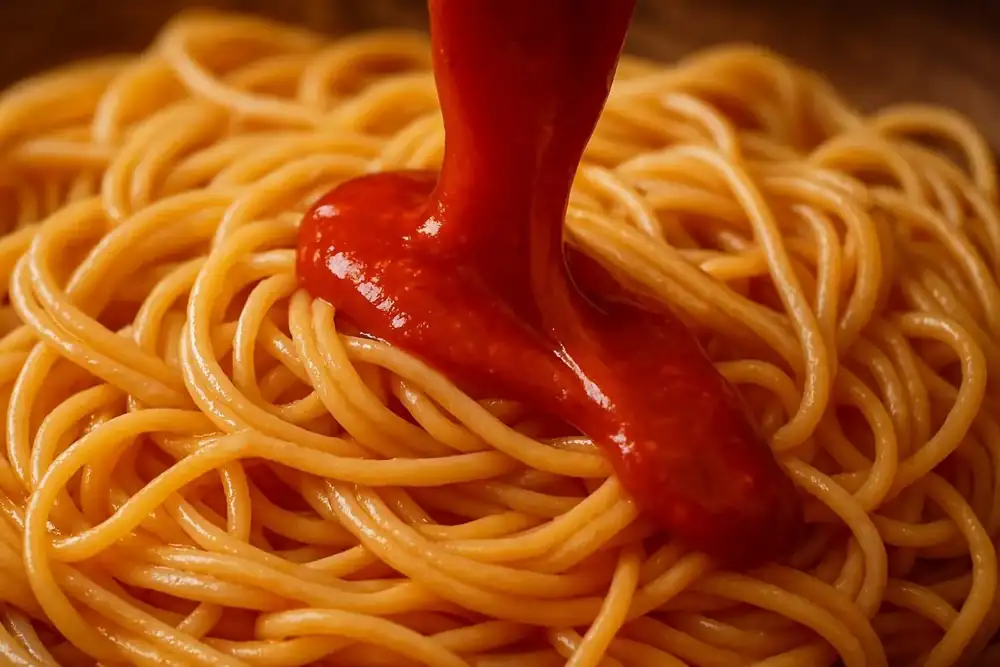
What really works is having the sauce prepared, or almost ready, before draining. Drain the pasta, pour it into the pan, and mix in a little of the reserved cooking water. It's that simple.
Why technique beats old tricks
We've spent years searching for the magic ingredient, whether it's oil, vinegar, or coarse salt, when the answer lies in the order of the steps. Compare pasta left to rot in the colander with pasta thrown straight into the pan, and you'll notice the difference with the first bite. Pasta is better when it goes directly into the sauce, cooked over just the right heat to allow it to meld, and without letting it cool down.
With these small changes, starch ceases to be the problem and becomes just the opposite: the element that binds the pasta and the sauce together.
💡 The trick of the almond
Total time: 10-12 minutes. Difficulty level: easy. Reserve a cup of the cooking water before draining: it thickens the sauce and prevents the pasta from sticking together.