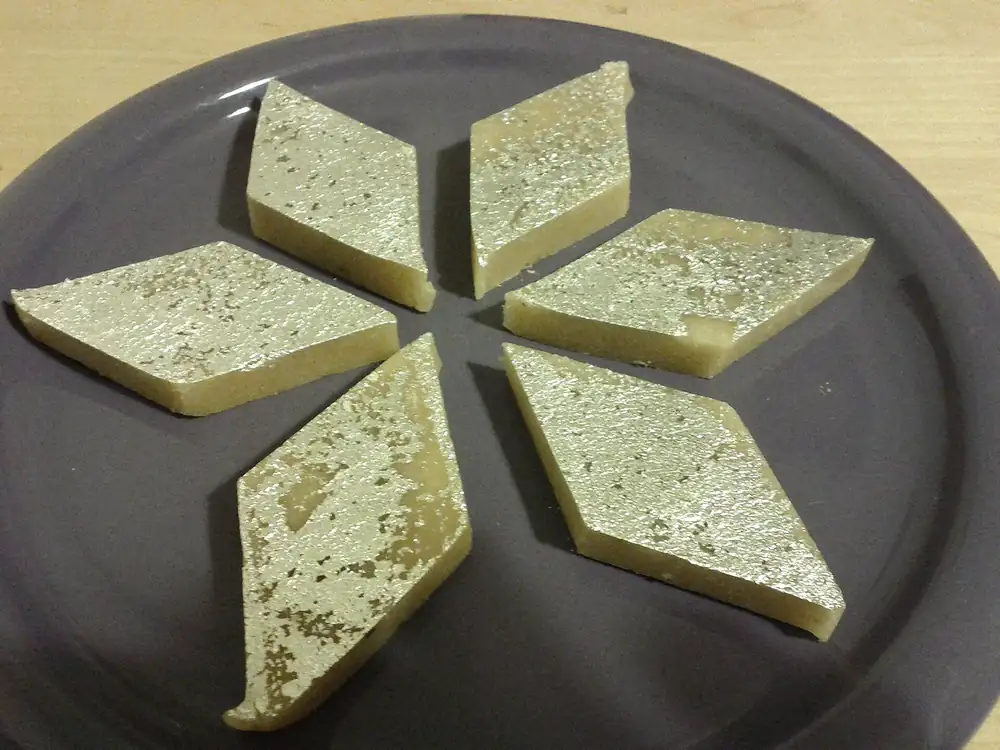
Kaju Katli, India's Sweet Diamond: History, Curiosities, and Secrets of the Cashew Nut Dessert
The sweet treat that accompanies every celebration in India.
Why is it called that? The name itself reveals a lot about its identity. "Kaju" in Hindi means cashew, while "katli" means a thin slice. The result is an elegant dessert, often cut into a diamond shape, with a smooth surface and sometimes decorated with a thin edible silver leaf, called vark, traditionally used in Indian pastries.
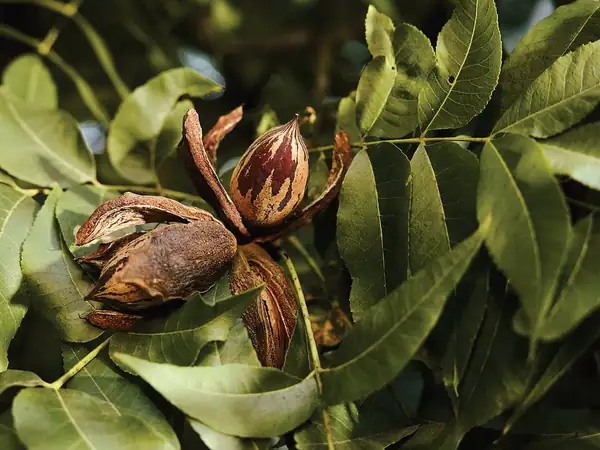
A recipe born in royal courts. The origins of Kaju Katli likely date back to the royal kitchens of northern India, influenced by Mughal culinary tradition. Cashews, brought to the subcontinent by Portuguese traders in the 16th century, quickly became a prized ingredient in the most refined preparations. From an aristocratic dessert, Kaju Katli later transformed into a popular sweet spread throughout the country.
The ingredients: few but delicate. The traditional recipe is surprisingly simple. All you need is unsalted cashews, sugar, and water. Some variations include cardamom, rose water, or saffron to enhance the aroma. The difficulty lies not so much in the ingredients, but in the precision of the preparation: overcooking can alter the consistency.
How it's actually made: The cashews are first ground into a fine powder. A sugar syrup is prepared separately, which must reach a precise consistency. Then the cashew powder is added and stirred continuously until a smooth, compact dough is obtained. After cooling, the mixture is rolled out and cut into the classic diamond shape.
The secret is in the texture. Authentic Kaju Katli should be neither too hard nor too soft. It should melt slowly in the mouth while maintaining a velvety texture. It is precisely this delicacy that makes it one of the most popular traditional Indian sweets, often given as a sign of respect and affection.
From local specialty to global phenomenon. In recent years, Kaju Katli has also conquered international markets. Brands like Haldiram's have contributed to its spread outside India, exporting it to Europe, the Middle East, and North America. Today, it can be found in many specialty shops and ethnic supermarkets.
Tradition, luxury, and memory. More than just a dessert, Kaju Katli represents a piece of Indian culture. Each slice tells a story of family celebrations, hospitality, and traditions passed down through time. A dessert with minimal ingredients, yet rich in meaning.
The dough: the art of simplicity
Once rolled out thinly (about 1 mm thick), the dough is cut into 6-7 centimetre squares, ready to accommodate the filling.
The heart of the dish: the pumpkin filling
The traditional Mantuan recipe calls for delica or Mantovana squash, a variety with dry flesh and an intense flavor. After being sliced and baked in the oven for about 40-50 minutes, the squash is mashed and combined with grated Parmigiano Reggiano, crumbled amaretti biscuits, finely chopped apple or pear mostarda, and a sprinkling of nutmeg. The result is a soft and aromatic mixture, perfectly balancing the sweetness of the squash with the slightly spicy and citrusy note of the mostarda.
The closing: a gesture of mastery
There are regional variations: in Mantua they are thinner and rectangular, in Ferrara they take the shape of cappellacci, larger and rounder.
Cooking and seasoning
The traditional sauce is simple and irresistible: melted butter and sage. The butter, left to brown slightly, envelops the pasta with a delicate aroma, while a sprinkling of Parmigiano Reggiano enhances the overall effect. In some more modern versions, a light reduction of balsamic vinegar or a cream of aged cheese is added, but never overpowers the unmistakable flavor of the pumpkin.
A dish that tells the story of a territory
In the Mantua area, they are a must-have during the holidays, prepared by the family, often by several hands, with slow and precise gestures passed down from generation to generation.
The taste of memory
Every bite holds the story of a cuisine that unites Northern and Southern flavors, tradition and innovation, past and present. And while the first leaves fall outside, the scent of pumpkin baking in the oven continues to remind us that true beauty, in the kitchen as in life, always comes from the simplest things.