¡Cocinen, maldita gente!
Para mi madre, los guisos nunca son iguales.
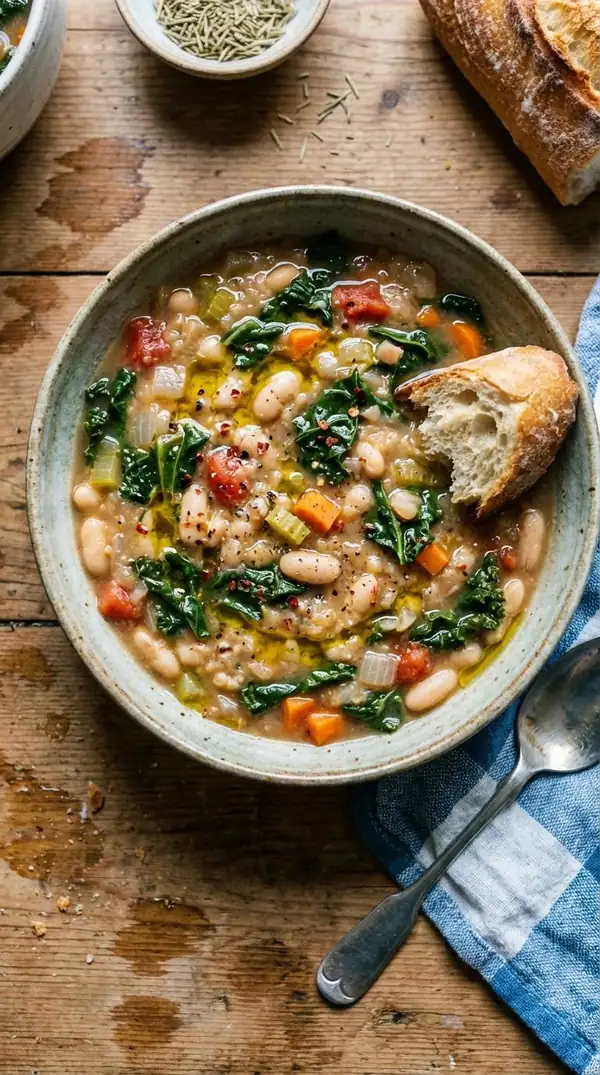
For my mother, her stews are never the same. Today the casserole is thicker because this potato is falling apart, or a little sweeter because she had a slightly overripe carrot and used it up. The stew has red wine because the oloroso sherry ran out, the pot roast has a chicken with its giblets that she found at the market. The rest of the family responds to her comments by saying that everything is as delicious as usual, and although they perceive variations, her flavors prevail. We may have her exact recipes, but we'll never have her touch.
However, it's quite possible that a spoonful we take elsewhere will transport us back to that family table; that it will bring back its sounds, its clattering spoons, and its laughter; Mom bustling about in the kitchen. Without meaning to, our eyes will fill with tears. It's possible that the dish that unleashes such a torrent of memories isn't even part of her repertoire; that it was actually the subtle hint of cumin, the depth of the broth, the freshness of the parsley, or the feeling of care with which it was prepared that reminded us of her.
Of all the foods that exist, it is those simple, everyday home-cooked dishes that trigger the connection between cooking and emotion. An intimate yet shared emotion; a traveler through time. The stew sails through the memories of many, countless generations. Swimming in its essence, we could reach back to the first time someone cooked something that children, toothless elders, and the sick of the tribe could easily eat. Something prepared with the intention of caring for the most vulnerable, where the broth was as, or even more, nutritious, appetizing, and important than the pieces of meat floating in it.
In his book 'Cooking: A Natural History of Transformation', Michael Pollan contrasted the triumphant, masculine, and festive cuisine of the roast, where the naked product is the absolute protagonist, with the everyday, feminine, humble, and ephemeral cuisine of the stew, where vegetables and animals return to the primordial broth transfigured into ingredients to continue their mission of perpetuating life, this time feeding not only the body, but also the bonds of affection, shared memories, identification, and identity.
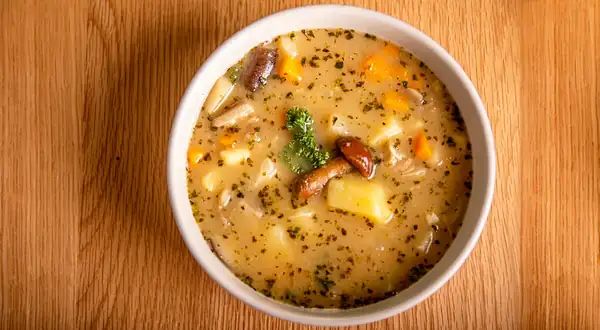
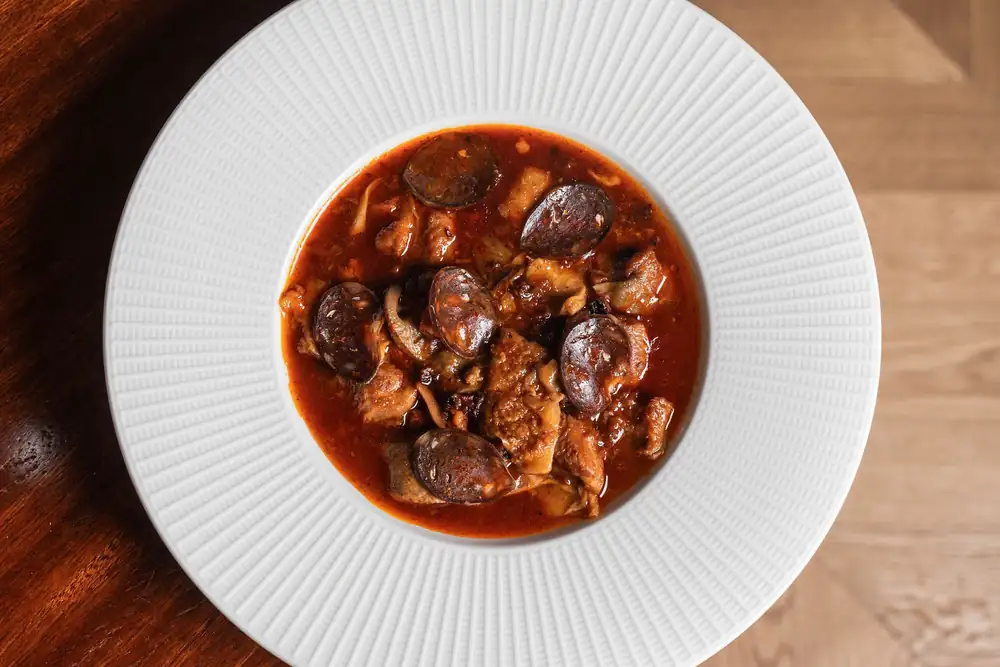
A stew might lack glamour or photogenic appeal. It's rarely seen on Instagram because it doesn't exude the same grandeur as a ribeye steak or a king prawn, nor does it possess the visual beauty of a haute cuisine dish. It also doesn't fit the low-calorie food ideal that dominates our aspirations. However, the stew is a weapon of the future, and that's why it's crucial that new generations, both men and women, dare to cook. It allows you to choose what you want to eat, eat seasonally, spend less money, transform humble ingredients into delicious ones, avoid waste, and save time and energy. In a pressure cooker, it only takes three to thirty minutes to have food for a whole family, for one or more days.
Authors like anthropologist Isabel González Turmo ('Cooking Was a Practice') and María Nicolau ('Cooking or Barbarism', 'I'm Burning!') highlight the fact that the more recipes circulate, the harder it is for us to actually cook. In old household cookbooks, the recipes that were written down were those that weren't part of everyday life: the neighbor's delicious doughnuts, the pastry dough for empanadas, the Christmas roasted meat. It's rare to find the recipe for broth, stew, bread soup, or gazpacho in those handbooks. These were basics that were taken for granted when cooking was a common skill.
The stew has a thousand recipes, and yet none. What's important is its architecture; the way the flavor is built. Manuel Maeso, the much-missed chef from Malaga, culinary activist, and cooking teacher, was one of the pioneers in including traditional cuisine in the curricula of public hospitality schools, where priority is still given to turning and glazing carrots or mushrooms over content that would be much more useful today.
When Maeso, forced to condense his teachings into a short time, began to reflect on how to teach new generations of cooks dishes they often didn't even know, he decided to focus on the architecture of culinary procedures. This simple approach eliminates inconsistencies (vernacular names, regional origins, variations in the use of ingredients or seasonings) and allows him to approach the vast repertoire of recipes using a framework understandable to any student. Thus, for Maeso, a stew is the sum of a sofrito and cooking in liquid (water, wine, the food's own juices), to which a paste or chopped mixture can be added for flavor and texture.
This formula encompasses all stew recipes published from the 'Llibre de Sent Soví' (1324; the first to record sautéed bacon and onion as a base) to the present day. From there, we can generate hundreds, thousands, millions of variations, because each culinary system (which González Turmo defines as the set of ingredients, seasonings, and procedures that characterize and differentiate the cuisine of a region) will use its own, and each cook will adapt them to their tastes, whims, and needs.
Can you imagine the power of teaching children to create flavor through cooking? What it would contribute to their food sovereignty, their ability to manage their finances, their control over their health, their creativity, and the strengthening of intergenerational bonds? It would be enough to show them the simple basics of a sofrito. The magical complexity unleashed by Maillard reactions and how sometimes we overlook them because, instead of sweetness, color, and depth, we seek freshness and acidity, leaving the vegetables uncaramelized. It would be enough to rediscover the value of observation to know when the ingredients in the broth or cooking juices are ready. From there, experiment, learn from mistakes, improvise, practice, find your own signature, and enjoy.
Stew is the very essence of home cooking. Its symbol. And it could remain its heritage even if it had to be taught in schools. It's part of the collective memory of those of us who grew up with it, and there's nothing sadder than having to go out and find it. But above all, stew is an investment in the future. We're already late in putting on our aprons, and getting our families to do it.