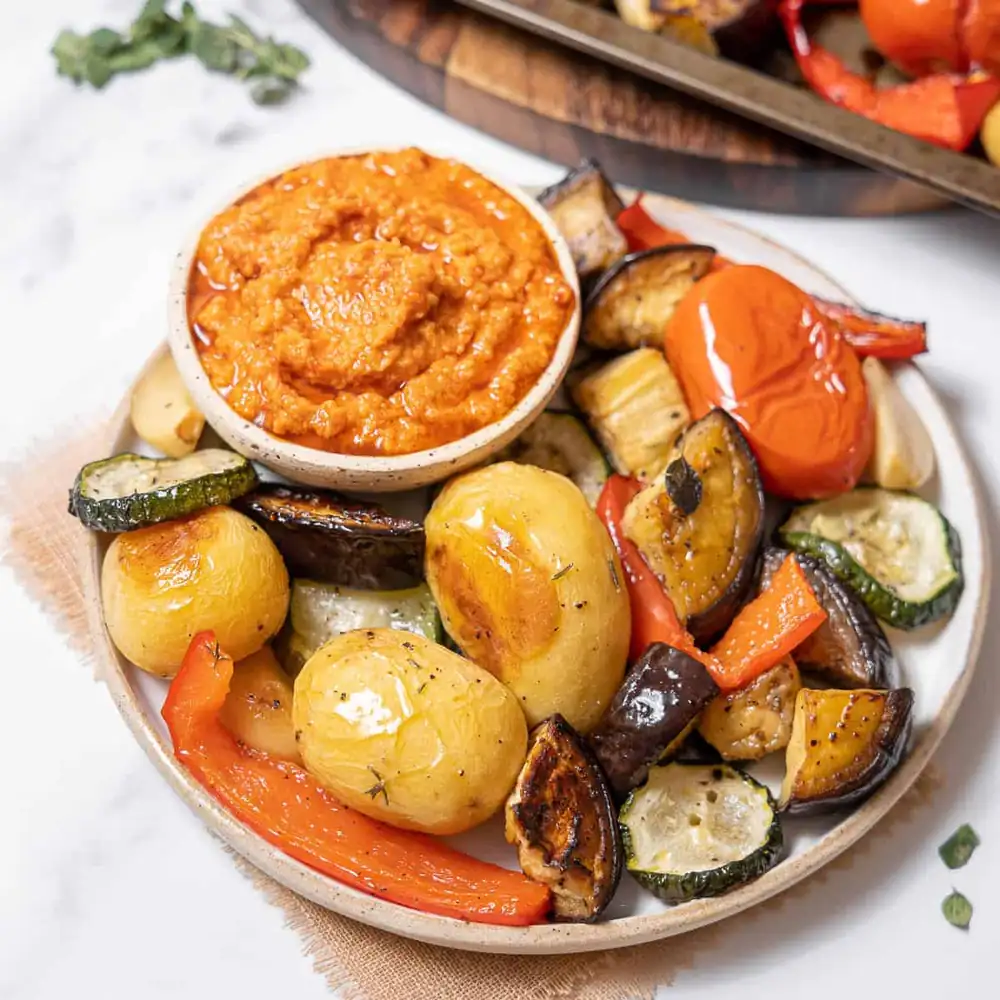
Mediterranean Roast Vegetables
Looking for perfectly roasted vegetables each and every time?
- 8 ounces waxy baby potatoes
- 8 ounces roma tomatoes (or any small, sweet tomato)
- 2 zucchinis (cut into bite-sized pieces)
- 2 red bell peppers (cut into bite-sized pieces)
- 2 medium eggplants (cut into bite-sized pieces)
- 1 head garlic (broken into cloves, peeled)
- 1/3 cup extra virgin olive oil
- 1 tablespoon fresh thyme (or substitute with dried)
- 1 tablespoon fresh oregano (or substitute with dried)
- salt (to taste)
- black pepper (to taste)
- Preheat the oven to 425°F (220°C), and lightly oil a large roasting pan or ceramic baking dish.
- Place all of the veggies and garlic into a large mixing bowl. Drizzle with the olive oil, and add the herbs. Season with salt and pepper to taste and toss to combine. Make sure everything is well coated with oil.
- Take out the potatoes and place them on the roasting pan, then roast for 10 minutes. Add the remaining vegetables and roast for another 20-25 minutes, or until all of the vegetables are fork tender and lightly charred.
- Remove from oven and serve immediately. You can garnish with some freshly grated parmesan or Manchego cheese on top for even more flavor!
This easy Mediterranean roasted vegetables method is as simple as it sounds. So choose your favorite seasonal veggies, and in only 30 minutes, you'll be enjoying a healthy meal or side dish!
Love simple vegetarian recipes? Don't miss these recipes for roasted vegetable gazpacho and Spanish romesco sauce.
These Mediterranean roasted vegetables are something I prepare weekly for my family when I meal prep, and is my go-to veggie bake! I crowd our favorite seasonal veggies onto a huge baking sheet and let the oven do its magic.
Even if you're not a big fan of vegetables, I challenge you to try these roasted vegetables and not enjoy them! The great thing about this Mediterranean roasted vegetables method is how versatile it is. You can substitute all of the vegetables I use for whatever you have on hand, but I recommend using whatever is fresh, in season, and tasty.
Whatever you use, the base roasted vegetable method stays the same, so feel free to experiment! - All-Season Veggies: For this recipe, I've opted for the classic Mediterranean veggies you can find in Spanish trades close to all year: potatoes, tomatoes, zucchini, bell peppers, and eggplant. - Winter Veggie Options: When the all-season vegetables can be a bit less fresh and juicy, I'll go for mushrooms, carrots, cabbage, onion, turnips, or pumpkin.
See method card for full information on components and quantities.
How to Make Mediterranean Roasted Vegetables
If you’d like to see the full elements and instructions, scroll to the bottom of the post for the printable method card. - Place all of the vegetables in a large mixing bowl and add the olive oil, herbs, salt, and pepper. (image 1)
- Toss the veggies until they are well coated in the oil and the spices are evenly distributed. (image 2) - Pull out the potatoes and place them on a greased baking tray, then roast them at 425°F (220°C) for 10 minutes to soften them slightly. (image 3)
- Add the remaining veggies to the pan. (image 4) - Roast for an additional 20-25 minutes, or until the veggies are tender and lightly charred. (image 5) - Serve these Mediterranean roasted vegetables when they're hot and fresh from the oven. Enjoy them with Spanish sauces like bravas sauce, homemade alioli, mojo picón, or mojo verde for a real treat! (image 6)
Recipe FAQs
What temperature is best for roasting vegetables?
I've found that the ideal temperature for roasting vegetables is at least 400°F (200°C). This is hot enough to caramelize the natural sugars in vegetables and give them that slightly crisp exterior.
I personally prefer to roast at 425°F (220°C). Which oil is best for roasting vegetables?
Extra virgin olive oil is hands down the best choice for roasting vegetables. It is the healthiest choice, absolutely delicious (experiment with different varieties), and allows the vegetables to cook to crispy perfection.
Should I cover vegetables when roasting? Vegetables need to be exposed to the oven's dry heat and covering them would create steam (and therefore steam the veggies instead of roasting them). While steamed vegetables are healthy and delicious, we want to achieve the deep flavors of caramelization that you find with roasting.
Why are my roasted veggies soggy? Usually this is because you've steamed the vegetables somehow. If you crowd the baking sheet or cover the vegetables they will be soggy.
It in addition may happen if you put too much oil on your veggies. They'll become saturated with oil and therefore turn soggy. Can you roast vegetables ahead of time?
Roasted vegetables will be their best (and most crispy) when served right out of the oven. But leftover roast vegetables last in the fridge for a few days and can be reheated in the microwave, the oven, or in a frying pan with a small amount of oil.
Roasting the vegetables brings out their natural flavors, and gives them an extra layer of sweetness. They're a great side dish to roast meat, and fantastic by themselves, too!
I like to serve them alongside these Spanish pork skewers (pinchos Morunos) and shrimp skewers (pinchos de gambas). It's like a surf and turf dinner with lots of healthy veggies on the side!
These delicious Mediterranean roasted vegetables go perfectly with Spanish sauces and dips, like romesco sauce or smoky Spanish hummus.
Expert Tips
- Spread the veggies out on a large baking sheet for the best results. I like baking directly on the sheet, but if you must, use parchment paper or foil.
- Never cover your vegetables! This will steam them and make them soggy. - Resist the urge to move them around while preparation.
We want them to stick and caramelize just a bit. - Taste and add more sea salt before serving if necessary.
- For a touch of Spanish taste, add a pinch of pimentón de la Vera (smoked Spanish paprika) right before serving.