The Original Names Of Your Favorite Restaurant Chains Might Surprise You
Some of the nation’s most popular fast food chains went by different names back in the day.
“isn't the most appetizing of adjectives) and was eventually sold. The new owners dropped”
- A few restaurants, like Applebee’s and Burger King, simply shortened their original names.
- Others changed their names completely, like Dunkin’, Potbelly, and Sonic.
The biggest fast food chains have names so familiar that it is hard to imagine them being called anything else. But before the Golden Arches, Whoppers, and footlongs became fixtures of American life, plenty of these restaurants went by names that were stranger, sillier, or just downright bizarre.
Some of these names I wish had stuck around. Others, I’m very thankful they didn’t. Let’s dive in.
Subway (Pete’s Super Submarines)
The origin story of Subway sounds a bit like a knockoff of Back to the Future.
A 17-year-old named Fred DeLuca wanted to pay for college, so he asked family friend Dr. Peter Buck, an actual nuclear physicist, for advice. Buck's answer: Here’s $1,000, go open a sandwich shop.
They called it Pete's Super Submarines and opened the first location in Bridgeport, Connecticut. As the shops multiplied, the name was eventually shortened to Subway.
McDonald’s (McDonald’s Bar-B-Q)
The McDonald brothers weren't exactly in the burger business when they opened their first restaurant in 1940.
McDonald's Bar-B-Q was a drive-in (not through) where carhops served meat from an actual barbecue pit out back: beef, ham, or pork with fries, plus “Giant Malts, made with Real Milk” to wash it all down. But in 1948, the brothers reinvented the restaurant with a self-service system focused on burgers. One of the few menu items to survive: “The Aristocrat,” an early predecessor to the Big Mac.
Dunkin’ (Open Kettle)
The idea for Dunkin’ Donuts started when entrepreneur Bill Rosenberg realized that no matter what he brought to sell at construction sites, all anybody really wanted were his donuts and coffee. So in 1948, he opened Open Kettle to sell exactly that pairing.
Two years later, he swapped the name for something more literal: Dunkin’ Donuts. Because hey, sometimes we just need to be told what to do.
Domino’s (DomiNick’s)
Domino’s began in 1960, when brothers Tom and James Monaghan bought a small Michigan pizza shop called DomiNick’s for $500.
Tom eventually took control and expanded, but the original owner would not let him keep using the DomiNick’s name for new stores. In 1965, an employee suggested Domino’s. One small syllable change for pizza, one giant change for pizzakind.
Burger King (Insta-Burger King)
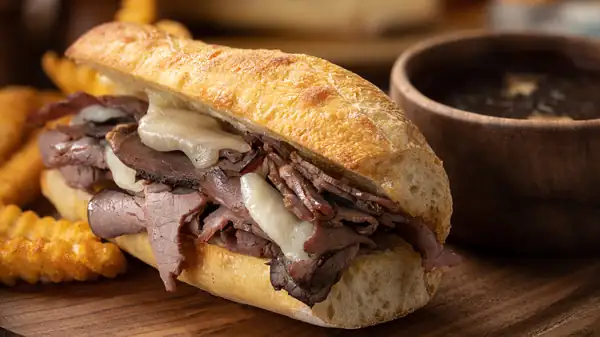
Shockingly, “Insta-Burger” isn’t some misguided corporate attempt at social media: It’s actually the original name for Burger King.
The name comes from a 1950s device called the Insta-Broiler, a conveyor-belt oven that could cook a burger patty on both sides at once, fast enough to keep a lunch counter moving. But the restaurant struggled (perhaps "Insta" isn't the most appetizing of adjectives) and was eventually sold. The new owners dropped "Insta" for “flame broiled,” and the rest is history.
Popeyes (Chicken on the Run)
Popeyes’s original name sounds more like an animated action movie than a fried chicken chain.
Alvin C. Copeland Sr. opened Chicken on the Run in New Orleans in 1972, serving traditional Southern fried chicken. Business was slow, so Copeland closed the restaurant, reworked the recipe with spicier New Orleans flavors, and relaunched it as Popeyes.
Surprisingly, the new name came from Popeye Doyle, Gene Hackman’s detective character in The French Connection. Because apparently nothing says Louisiana-style fried chicken like a gruff New York cop.
Sonic Drive-In (Top Hat)
The first Sonic was actually a little Oklahoma hamburger-and-root-beer stand called Top Hat.
With “Service at the Speed of Sound,” business was booming, and Top Hats were opening all over the state. There was just one problem: someone else already owned the Top Hat name. Luckily, they already had the perfect slogan; they just needed the name to match: Sonic.
7-Eleven (Southland Ice Company & The Tote’m Stores)
7-Eleven began as the humble Southland Ice Company, selling blocks of ice in Texas in the 1920s.
Then in 1928, a manager returned from Alaska with a carved souvenir totem pole and planted it outside his store. Unfortunately, most 7-Elevens are open 24/7 now, making the name about as relevant as selling ice by the metric block in 2026.
But hey, it's catchy!
Chick-fil-A (The Dwarf Grill)
Truett Cathy and his brother Ben opened the Dwarf Grill in 1946, a tiny all-day diner with just 10 stools and four booths. The original menu included 15-cent hamburgers, 30-cent steak sandwiches, fried ham, and slices of lemon pie for a dime.
There, Truett began experimenting with a boneless chicken breast, eventually pressure-cooking it and putting it on a buttered bun with two pickle chips. In 1967, that sandwich became the centerpiece of the very first Chick-fil-A.
Taco Bell (Taco Tia)
Glen Bell got into fast food with Bell’s Hamburgers in California in 1948, serving burgers and hot dogs before becoming fascinated by the crowds lining up for hard-shell tacos at nearby Mitla Cafe. He began experimenting with his own crunchy taco that could be assembled and served quickly, then opened Taco Tia in 1954 and sold them for just 19 cents apiece.
Bell kept refining the concept through several restaurants before opening the first Taco Bell in 1962.
KFC (Sanders’ Court & Café)
During the Great Depression, Harland Sanders began feeding travelers from his Kentucky service station, converting a storeroom into a tiny restaurant to serve country ham and steaks on his own dining table.
The operation eventually grew into Sanders’ Court & Café, where fried chicken became the star. Sanders later modified a pressure cooker to fry his chicken faster, helping turn a roadside specialty into the recipe that would become Kentucky Fried Chicken.
Potbelly (Hindsight)
Amazingly, Potbelly didn’t even start out serving food.
In 1971, Peter Hastings opened a Chicago antique shop called Hindsight, where an old potbelly stove was among the many goods sold. He eventually began making cheap sandwiches on Italian bread and toasting them on the stove for customers as they shopped.
The sandwiches quickly became more popular than the antiques, and in 1977, Hindsight became Potbelly Sandwich Works. To this day, every Potbelly location has an antique stove commemorating the chain’s unusual roots.
Jack in the Box (Topsy’s)
Robert Peterson opened Topsy’s Drive-In in San Diego in 1941, a classic carhop restaurant with circus-themed decor and a starry-eyed clown motif. But after World War II, Peterson pushed the clown idea much further, transforming Topsy’s into Jack in the Box, a tiny drive-through “food machine” topped with a giant jack-in-the-box clown.
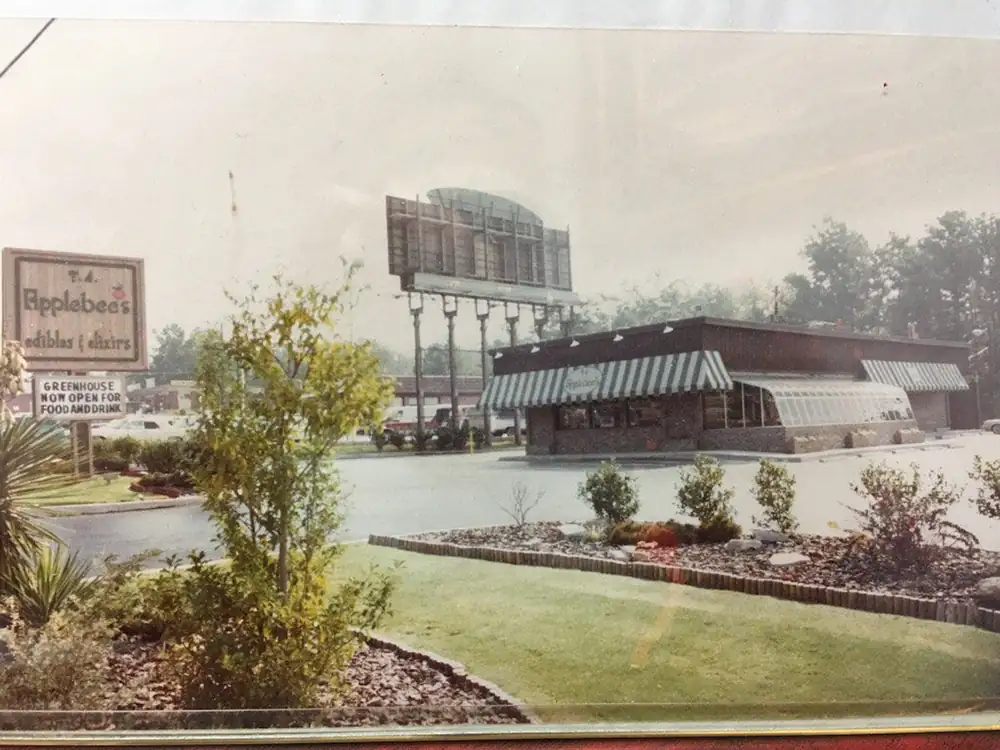
Applebee’s (T.J. Applebee’s Rx for Edibles & Elixirs)
Bill and T.J.
Palmer wanted their first restaurant to feel like an old-fashioned drugstore because, why not? In 1980, they opened T.J.
Applebee’s Rx for Edibles & Elixirs, complete with stained-glass panels, vintage-style signs, dark wood, and Tiffany-inspired lamps. But unfortunately, nobody in the entire world could make signs big enough for that name, and it was eventually shortened.
- Who: Top Hat · Burger King
- Money: $1,000, · $500.