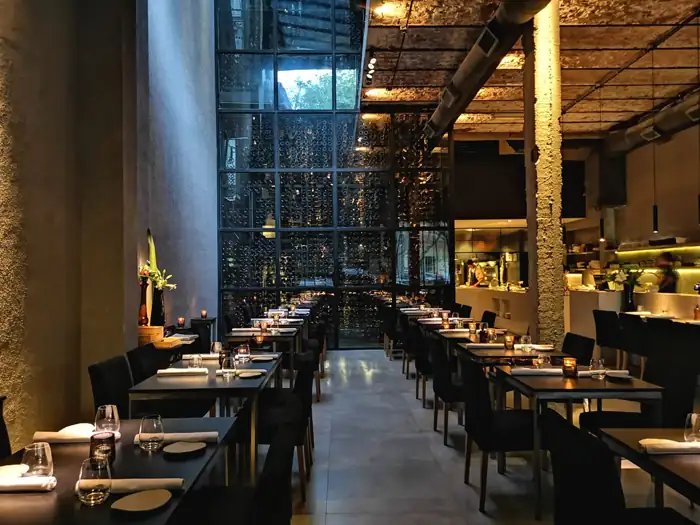
Gabriel Oggero and the Long Argument With Fire
He grew a garden behind a restaurant in Palermo, put oysters on a menu in a city of beef, and waited for Buenos Aires to catch up. It did.
Every great restaurant is, at bottom, a stubbornness. Crizia's is Gabriel Oggero's refusal, over more than twenty years, to accept that a country with one of the longest coastlines on earth should eat as if it were landlocked. He opened in 2004 with Geri Gastaldo on Fitz Roy, in Palermo Hollywood, and the first thing he put on the menu was an oyster from Patagonia. People came for the novelty. They stayed because the oysters were extraordinary, and because the man behind them clearly knew something.
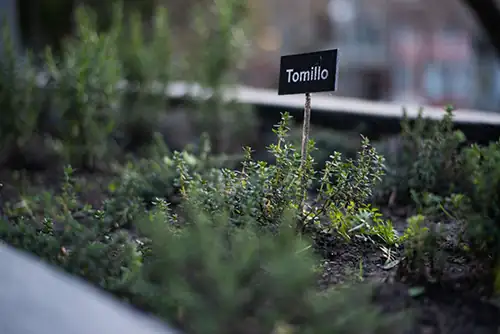
What he knew, and knows, is fire. Argentine cooking has always been about the grill, and Oggero's contribution was to ask what else the grill could do. Fish, first: the artisanal boats of the coast send him what they catch, and he cooks it whole over embers with a patience that turns the skin to lacquer and leaves the flesh trembling. Then vegetables, from a garden he planted behind the restaurant, where herbs and leeks and beets grow to be charred and buried in ash and served with sauces that taste of the same smoke. Then, and only then, beef, which he cooks as well as anyone and refuses to make the star.

To eat his tasting menu is to follow this argument to its conclusion. The oysters are the thesis, cold and clean. The raw fish with citrus is the pause before the fire. The sole from the coals, with a butter green with garden herbs, is the proof. The charred leek, black outside and custard within, with roasted almonds, is the surprise, the moment when you realise that a vegetable can carry the whole weight of a course. And the beef, when it arrives with its crust like bread, tastes better for having waited.
The fishermen matter to him personally. The restaurant works with small boats along the Atlantic coast that fish by line and by hand, and the relationship is not a supply chain but a friendship maintained over decades: he knows which boat brought the sole, which family harvests the oysters in the cold water of the south. When the sea is rough and nothing comes, the menu changes, and he would rather serve a vegetable than a fish that was not caught the way he believes it should be.
What he has built, in the end, is a kind of proof. That a country can eat its own coast. That a grill can be a tool of finesse. That vegetables can carry a menu in the land of beef. Twenty years ago these were arguments; now they are what people expect when they walk in the door on Fitz Roy, and the young chefs of the city grew up eating them. That is how a restaurant changes a place: not with a manifesto, but with a plate, repeated.
There is a tenderness in how he speaks of his suppliers: the fishermen, the grower of the oysters in the cold southern water, the people who work the garden. Sustainability is a word the restaurant uses, but what it means in practice is simpler and more moving: he cooks what these people bring him, and he cooks it in a way that honours the effort. Nothing is disguised. The fish tastes of fish, the leek of leek, the smoke of a particular wood on a particular night.
When Michelin came to Argentina for the first time, at the end of 2023, and put a star beside Crizia's name, the city treated it as confirmation of what it had slowly come to understand: that the restaurant that had once seemed eccentric was in fact the one that had seen furthest. Oggero received it with the modesty of a man who had been doing the same thing for two decades and intended to keep doing it.
Dinner ends, as it should, sweetly: fruit from the garden, honey that has been let burn a little, cream. You walk out onto Fitz Roy with the taste of the sea and the smell of wood smoke on your coat, and Buenos Aires, that city of pampa and steak, feels for a moment like a port. That is what one man's stubbornness can do to a place.