Meet 'Chuck Wagon Stew' — The Hearty Comfort Meal Cowboys Devoured On The Trail
Giddy up, friends — chuck wagon stew is a warm, cozy, end-of-day meal cowboys often enjoyed after a day of cattle driving on the old frontier. A hearty mix of beef, vegetables, and potatoes, it was the perfect way to refuel after a long day of hard work in the elements.
Of course, your chuck wagon stew beef will almost definitely be different from what cowboys ate on the trail. Fresh beef wasn't often on the menu, as the cattle being driven were considered valuable livestock. The meat in chuck wagon stew may have come from whatever animals cowboys could hunt during their travels, along with long-lasting cured meats like salt pork. No matter what made its way into the pot, though, a hot bowl of fire-cooked stew surely was a comfort. Luckily, it's easy enough to cook up a fantastic version of chuck wagon stew at home (whether on or off the range), as long as you keep a few things in mind.
Tips for making the choicest chuck wagon stew
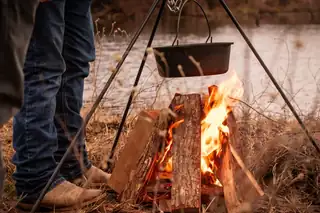
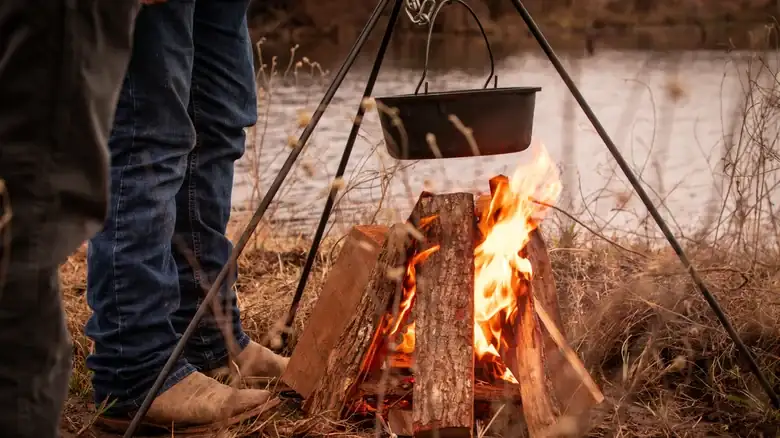
The great thing about chuck wagon stew is its versatility. If you want to put camping cooking hacks to good use, you can make your stew over a fire, though it's also great cooked in a pot on the stovetop. Either way, to easily enhance the dish, you can evoke a campfire's savory smokiness by rendering some bacon before searing your meat and softening your vegetables in the fat. For a pork-free version, use beef bacon, or simply soften your vegetables in a bit of oil or butter.
While you can use basically any cut of beef, stew meat and roasts are a good place to start. Bison, which is jam-packed with flavor, also works well. Just know that you'll need a decent chunk of time to make a legit chuck wagon stew with these cuts. However, you can also use ground beef for a quicker braise (about 45 minutes to an hour instead of two hours or more).
Cowboys on a cattle drive could let the ingredients come together for hours, the scent of cooking vegetables and beef wafting through the air as the stew simmered over the fire. While trail cooks of yore were often limited to dried seasonings like allspice, ginger, and nutmeg, you can add fresh herbs like thyme and ingredients like diced green chiles to kick up the heat. When it's time to simmer your stew, don't forget to add broth instead of water for extra flavor (canned tomatoes wouldn't be out of place, either) — and feel free to put on an old Western movie for a full on-the-trail dinner experience.