Why does garlic turn blue when making pickles?
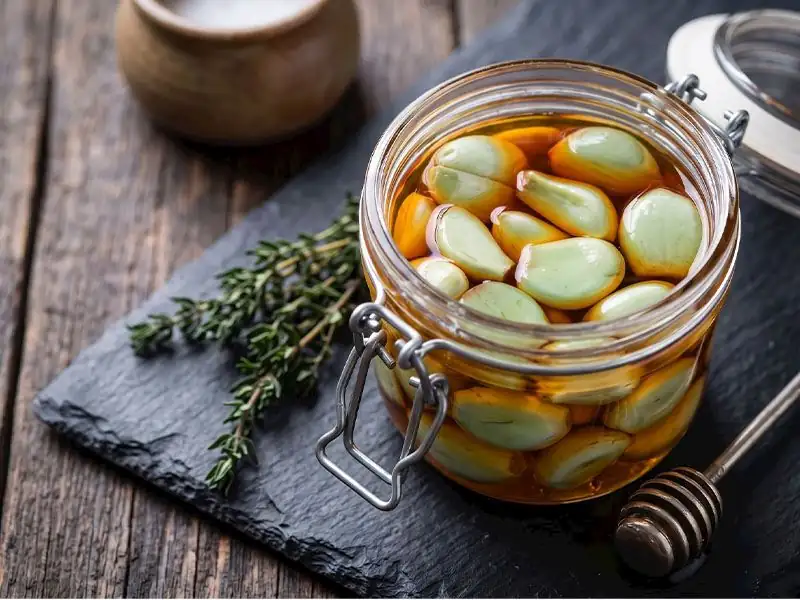
When making pickles at home, it may seem surprising if garlic turns blue or green within a few days. However, this is often not an indication that the pickles were made incorrectly, but rather a chemical reaction occurring within the natural compounds of the garlic.
-
Garlic's Natural Compounds Change Color: The main reason garlic turns blue or greenish during pickling is that its natural compounds react with the acidic environment. When garlic is crushed or cut, its cellular structure is disrupted, releasing certain sulfur compounds. These compounds, when exposed to the acids in vinegar and pickling brine, can lead to the formation of different color pigments. This color change is particularly noticeable in fresh garlic. It generally doesn't mean the garlic is spoiled or the pickles are inedible.
-
Vinegar and Acidity Levels Are Effective: The acidity of the pickle brine plays a significant role in the discoloration of garlic. In pickle brine with a high vinegar content or pronounced acidity, the natural compounds in garlic can react more easily. As a result of this reaction, the garlic may develop blue, turquoise, or greenish tones. The type of vinegar used and the overall composition of the pickle brine can also affect the degree of color change. Therefore, garlic that turns blue is often a natural chemical change related to the acidic nature of the pickle brine.
-
The freshness and storage conditions of garlic are important. Color changes are more common in very fresh garlic because the natural compounds in young garlic may be more susceptible to this reaction. Garlic used shortly after harvesting may not have fully transformed, resulting in different colors in the pickles. Previous cold storage can also affect the likelihood of color change. Furthermore, the type of garlic and the conditions in which it was grown can vary in the severity of this reaction. Therefore, even with the same pickle recipe, it's possible for color changes to occur in one jar but not in another.