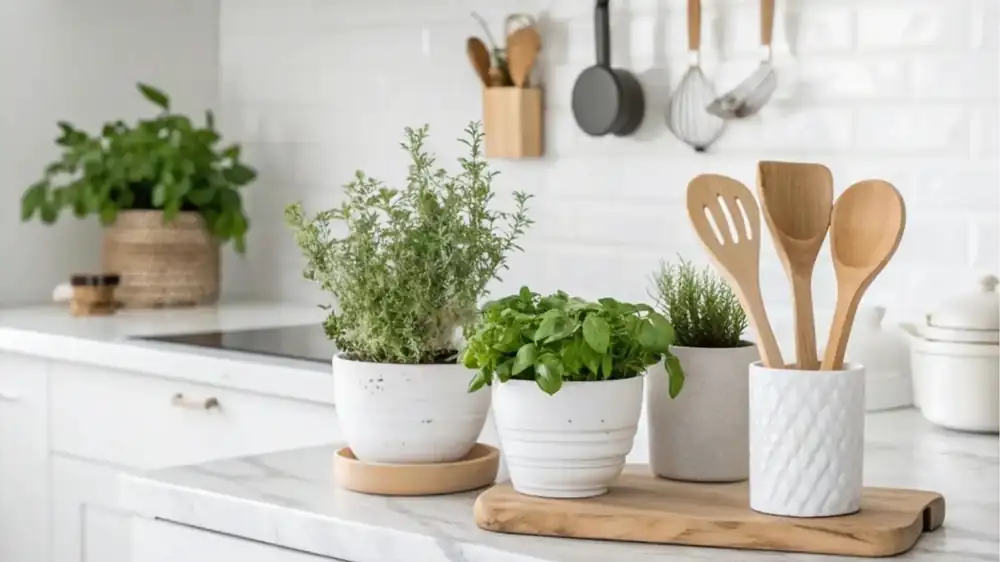
Experts agree: these 4 hardy plants are perfect for your kitchen
Do you dream of a greener kitchen, but your plants regularly end up dying? Some species are much more resilient than others. They tolerate missed waterings, adapt to indoor light, and require little daily maintenance.
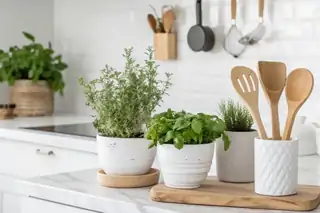
Some houseplants tolerate the specific conditions of the kitchen quite well (temperature fluctuations, humidity, frequent foot traffic, or lack of light). Here are four that are robust enough to withstand the challenges of the kitchen environment.
The crassulas, champions of sobriety
Crassulas, often classified as succulents, are particularly useful for people who tend to forget to water their plants. Their fleshy leaves allow them to store water, giving them some resistance to periods of drought.
In a kitchen, these plants can find their place on a bright windowsill, provided that overly warm situations are avoided (too close to the oven for example).
Their maintenance remains limited: a well-drained substrate and spaced waterings are generally preferable to excess water.
The spider plant, ideal for forgetfulness
With its long, drooping leaves and small offshoots, the chlorophytum, also known as the spider plant or ribbon plant, quickly adds volume to a kitchen. It also tolerates indoor conditions quite well and can thrive in indirect light.
Its other advantage lies in its ease of propagation. The plant regularly produces small shoots that can be replanted.
In a kitchen, it can be placed near a window, but it's best to avoid direct, intense sunlight. When watering, wait until the surface of the soil begins to dry out, without leaving the plant constantly sitting in water.
The pothos, perfect for decorating a corner
The pothos is one of the most popular houseplants for a simple reason: it tolerates the sometimes less-than-ideal conditions of a home relatively well. Its long stems can be left to cascade from a shelf or trained on a support, allowing you to add greenery to a kitchen without taking up much floor space.
It prefers indirect light and can tolerate lower light levels, although its growth will generally be less vigorous.
When it comes to watering, it's best to wait until the substrate is partially dry before watering again. This tolerance for forgetting makes it a practical option for a room where daily maintenance is less of a concern.
The philodendron, a spectacular touch of greenery
The philodendron also possesses interesting qualities for the kitchen. Depending on the variety, its leaves can take on particularly decorative shapes, and its stems can trail or climb. It thus makes it easy to add a real touch of greenery to a shelf or piece of furniture.
Like the pothos, it generally prefers indirect light and a potting mix that doesn't become waterlogged. Therefore, avoid overwatering out of habit. In a kitchen, its foliage adds a generous decorative touch without requiring particularly complex care.
However, be aware that pothos and philodendrons are toxic plants. They are particularly unsuitable for homes where pets or young children might chew on their leaves. And, contrary to popular belief, their presence is obviously no substitute for good kitchen ventilation.