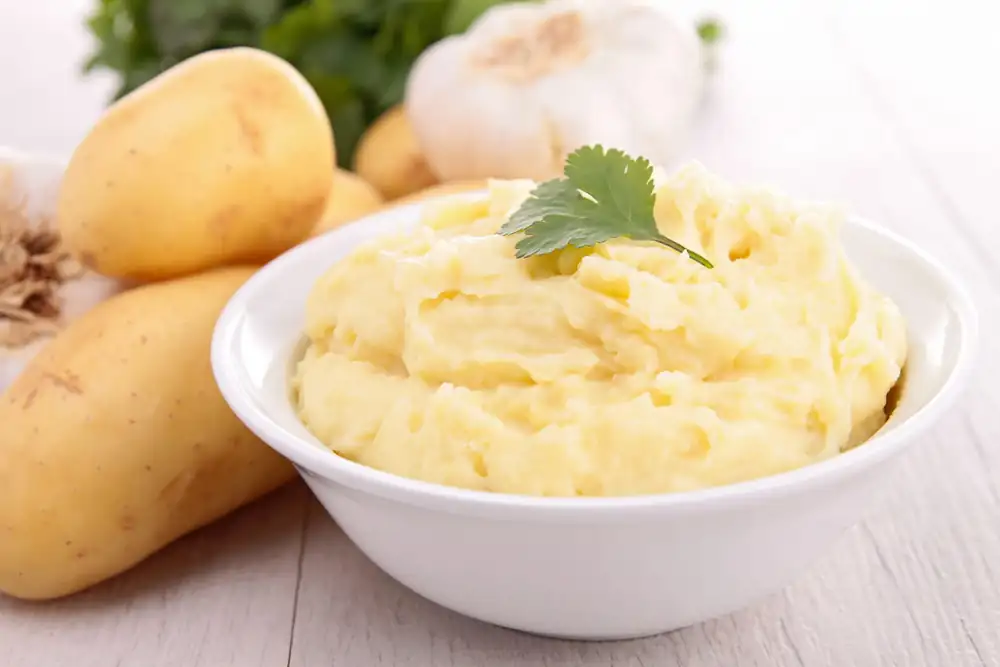
How to prepare good homemade mashed potatoes?
Choosing potatoes, cooking, preparation… Here are our best tips and tricks for easily preparing a smooth homemade mashed potato.
- 700g potato
- 100 ml whole milk
- 70 g beurre demi sel
- 1 pinch nutmeg
- freshly ground pepper
- fleur de sel
- Choose potatoes of roughly equal size. Cook them in a large saucepan filled with boiling water.
- Once cooked, drain and peel them (careful, they're hot!). Puree them using a food mill (choose the finest screen).
- Meanwhile, heat the milk in a small saucepan. Once it's hot, add it to the mashed potatoes and mix everything together with a whisk.
- Whisk in the diced butter. Finish by seasoning with nutmeg, a few turns of freshly ground pepper, and fleur de sel. Serve immediately.
Creamy, smooth, and comforting, homemade mashed potatoes are one of those simple recipes that the whole family loves. They pair perfectly with roast meat, fish, vegetables, or a saucy dish. However, achieving a perfectly smooth and flavorful mash requires a few precautions. The choice of potatoes, the cooking method, and the way they are mashed make all the difference.
Which potatoes should I choose to make a good mashed potato?
To make smooth, creamy homemade mashed potatoes, choose potatoes that are high in starch and have a floury texture. Varieties like Bintje, Agria, or Caesar are particularly well-suited. After cooking, their flesh mashes easily and readily absorbs butter and milk.
Conversely, firm-fleshed potatoes are better suited to salads, sautéed potatoes, or steaming. They generally produce a less light and more difficult-to-work-with mash.
Peel the potatoes and cut them into similar-sized pieces to ensure even cooking. Place them in a saucepan of cold, salted water, then gradually bring to a boil. Cook for approximately 20 to 25 minutes, depending on the size of the pieces. To check if the potatoes are cooked, insert the tip of a knife into the flesh: it should slide in easily without resistance.
Once the potatoes are cooked, drain them thoroughly. You can even put them back in the still-hot pan for a minute over very low heat. This little trick helps eliminate excess moisture and results in a more flavorful mash.
Mash the potatoes while they are still warm, ideally with a potato masher or food mill. Avoid using an electric mixer: it overworks the starch and risks turning your mash into a sticky, elastic paste.
Next, add the butter, then gradually stir in the warm milk until you reach the desired consistency. For an even creamier purée, you can replace some of the milk with cream. Season with salt and pepper, and optionally add a pinch of nutmeg.
How much milk and butter should I put in mashed potatoes?
For 1 kg of potatoes, allow approximately 20 to 25 cl of milk and 80 to 100 g of butter. These proportions can, of course, be adjusted to your liking. It's especially important to add the milk gradually: it's always possible to add more, but it's much more difficult to fix mashed potatoes that have become too runny.
For a particularly rich version, slightly increase the amount of butter. For a lighter purée, reduce the amount and use more milk.
Mashed potatoes lend themselves to many variations. You can flavor the milk with a clove of garlic, thyme, or a bay leaf before adding it. You can also opt for nutmeg, as in the old-fashioned mashed potatoes our grandmothers used to make. Grated Parmesan, Comté cheese, fresh herbs, or a few drops of olive oil also make it easy to change the flavors.
Finally, serve your homemade mashed potatoes piping hot. Add a small knob of butter at the last minute: it will melt gently on the surface and provide that delicious touch that makes all the difference.