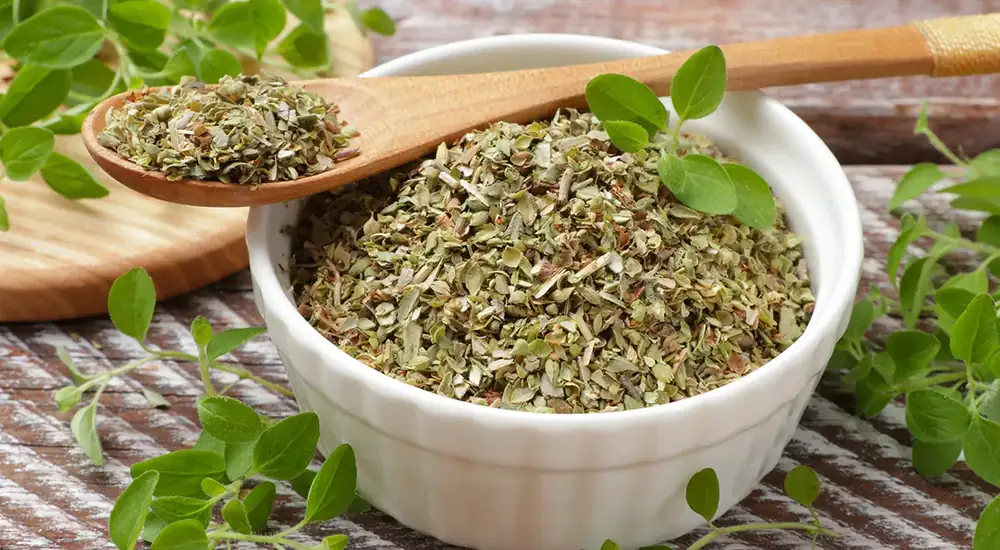
How to replace oregano in dishes: marjoram, thyme, basil and other options
It's oregano's closest relative, so much so that they're often confused. Marjoram and oregano share a very similar sweet-spicy aroma, with the former having more subtle notes, featuring sophisticated citrus undertones. Marjoram is an ideal substitute for oregano in pasta sauces, soups, and meat marinades.
Thyme
This spicy and aromatic herb contains the same essential oil as oregano—thymol. It's responsible for its distinctive woody, peppery bitterness. Thyme is slightly more herbaceous than oregano, with light pine notes, but it performs almost identically in hot dishes.
If you want to substitute dried oregano with thyme, use a 1:1 ratio. Due to its stronger flavor, use slightly less fresh thyme (about 3/4 the volume of fresh oregano). This substitution works wonderfully in potato dishes, legumes, and roasted meats and poultry.
Basil
Along with oregano, it's often included in herb blends called "Mediterranean" or "Provencal." Basil has a sweeter, slightly aniseed flavor, with less peppery heat.
For tomato sauces, pizza, lasagna, and light vegetable salads, substitute basil for oregano in a 1:1 ratio. If you're making a rich meat sauce, add a pinch of freshly ground black pepper to the basil.
Rosemary
Like oregano, it has woody notes, but they are much more pronounced. Therefore, use rosemary as a substitute sparingly, using only the minimum dosage. It's suitable for roast lamb, beef, or pork recipes.
Sage
This herb has a distinctly musky, slightly bitter flavor with distinct, cool camphor notes. It shares a common astringency with oregano, but sage, like rosemary, should be used with caution, adding it sparingly.
Parsley
The familiar herb, alas, can't replicate the complex camphor-peppery aroma of oregano, but it will impart a pleasant freshness, a beautiful green color, and a slight herbal bitterness to dishes. Add parsley as a 1:1 substitute for oregano in dishes. It's a good compromise for certain types of pasta or Greek salad dressing if you don't have oregano on hand.
Fenugreek
A less obvious but quite interesting substitute, especially when it comes to the Mexican variety of oregano, fenugreek has a deep, bittersweet aroma with subtle nutty nuances. Add this dried spice, literally at the tip of a knife, to curry sauces, complex meat stews, or marinades.
What not to replace the herb with
Some herbs, despite their popularity, are absolutely not suitable as an alternative to oregano due to their very specific flavor profile.
Cilantro (coriander)
Fresh cilantro has a sharp aroma that will instantly overpower everything else. Substituting cilantro for oregano in an Italian sauce will give you a Caucasian flavor instead of a Mediterranean classic, ruining the whole dish.
Mint and lemon balm
Although they are botanical relatives of oregano, they contain too much menthol. The excessive cooling effect and pronounced perfume notes are appropriate in desserts or drinks, but definitely not in meat stews or pizza.
Tarragon (tarragon)
This herb has a powerful, dominant anise flavor. It's too sweet and distinctive to mimic the austere, peppery, woody bitterness of oregano.
Dill
Chefs love dill so much that they'll even add it to pasta and Greek salad. But it's best not to do so—it practically destroys the authentic character of Italian dishes.